
The Devotional Journey: Bible Reading 25
Some insights into suffering
Read Job 3:1–4:21.
Job’s friends have spent a week mourning with him in silence. Then Job began to speak. Satan had claimed that if Yahweh took away the blessings He had given Job, then Job would curse God. Now when Job spoke, he did not curse Yahweh, but rather he cursed the day he was born.
He complained that it would have been better not to have been born, or to have been stillborn rather than to have suffered the things he had just experienced. What we see is that even a person who trusts God and is obedient to God can sometimes be overwhelmed by grief when tremendous tragedy strikes. It’s not weakness but part of the fallen human condition.
Job’s lament was very different from the wise and comforting advice that he had given to others in the past. This tells us that though we may know how life works, sometimes in the midst of our own suffering, our emotions can overwhelm our reasoning.

Then the first of Job’s friends spoke. Eliphaz was probably the oldest of the group and so he spoke first. He gave his own opinion: Those who are innocent and morally upright are not destroyed by God. He was implying that Job had done something wrong and that’s why God was punishing him.
Eliphaz claimed this understanding was given to him in a vision by a spirit. He said this to give his personal opinion authority. As the discussion continued further in the book of Job, we see that Eliphaz was pushing across his own ideas of morality.

We have seen that since Adam and Eve rebelled against Yahweh in the garden, all people on earth have a sin nature and are sinful before the all-righteous Creator-God. But then God demonstrated to Adam and Eve the sacrifice of animals and how a person could have a right standing with God because a sufficient substitute had died in place of the guilty person.
Job understood this principle because as a God-fearing man, he performed many such sacrifices for himself and his family. Job knew His God and His righteous requirements.
But Eliphaz was insisting that Job had some sin that he did not account for. What Elizphaz didn’t realise was there was a challenge between Yahweh and Satan. Job’s suffering wasn’t directly related to sin but was a result of this challenge.
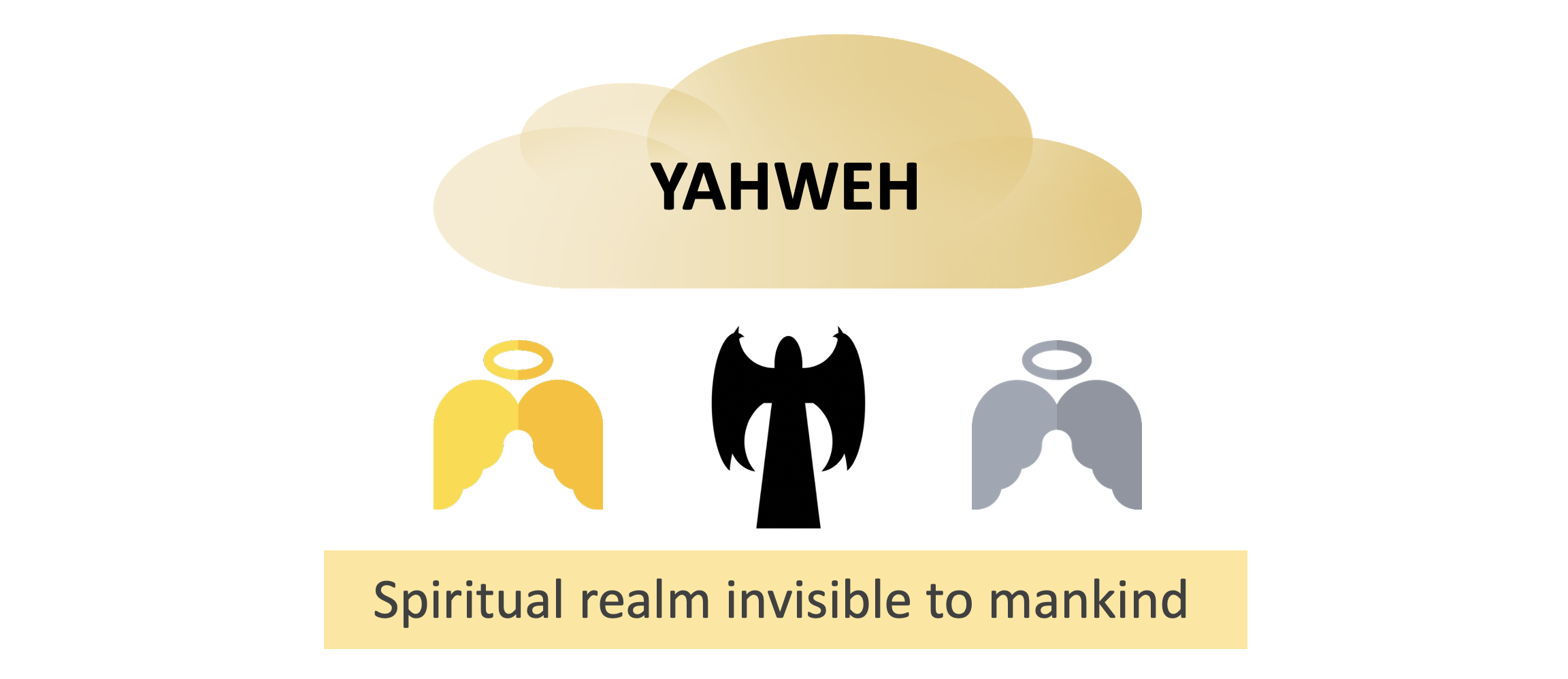
The first speeches of Job and Eliphaz start to give us insight into the nature of suffering. Eliphaz was not wrong to state that a person’s sin will be dealt with by the Creator-God. But as we’re starting to see, not all suffering is the direct result of sin.
In our own lives, when suffering comes our way, we should examine ourselves to see if there is any sinful cause to our suffering. But after close examination and prayer to God, if we are convinced that we’ve walked uprightly before God, there may be more to our situation then the “first level” principle of “you reap what you sow”. We shall learn more as we continue with Job’s account.
Also, when we see the suffering of a dear friend or loved one, we mustn’t immediately jump to assigning blame or looking for the sin that caused the suffering. Rather, we should extend compassion and understanding to our friend or loved one.
Historical note
In the midst of his complaining, Job mentioned a creature named leviathan (Job 3:8). This Hebrew word is used at least five times in the Old Testament. It is also mentioned in Job 41:1, Psalm 74:14, Psalm 104:26 and Isaiah 27:1. These verses describe leviathan as a great, serpent-like creature that is capable of living in the water and on land (semi-aquatic). Throughout the book of Job, Yahweh, Job’s friends and Job described things and animals that were familiar to them. This tells us that the leviathan was perhaps a creature that Job was familiar with but now extinct.
Read Job 41:1–34 for a detailed description of the massive leviathan and note how similar it is to what scientists today would call “semi-aquatic dinosaurs". While we won’t see in the Bible modern words like “dinosaur” (which means “terrible lizard”) which was coined in 1841 by Sir Richard Owen, Scripture does have its own vocabulary, like leviathan, to describe the great variety of creatures that Yahweh created during Creation week.