
The Devotional Journey: Bible Reading 46
Just stand still and let Yahweh fight for you
Read Exodus 13:17–14:31.
Israel was free to go! Though they were many in number, they were not yet a cohesive nation ready to do battle. They lacked confidence and unwavering commitment so Yahweh needed to build that up in them.
Taking the shorter route to the Promised Land would have meant they had to fight the hostile Philistines. So Yahweh led them on a detour, along a southeast route into the wilderness. He showed them where to go, guiding them with a pillar of cloud during the day and a pillar of fire at night. This way, all the Israelites could see Him. There was no mistaking where Yahweh was directing them!

The people took with them Joseph’s remains. Joseph had faith that Yahweh would indeed settle the Israelites in the Promised Land so he had left instructions for his bones be taken along and buried in Israel. Would this later generation have the same unwavering faith as Joseph?
Then Yahweh did something unusual. He instructed Israel to camp along the shore of the Red Sea. By this time, Pharaoh realised the economic impact of losing this large labour force. He wanted them back! (This despite all that Egypt had suffered because of Yahweh, and despite how he had personally suffered the loss of his own son!)
To the Egyptians, it looked like the perfect opportunity to recapture Israel. If the Egyptians could block them off from the west, Israel would be trapped as the eastern side of their camp was by the sea.
When the Israelites saw the Egyptian army approaching, they immediately feared for their lives. It’s sad to see that their first reaction was not to turn to Yahweh who had already shown them His power. Instead, they let their fears run wild and they blamed Moses for their situation. This was a test of faith that God had placed on them and they weren’t doing very well.

In contrast, Moses was calm. He knew God was in charge and had set up this difficult situation. He told the people, “Yahweh Himself will fight for you. Just stay calm.” (Exodus 14:14.)
And Yahweh did. He used the column of cloud to separate Egypt from Israel. Then as Moses raised his hand over the waters of the sea as instructed by God, Yahweh used a powerful wind to part the waters. He created a pathway through the sea, with a huge wall of water on the right and left. The pathway was dry and it was wide enough to let over two million Israelites pass through. All the people crossed the sea safely.
Then Yahweh let the Egyptians try to do the same. But He caused their chariots to get stuck and once all of Israel had crossed safely, God released the waters and it destroyed the entire Egyptian army.
Yahweh did all this for Israel because He had made an unconditional covenant with Abraham. But He was also doing this because He was demonstrating to Israel, Egypt and the world just who He was—the all-powerful Creator-God.
In our own lives, we may hear God clearly direct us down certain paths but when we follow His lead, it may seem that the situation gets worse! It could very well be that God wants to demonstrate who He is to us and to others aware of our circumstances. It is when we run out of ideas, resources or help that God can show Himself clearly. When we hear the call: “Just stand still and watch Yahweh rescue you today,” may we still our fears and our mouths and let God guide us out of the situation by His ways. Remember that unbelief leads to fear and complaints. But faith in God leads to obedience and brings glory to God.
Archaeological Note
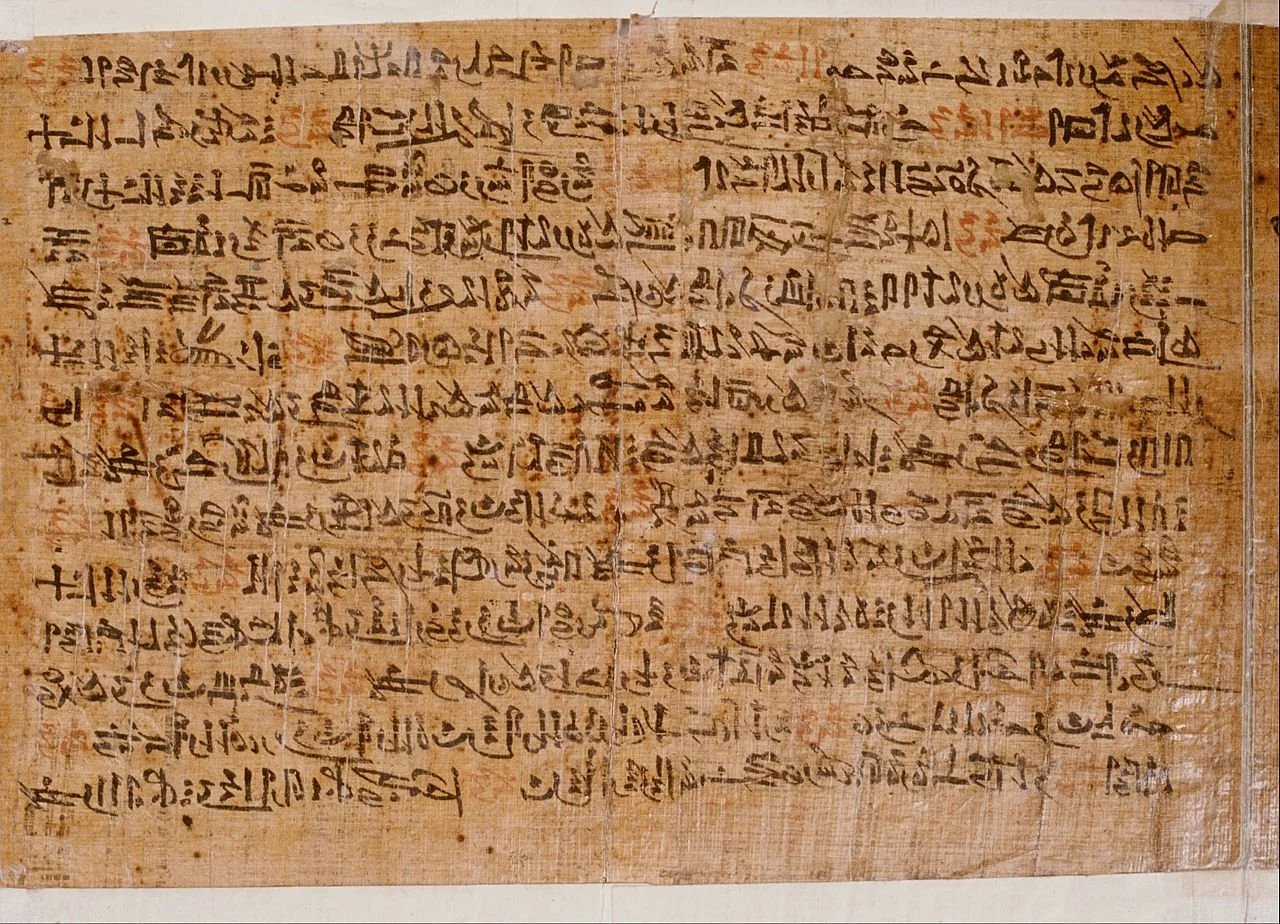
Photo of “Ipuwer Papyrus” at the Leiden Museum. Public domain. Wikimedia Commons.
The historical records of Egypt that have been found say little about the Exodus. This is not surprising as ancient historians were reluctant to keep the memory of devastating defeats and often removed embarrassing accounts. But in 1828, the Leiden Museum in Holland acquired a papyrus which came from the city of Memphis in Egypt. It was written by a scribe named Ipuwer and gives a graphic description of conditions in Egypt at the time of the writing of the papyrus. The copy of the Ipuwer papyrus in the Leiden Museum appears to be a copy of the original. In reading the text, it sounds very much like an echo of the biblical account of Yahweh’s plague judgments on Egypt.
Here is the text:
Nay, but the heart is violent. Plague stalks through the land and blood is everywhere…. Nay, but the river is blood. Does a man drink from it? As a human he rejects it. He thirsts for water…. Nay, but gates, columns and walls are consumed with fire…. Nay but men are few. He that lays his brother in the ground is everywhere…. Nay but the son of the high-born man is no longer to be recognised…. The stranger people from outside are come into Egypt…. Nay, but the corn has perished everywhere. People are stripped of clothing, perfume and oil. Everyone says “there is no more.” The storehouse is bare…. It has come to this. The king has been taken away by poor men.