
The Devotional Journey: Bible Reading 21
Yahweh oversees Jacob’s life
Read Genesis 30:25–43.
As soon as Rachel gave birth to Joseph, Jacob told Laban that he wanted to return home to Canaan. Jacob now had eleven sons and one daughter and had worked for Laban for many years.
Because Yahweh had blessed Jacob in all he did, when Jacob was looking after Laban’s animals, Laban became a very rich man. Laban knew that it was because of Jacob’s God that he had become rich.
Though it appears that Laban acknowledged who Yahweh was, his heart was not loyal to God.(See Genesis 24:31 when years ago, Laban acknowledged that Yahweh had blessed Abraham’s servant who had come seeking a bride for Isaac.) In his daily life, Laban now worshipped idols. Yet, he was happy to benefit from Yahweh’s blessings but he did not make Yahweh his God.
When Laban asked what Jacob wanted for his salary for working for him, Jacob said that he would take:
all the sheep and goats that had spots or specks on them
all the black sheep. This kind of sheep was rare and in general, accounted for only ten percent of the animals.

Why did Jacob ask such a strange thing? Taking only the spotted, speckled and black sheep would make it easy to distinguish his flock from his father-in-law’s. Laban readily agreed because he thought that he would be getting away with paying Jacob very little. But even then, before Jacob could do as he had asked, Laban deviously removed all such animals and gave them to his sons. Then he made his animals and sons take a three-day trek to keep them far away from Jacob! Laban was really trying to make sure he would not need to pay Jacob much at all!
Jacob did something unusual and perhaps superstitious by taking sticks and tearing off the bark so that the sticks would have two colours. Some Bible scholars think that this superstition is like the thinking where if a pregnant woman keeps looking at boys then she will likely have a boy. Or perhaps Jacob knew something of the animals’ behaviour. Whichever the case, we are not sure. But Jacob also cleverly practised selective breeding by getting the stronger, healthier females to mate and therefore produce stronger lambs.
In any case, Yahweh prospered Jacob not because Jacob did these things but because of God’s own promise to him.
Actually, Jacob himself knew that. Later on, he himself said that it was Yahweh who increased his flocks. He knew that God was the One who gave him all that he had. He did not credit it to the sticks nor his clever breeding methods.
Yahweh helped Jacob when Laban was trying to cheat him. God made sure that Jacob was well compensated for all the work he did for Laban. God didn’t allow Laban to succeed in continually cheating Jacob.
We continue to see human striving and manipulation in this account between Laban and Jacob. But we also continue to see God’s control over all that happens.
Yahweh is sovereign over all and He can triumph over any human effort. This is the kind of God we worship. Nothing is out of His control. Let us ponder on this. No matter what mankind does, good or bad, God is watching and can intervene according to His will.

We can go to God in prayer about any situation we are facing.
Those who don’t know Yahweh won’t go to Him in prayer.
But for those of us who do, we rejoice and are thankful that we have a God who has access to all the resources in the world. He controls birth and life, the animal world and all He created. And He watches over us in every detail of our lives.
There is also a caution for us from today’s reading. We note that Laban, though knowing who Yahweh is, also worshipped idols and in fact, didn’t think much of God at all. We ought to examine our own thinking to ensure that we are not mixing ideas about Yahweh, the true God, with false ideas or false superstitions. The only way to know God accurately, is to read and study His Word regularly. Then we would be relying on a clear understanding of Yahweh and not on truth that has been mixed with falsehoods.
The Devotional Journey: Bible Reading 20
The sons of Jacob
Read Genesis 29:15–30:24.
Earlier on, we saw trouble in Isaac and Rebekah’s family when Jacob deceived Esau to gained the birthright. Now Jacob himself was deceived by his uncle, Laban, when Jacob lived with him for 20 years.
Through these events, Yahweh used this challenging period to discipline Jacob as well as grow him. And God also advanced His promised plan of building the nation of Israel from Jacob.
Laban had two daughters, Leah and Rachel. Jacob loved Rachel and wanted to marry her. But in their culture, the groom would have to pay a bride price. That would be about 30-40 shekels of silver. The average worker’s income was one shekel per month. Because Jacob didn’t have money, he and Laban agreed that he would work for seven years to pay the bride price for Rachel.
This was actually a poor deal: working seven years meant Jacob would have earned 84 shekels, more than double the average bride price. Nevertheless, he loved Rachel so much he was not only willing to do that, he felt that the seven years went by quickly.
However, Laban deceived Jacob. On his wedding night, Leah was given to Jacob instead of Rachel!
Leah would have been veiled, so Jacob wouldn’t have been able to see her face. Earlier, Jacob had pretended to be Esau in order to trick his father Isaac. Now, Jacob experienced how it felt to be deceived by Laban: he was intentionally given the “wrong” girl! Jacob must have recognised that he had done the same thing before. So he had to accept it.
After finishing the bridal week with Leah, he also married Rachel. So Jacob had two wives in seven days: Leah at the start of the week and Rachel at the end of that week. But to pay the bride price for Rachel, he now had to work another seven years for Laban.

When God created mankind, marriage was supposed to be between one man and one woman. But we see that mankind perverted it. Even Jacob ended up with two wives!
There are serious consequences when people don’t follow God’s good design. The wives were jealous and competitive. They started a contest of child-bearing, competing for Jacob’s love and recognition. What a terrible situation! But we will see that God was not thwarted. He used this bad situation to bring about good. He created the nation of Israel.
How did this happen?
It started when Jacob favoured Rachel but was cold towards Leah. God saw that Jacob didn’t love Leah as much as Rachel and in His compassion, gave Leah children. Rachel became jealous because she was barren. So she came up with a plan and gave her servant to Jacob as his wife.
When both Leah and Rachel got married, their family had given each of them a servant girl as a wedding gift. This was the custom during that time. One servant girl, Zilpah, belonged to Leah and another, Bilhah, belonged to Rachel. Just as it was earlier, when Jacob’s grandmother, Sarah, had given her servant girl, Hagar, to Abraham as a wife to help her bear a child who would be treated as Sarah’s, Leah and Rachel could choose to do the same.
So both women, aside from trying to have children with Jacob themselves, gave their servants to Jacob to increase the number of children they could count as their own! What a mess! So much heartache, competition and jealousy between the sisters! They even gave their sons names that communicated the struggle they felt. For example, Leah named her first son Reuben, which means “the Lord has seen my misery” as well as “now at last my husband will become attached to me”.
In this reading, 11 sons of Jacob were born. Ultimately, he would have 12 sons and a daughter. And God used all 12 sons to create the nation of Israel.

Through these events, Jacob was learning to submit to Yahweh’s loving hand of discipline. He also grew in faith and character. He had four women in his life and two were actively manipulating him. He received tough lessons on how it feels to be on the receiving end of deception and manipulation.
Sometimes, Yahweh allows people to experience what they themselves have done to others. His discipline on His people can be very ironic. The Bible says that a person will reap what he sows. This means that what one does, one will receive the fitting result.
Ponder about our own lives. Have we been on the receiving end of something nasty or miserable? Have we experienced how it feels to be treated in a certain way?
First, let’s determine not to do to others what we did not like receiving.
Secondly, ask God to reveal if we have ever treated others in this way. See if He impresses some situation or someone onto our hearts. Pray and ask for His forgiveness.
God could make something good (the 12 tribes of Israel) come out of something not good (two wives, two concubines and a miserable family life for all).
Are we or our loved ones in a situation that we would say is “not good”?
Pray and tell God about it and ask for His help. God is able to work His good even in the worst of situations. He is never stuck. Go to Him in prayer.
The Devotional Journey: Bible Reading 19
Yahweh gives Jacob a vision
Read Genesis 28:10–29:14.
Rebekah told Jacob to escape from an angry Esau by going to her brother Laban’s home. And Jacob left in a hurry. It would be an 800 kilometre (500 mile) trek to Haran in Paddan Aram (Genesis 28:6), and he could only rely on the blessing his father said over him.

On the way there, Jacob stopped for the night and slept in the open. While he slept, Yahweh graciously gave Jacob a vision. He saw a ladder or stairway reaching up all the way to heaven. Angels were going up and down the stairway and at the top, there was Yahweh Himself!
The vision showed Jacob that Yahweh was with him. Though he had gone along with his mother’s scheme, God didn’t scold him for what he had done. Instead, Yahweh spoke and reassured Jacob of His continued presence. In the culture of the time, people thought that the false gods they worshipped were only in charge of certain areas and moving away meant leaving the protection of their god. But Yahweh is not like that. He is the true God of all the earth and He would be with His people wherever they were. This would be reassuring to Jacob. It should also be reassuring to us for it shows that God will also be with us wherever we go. He is not limited.
The same God who had cared for his grandfather Abraham and father Isaac, and had made them promises was now passing the same promises to Jacob (the promises of land, descendants and that through the family would come a worldwide blessing). He is a faithful, promise-keeping God.
But as we will also learn in the next few readings, while God did forgive Jacob for how he had schemed and lied, as the God of justice and righteousness, He would also let Jacob suffer the consequences of his actions. (God’s forgiveness doesn’t mean He supernaturally removes the consequences of our actions.)
When Jacob woke from his vision, he immediately started to worship Yahweh. How?
He feared Yahweh, meaning that he recognised that Yahweh is the great Creator-God whose power is without limit. He had the proper respect for God.
He erected a memorial stone as a sign of God giving him a vision at that place. (It is good to make the effort to remember God acting in one’s life.)
He consecrated the stone by pouring oil over it (to consecrate means “to set something apart” as special).
He named the place Bethel, which means the “house of God”.
He made a vow, expressing his faith in God for the first time.
He promised to give God ten percent of all he had.
The vision God gave Jacob had such a great impact on him!

When Jacob finally arrived at his mother’s home region, he met Rachel, his mother’s brother’s daughter. (In other words, she was his cousin. It was still common during this time to marry relatives). He kissed her because the kissing of relatives was the proper way of greeting. He had made it to Laban’s house as his mother had wanted. Rachel and Laban welcomed Jacob immediately. It was customary to show hospitality to one’s family, even to a member they had just met for the first time.
When Jacob encountered God, he naturally and spontaneously started to worship Him. It was the right and good response to the Creator-Ruler-Owner of the universe. Yahweh deserves all honour and worship!
How do we respond to Yahweh when we think of Him?
Is He of any consequence to us?
Is His Word important to us?
Do we ignore Him most of the time?
Or is our heart filled with worship for Him?
Let’s reflect on who God is and on all He has done and thank Him for being all-good and all-loving.
The Devotional Journey: Bible Reading 18
Trouble in Isaac’s family
Read Genesis 27:1–28:9.
There was trouble in Isaac’s family and everyone was at fault.
Isaac was now an old man. From the details in today’s reading, it seemed he was now bedridden (Genesis 27:19). Even though he knew that Yahweh had told Rebekah years ago that the descendants of their eldest son, Esau, would serve the descendants of the younger son, Jacob, Isaac tried to spoil God's plan by blessing Esau. Throughout his life, Isaac had seen God at work but now as a old man, his own human thinking got the better of him and he wanted to bless his favourite son instead of obeying God’s plan.
Esau had previously exchanged his birthright for a bowl of lentil stew. He had showed disdain for the privilege and responsibility, but now it appeared he wanted to wrestle it back by getting his father’s blessing. His heart was never truly with God but he wanted the blessings of God.
Rebekah and Jacob tried to get Yahweh’s blessing through deception. Both of them knew what Yahweh had already decided years ago. But here they were, thinking they could help God out with human scheming. But scheming only ever brings sorrow and causes all kinds of trouble. In their attempt to fool Isaac, they succeeded, but they had to live with the consequences. The relationship between Esau and Jacob relationship completely broke down. And Rebekah would never get to see Jacob again on this earth. Jacob had to flee for his life.

None of them showed any faith in Yahweh or love for each other! Everyone tried to use human means to manipulate the situation to get what they wanted. What a disaster!
However, just as Jacob was about to leave, Isaac did bless him with the blessing that Yahweh had given to Abraham. Isaac finally recognised that the birthright and blessing belonged to Jacob as God had already said. So he told Jacob not to marry any Canaanite women. The Canaanites were a pagan people group who worshipped false gods so it was important that Jacob not get influenced by them. It would now be through Jacob that God would fulfil His promise that Abraham’s descendants would deliver a blessing to the world.

One main problem in this whole messy situation was that Isaac and Rebekah played favourites between their sons. This tore their family apart. Their marriage, which had begun so well, had also deteriorated to the point where they were scheming instead of cooperating together with God.
In our own lives, how are we treating our loved ones or those close to us?
If we are to examine our own words, actions and behaviours, do we think we may be showing favouritism, causing strife and hurting others?
Ask God to reveal to us if we are unintentionally hurting others. Let us be sensitive and loving towards others.
Another thing we can reflect on is how Jacob tried to gain God’s blessings through human means and deceit. He did not pray for God’s help nor did he trust that God would do what He had promised.
Even though he got what he wanted, he ended up with broken relationships with his father and brother and he never got to see his mother again. Jacob lost a lot because he wanted to do things his own way.
Is there something on our hearts that we want to talk to God about or ask God for?
Let us go to God in prayer and determine never to use human means, schemes, deceit or manipulation to get what we want. God wants His people to live trusting Him and loving others.
The Devotional Journey: Bible Reading 17
Yahweh gives Isaac sons
Read Genesis 25:19–34.
Abraham was 138 years old when Sarah died at 127 years old (Genesis 23:1). After her death, Abraham took another wife, named Keturah, and had six sons with her (Genesis 25:1–2). But he knew that the promises Yahweh had made to him were to be fulfilled through Isaac alone for Isaac was the miraculously-born son that God had given Abraham and Sarah.
It was not uncommon for sons to bicker over the father’s inheritance. In order to protect Isaac and possibly also to prevent fighting among his sons, Abraham gave gifts to his other sons and sent them to live elsewhere. Earlier, Yahweh had also told him to send Ishmael away possibly for the same reasons (Genesis 21:8–20). Abraham died when he was 175 years old (Genesis 25:7).
Isaac’s wife, Rebekah, was barren, so he prayed to Yahweh for children. Here we see Isaac’s faith in action. He knew full well that Yahweh had promised his father Abraham many descendants. And Isaac knew he was the son given by promise. So he knew he could ask God for a child. He was actually asking for God to act on His plan. The only thing he didn’t know was God’s timing.
Yahweh answered Isaac’s prayer by allowing the couple to conceive twins. Rebekah’s pregnancy was not easy and she also prayed to God about it. She demonstrated how one could go to God with any concern. And He revealed to her what was happening. He told her that both her children would become great but competing nations. God would work through the younger son’s nation to fulfil the promises He made to Abraham.

Esau was the older son while Jacob was the younger. In natural order, Esau, being the firstborn, would have the birthright. It was the right and privilege of the firstborn son to take on the father’s authority and responsibility when the father was not around or dead. In addition, the firstborn would also inherit a double portion of the father’s property compared to the other sons so that he would have the resources to take care of the extended family.
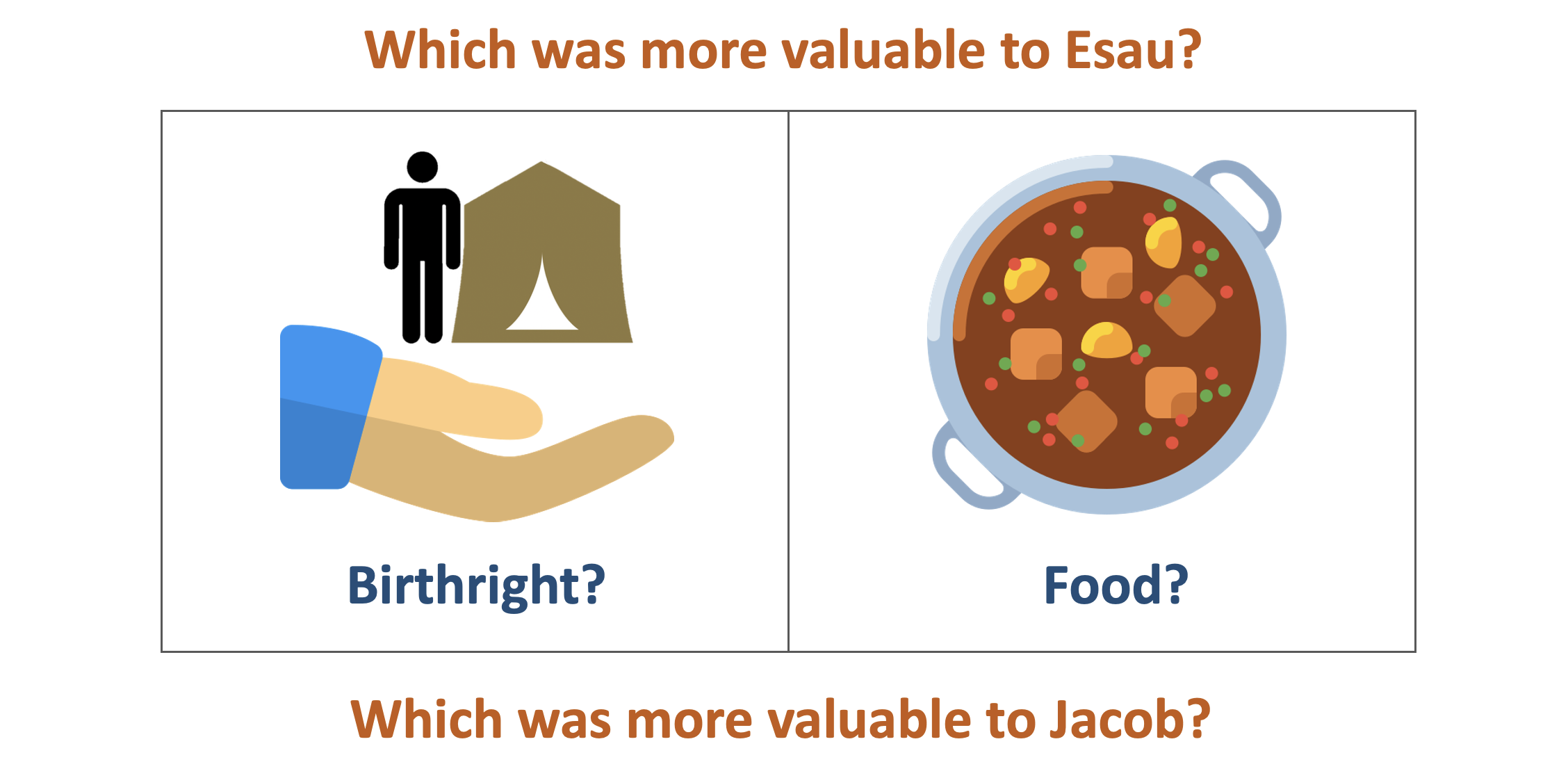
However, Esau despised his birthright. Instead of viewing his privilege and responsibility as valuable and important, Esau treated it with disdain. He had such low regard for his birthright that he was willing to exchange it for food, which he viewed as more important!
Jacob, on the other hand, knew the value of the birthright and he wanted it.
It’s very possible that Jacob knew what God had said to his mother when she was pregnant with the boys. He probably knew how God had already determined to work out the promises to Abraham through him. So Jacob didn’t need to scheme in this way, he just needed to trust God and His timing. (Though Jacob loved God, the Bible records incidents where he schemed to keep himself safe but he really didn’t need to behave in that way since God was in charge.)
As we reflect on today’s reading, what would we say is truly valuable in our life? Do we value God’s plans for our life? Do we trust His plans for us? Or do we value our own desires? Esau valued food as more important than his birthright. Jacob valued the birthright as he saw it was part of God’s plan for Abraham’s family.
In our lives, what do we value as important?
Spend some time thinking this through.
After that, consider what God would think about our list of priorities. What do we think are His priorities for us? Do our values and priorities align with His?
Then think about how we are allocating our time, effort and resources.
Do our daily decisions reflect the priorities we have?
Pray and talk to God about this. (And consider how God responded to the prayers of Isaac and Rebekah. He is a God who responds!)
The Devotional Journey: Bible Reading 16
Yahweh provides a wife for Isaac
Read Genesis 24:1–67.
This is the historical account of how Yahweh chose a bride for Isaac, who was now an adult. Interestingly, unlike some other accounts in Genesis, there is no special word from Yahweh, no miracles and no supernatural signs. Instead, we see God deliberately working “behind the scenes”. This account shows us how God often works in the lives of believers, quietly guiding and answering prayers.
God led Abraham to ask his chief servant, Eliezer (see Genesis 15:2), to find a wife for Isaac from among Abraham’s own relatives, and not from among the Canaanites, who worshipped idols. Abraham wanted to find a bride for his son who believed in Yahweh, the true God. Abraham didn’t want Isaac to go himself because he knew that God wanted the family to remain in the land that God had given them. So Abraham sent his chief servant on this mission.
Following the custom of the time, Eliezer put his hand under Abraham’s thigh, to show he was a making a serious promise. If he did not do what Abraham asked, Abraham’s children could punish him for his unfaithfulness.
The journey north to where Abraham’s family lived was a two-week journey, about 800 kilometres (500 miles). Eliezer had to take enough provisions for the long trip. He needed ten camels and accompanying camel drivers to go with him.

When Eliezer arrived at the town where Abraham’s family lived, he prayed to Yahweh to show him a woman with a heart for others. Specifically, he asked God to lead him to a woman who was willing to go out of her way to provide water for a stranger and his ten thirsty camels. Knowing that the average camel could drink about 100 litres of water at one time, Eliezer was asking for an exceptional woman! But he knew the importance of finding a woman with the right heart and so he asked Yahweh for help.
Yahweh worked quietly on this occasion. This is how the life of faith often works. Through prayer, we bring our concerns and requests to God, we move in obedience to His Word, and we look for the evidence of God’s working. This was exactly what Eliezer was doing. He was following the example of his master Abraham.
Over the years, by observing Abraham, Eliezer had learnt to have his own faith in Yahweh. What are the people in our lives learning about God from watching us?
When Rebekah showed up to draw water, we see that she was exceptionally generous. Not only did she provide water for Eliezer, she volunteered to get water for the camels. Imagine the number of trips to the well that she had to take to satisfy the animals. Rebekah demonstrated true kindness to strangers: first to Eliezer and then to his camels. This incident showed her character—her kindness and willingness to work hard.

At Rebekah’s home, Eliezer related to her family what God had been doing in Abraham’s life. He was not shy or afraid to talk about Yahweh and His goodness. We can learn from him how not to be shy but to share about the goodness of God with wisdom and tact.
Rebekah’s family recognised that Eliezer was sent by Yahweh and her brother, Laban, acted as the chief negotiator in the marriage contract. The family was willing to obey God’s will in this matter. And Rebekah also chose to be obedient to God’s plan.
Throughout this incident, we see God directing and working with the different people, yet allowing each of them to make their own decisions of what they would do. Ultimately, God’s sovereign will was accomplished while all the individuals involved made genuine choices.
This account is so helpful for Christians today.
We see faith in God.
We see praying and seeking God’s will.
And we see God quietly directing and guiding, so that eventually, Rebekah became Isaac’s wife.
This should encourage us as it shows how our typical daily life with God often unfolds. Even when there are no dramatic supernatural signs, God is working behind the scenes using our faith and prayers to direct us.
Let’s thank God for His provision even in our everyday life, in big and small decisions. He is ever watching and taking care of His children. He is involved in the lives of His people.
One more point to note is how Isaac took Rebekah as his wife and loved her. Isaac loved the one he married. He didn’t marry the one he loved. Love is also a decision.
Do we choose to love the people God has given to us like our parents, siblings, relatives, spouses, children, classmates, neighbours or coworkers? Do we struggle with loving some of them? Let’s pray, sharing with God our challenges and asking Him to help us love the ones in our lives.
The Devotional Journey: Bible Reading 15
Will Abraham trust Yahweh?
Read Genesis 22:1–24.
Yahweh asked Abraham to do something very shocking and unusual. He told Abraham to sacrifice his son, Isaac. This meant to place Isaac on an altar and kill him as an offering to God. This was a startling instruction to receive from Yahweh.
Additionally, it was also shocking because after the global Flood, Yahweh had put in place capital punishment for murder. He told Noah how much He valued the lives of all people as every human was made in His image. And so, He did not want anyone to be murdered.

What was also surprising was that Yahweh had promised Abraham a son and through this miraculously born son, He would fulfil the promises He had made to Abraham. But now God told Abraham to kill Isaac, his teenage son. What was going on?

The Bible said Yahweh did this to test Abraham. How much did Abraham trust God? Abraham already trusted God for salvation. But how much did he trust God in daily life? For this to be a real test, it had to be something difficult for Abraham to do. Yet, we see that Abraham obeyed immediately and without protest. Abraham passed the test! He showed He had great faith in God even when God asked for something so shocking. Abraham had years of walking with God and He knew God’s character, that He was always good, just and in control.
In Hebrews 11:17–19, we are told more of Abraham’s thinking during this incident.
Hebrews 11:17–19
[17] It was by faith that Abraham offered Isaac as a sacrifice when God was testing him. Abraham, who had received God’s promises, was ready to sacrifice his only son, Isaac, [18] even though God had told him, “Isaac is the son through whom your descendants will be counted.” [19] Abraham reasoned that if Isaac died, God was able to bring him back to life again. And in a sense, Abraham did receive his son back from the dead.
Abraham knew Yahweh and His power. He knew God had miraculously provided Isaac and He intended to provide many descendants through Isaac. So if Isaac were to die as a sacrifice, Abraham knew God was more than capable of bringing Isaac back to life so that His promises would be fulfilled. What understanding and trust Abraham had in Yahweh! When we have a right understanding of God, we can also have peace even when God is asking us to do something difficult. We trust in God’s character and can therefore obey.
Isaac also had great faith. He was a teenager at this time. He was strong enough to carry all the wood for the sacrifice. If he wanted to, he could have broken free from his aged father. But he didn't. Instead, he allowed himself to be tied up and placed on the altar. He too, trusted Yahweh.
But Abraham did not have to sacrifice Isaac in the end because once he showed He had faith in Yahweh, God called out to him not to harm Isaac. Instead, God provided a ram as a substitute for Abraham to sacrifice. Isaac lived because the ram died in his place.

Some people might wonder how God could have been so cruel to put Abraham through such a heart-wrenching test. Yet, let’s compare Abraham as a father and Yahweh as a Father.
Yahweh saved the life of Abraham’s precious son. But Yahweh Himself gave up the life of His precious son, Jesus, for all mankind.
Abraham’s son, Isaac, did not die that day because God provided a ram for the sacrifice. But Yahweh’s Son, Jesus, died. There was no ram substitute for Him because He was the necessary substitute Lamb for all mankind.

Let’s thank God for loving all of us so much that He put Himself through the heartache of seeing His only Son die on the cross to pay for our sins. He willingly did this so that we and all our believing loved ones won’t need to suffer eternal death and separation from God.
Let us never take God’s great love and Jesus’ great sacrifice for granted. Instead, let our hearts and our lips overflow with thanksgiving to Yahweh.
The Devotional Journey: Bible Reading 14
Yahweh provides the promised son
Read Genesis 21:1–34.
We finally read about the birth of Isaac. Yahweh’s promise of a son for Abraham and Sarah was finally fulfilled! God supernaturally provided a son even though Sarah was long past her childbearing years. There was no mistaking God’s hand in this.
As instructed, they named the son Isaac, which means “he laughs”. Originally, God had told Abraham to give the promised son this name because Abraham had laughed in disbelief when God had announced Isaac’s birth. So his name would be a constant reminder of that faithless moment in their lives.
But now Sarah brought fresh meaning to her son’s name. She said that everyone who sees Isaac will laugh in joy with her for gaining a son in her old age. Even when her faith was weak, it did not impact God’s ability to deliver on His promises!
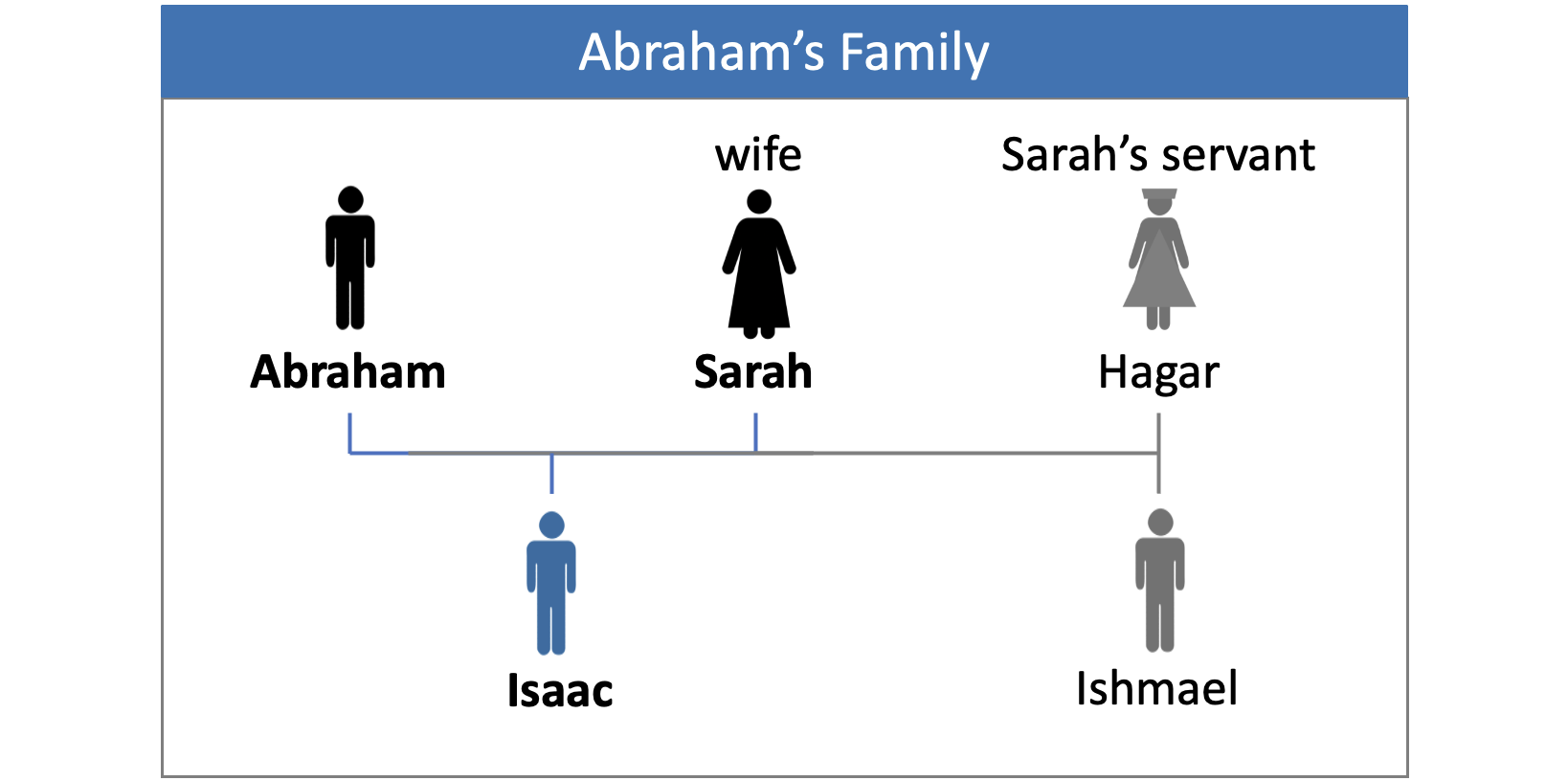
But not every one was happy. Ishmael, now 16 or 17 years old, mocked Isaac. As a result, Sarah wanted to get rid of Ishmael and Hagar. This caused distress to the whole family. This was another reminder of the consequences of sin and not waiting for God to fulfil His plans according to His way and at His timing. (Recall that having a child through Hagar had been Sarah’s idea.)
But God allowed Sarah to send Hagar and Ishmael away. This was because Ishmael was not part of God’s overall plan to work through the promised son of Abraham. But Abraham was concerned for Ishmael and so God promised Abraham that He would take care of Ishmael. After all, Ishmael was Abraham’s son.
Yahweh told Abraham that from Ishmael would also come a nation of people. We again see how gentle and kind God is to care for Hagar and Ishmael even though they were sent away. In fact, Hagar’s life turned out this way due to the poor choices made by Sarah and Abraham years before. But Yahweh is sovereign, He is all-powerful. He never loses control of the world. He is able to rescue a situation despite the poor choices of people.

The people living in the land could see that Yahweh was with Abraham and was blessing him. Two of them, Abimelech and his army commander Phicol, both Philistines (another people group) came to see Abraham to talk about making a contract between them. They wanted to make sure that there would be peace between Abraham and them. This contract allowed Abraham to settle in the land in peace. Abraham named the area Beersheba. (This is an example of a person-to-person contract in the Bible.)
In today’s reading, we see that Yahweh looked after Abraham, Hagar, Ishmael as well as Abimelech, who was happy to make peace with Abraham.
When God made Abraham promises, He not just fulfilled them, He continued caring for and looking after Abraham and those around him.
God wants us to know what kind of a divine Person He is. Is this a God whom you can trust? What do you think? Tell God how you feel about Him today based on what you have read about His character.
Archaeological Note
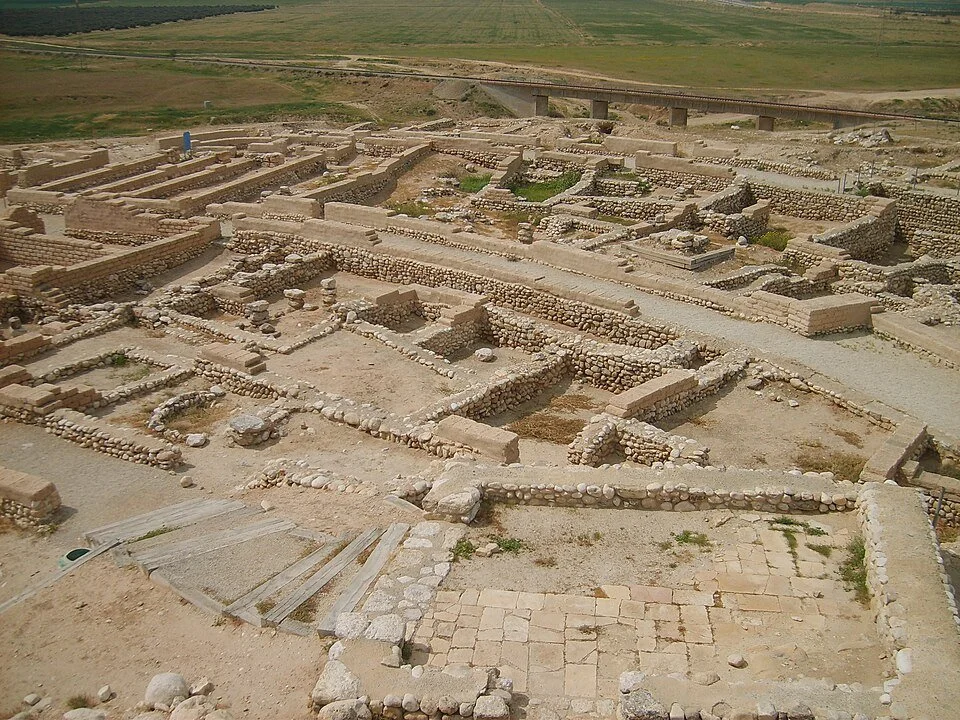
Tel Be’er Sheva excavations. Photo by gugganij, CC BY-SA 3.0, Wikimedia Commons.
Beersheba is 48 miles (77 km) southwest of Jerusalem. Abraham and Isaac both settled there for part of their lives (Genesis 21:31–34, 26:23–33). Beginning in 1969, the ruins of the small city were excavated by Yohanan Aharoni for the Institute of Archaeology of Tel Aviv University and the remains of many wells have been found. Today, the modern city is just one mile west of the archaeological site.
The Devotional Journey: Bible Reading 13
Yahweh judges two wicked cities
Read Genesis 18:16–19:38.
Today’s reading is full of action. We read about a negotiation between Yahweh and Abraham, supernatural happenings, homosexuality, fierce judgment and incest.
After having lunch with Abraham, Yahweh first sent ahead the two angels who were with Him while He stayed on with Abraham. He told Abraham that the complaints about the evil people in two cities, Sodom and Gomorrah, were so great that He was going to deal with the people of the cities.
Actually, Yahweh did not need to tell Abraham any of this. After all, He is the Creator-Owner-Ruler of the universe and He can do anything He wants without reporting it to anyone. But like an intimate friend, God revealed His heart to Abraham. And He invited and allowed Abraham to speak to Him about the situation.

This is the kind of close, personal relationship God wants to have with each of us as well, not just with Abraham. God wants to reveal things to us. He wants to teach us more about Himself. And He wants to hear our thoughts about what He tells us! This kind of personal interaction results in us growing in our relationship and understanding of Him. It shows how God wants us to talk to Him (that is, pray) about our lives and the lives of others.

Meanwhile, the two angels had gone on ahead to Sodom, where Lot, Abraham’s nephew now lived. Yahweh knew that Abraham when negotiating with Him, he was thinking of Lot and his family in the city. So the angels went to look for Lot.
But the city was full of wickedness and homosexual activity. The men in the city demanded to have sex with the two angels, whom they thought were human visitors. Some people today think that homosexual acts are something recent. But we see that the Bible records people engaging in such acts right from the early days of the world.
Lot’s attempt to protect the angelic visitors reflected the hosting culture of the time, where as the host, he had to protect his guests. How he risked his safety showed his righteous character. But how he went as far as to offer his daughters to the men of the city in a foolish attempt to protect his guests showed the influence of Sodom’s wicked culture on him.
The angels supernaturally struck the men with blindness and told Lot and his family to get out of the city. Notice how the angels insisted that Lot get out of the city before God judged it. Lot believed in Yahweh, and God would not destroy the righteous along with the wicked. We see that Lot was probably the only one who was righteous in all of Sodom. His soon-to-be sons-in-laws and even his wife, were reluctant to leave the wicked city.

But we see that having lived in such a wicked city, Lot’s two daughters had become influenced by the culture of Sodom. Even though God saved their lives, they didn’t have God’s morals and values. Now, living alone with Lot, they decided that the only way to have descendants was to make their father drunk and have sex with him in order to become pregnant. God was showing how the thinking of Lot’s daughters had become so corrupted and evil. The pagan culture they lived in had shaped the way they thought. This warns us that we have to be careful about the influences in our lives.
Today, we live in a world that is very challenging. But we can be encouraged with two truths.
First, God wants to reveal things to us and relate to us as personally as He did with Abraham. In fact, He planned it such that we have His written Word, the Bible, with us all the time! We allow Him to reveal things to us when we read the Bible. And He hears what we are thinking when we pray to Him. It’s such a privilege that Yahweh wants to have such a close relationship with us! Let us be diligent in reading God’s Word and praying to Him about what we’ve read, about our lives and for the lives of others.
Second, God will always save the righteous. It seems that Lot was the only righteous person living in those cities. And God ensured that He was safe before sending the judgment meant for the evil people of the cities. We can be certain that because we have put our faith in Him, that He has saved us and will ensure we will be with Him for all eternity. Let us thank God for that today.
The Devotional Journey: Bible Reading 12
Abram and Sarai take matters into their own hands
Read Genesis 16:1–16.
Many years earlier, Yahweh had promised that Abram and Sarai would have a son. And now, 13 years after Ishmael was born through Hagar, God appeared to Abram again to tell him that in the next year, Sarai and he would have their own biological son.
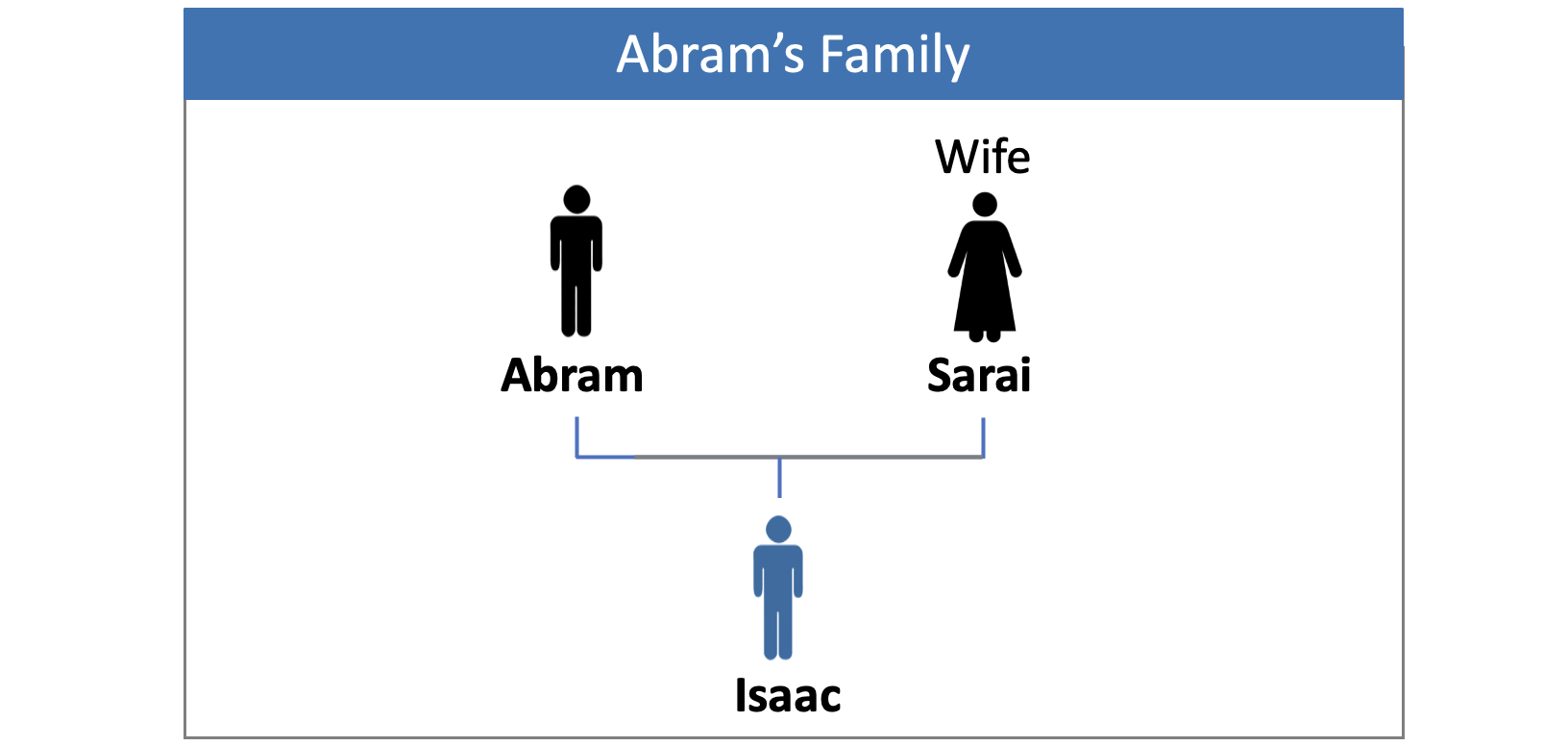
Abram laughed to himself in disbelief when he heard this, for he was thinking in terms of human limitations. At this point, he was already 99 years old and Sarai was 90; she was way past menopause. Humanly speaking, there was no way that Sarai could conceive a child!
He tried to convince Yahweh to work His plan through Ishmael but God did not accept Abram’s idea. He was showing Abram and Sarai once more just who He is. He was going to do something supernatural and miraculous for them. Nothing is impossible with God. Abram should have realised who was speaking to him.
So Yahweh told Abram that when their son was born, they were to name him Isaac. This Hebrew name means “He laughs”. It was like a gentle rebuke to Abram’s lack of faith in God. Every time he called his son, Abram would be reminded of this moment when he didn’t trust God.
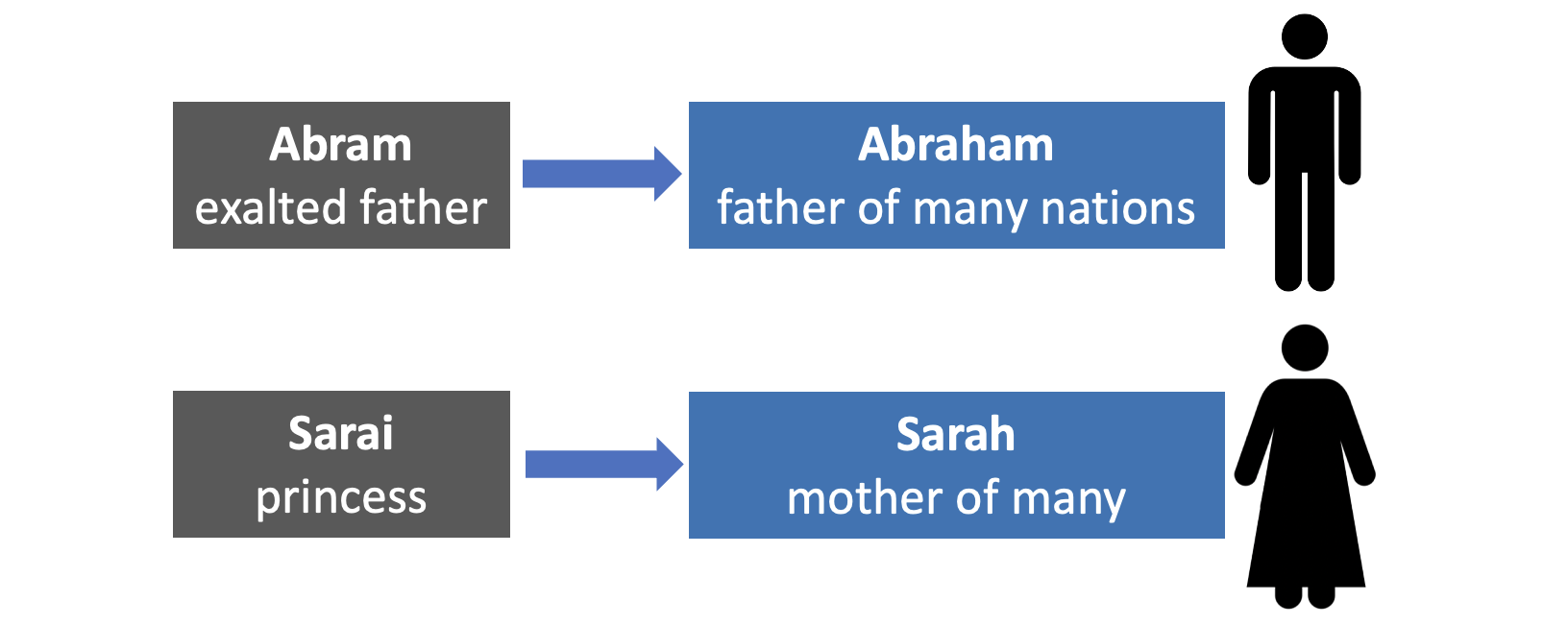
In addition, Yahweh also changed Abram’s and Sarai’s names. He said that Abram would now be called “Abraham”, which meant “father of many nations”. And Sarai’s name would now be “Sarah”, which meant “mother of many”. He wanted their very names to reflect His promise to Abram that he would have many descendants. Abraham and Sarah would have to use their new names by faith.
Yahweh also instructed Abraham to circumcise every male in his household. Circumcision was the procedure of cutting away the foreskin of the male organ. Why did God ask for this? He wanted all of Abraham’s male descendants to have a visible, outward sign that they were part of the contract that God had made with Abraham. God wanted them to take seriously their responsibility to raise godly children so that as a nation, they could bring the message of salvation to the whole world.
Some people wonder why God instructed that circumcision of newborn boys be performed on the eighth day. Modern medical science has discovered that on the eighth day, a baby’s level of prothrombin, a protein that helps in blood clotting, is at its highest level in the baby. This is important to prevent the baby from bleeding to death from the procedure of circumcision.
Even though God did not explain this to Abraham, He had designed and created all mankind and so He knows best how to take care of mankind! Isn’t that amazing? God really cares about even the smallest details of mankind’s needs.

Think about how kind God is as we ponder this incident. God was going to keep His promise that Abram and Sarai would have their own biological son even though the couple couldn’t believe it. Yahweh was showing them that He really is God. He can do anything. And He keeps all His promises, fulfilling them at the right time. This is the God whom we worship.
Do you feel that a problem in your life is humanly impossible to overcome? Perhaps you are right… humanly speaking, it is impossible. But know that your God is not limited. Nothing is impossible with Him.
Open your heart to share your anxieties and concerns with Him. Hand over your situation to Him. He is Creator-Owner-Ruler God of the universe. He has all the resources available to help you.
Speak to Him in prayer and allow Him to share His thoughts with you about your situation. Just as He cares about the smallest details of life (like performing circumcision on the baby’s eighth day), He cares for every small detail in your life. With every problem, you have an opportunity to experience God working in your life.
The Devotional Journey: Bible Reading 11
Abram and Sarai take matters into their own hands
Read Genesis 16:1–16.
In today’s reading, we see where the Arabs came from. Yahweh had told Abram that he would have a son. But after waiting 10 years, Sarai, Abram’s wife, grew impatient. Bearing children in their culture was very important as it ensured the continuity of the family. In Abram’s situation, it was even more important as having many descendants was one of Yahweh’s covenant promises to him. But he still had no children after all this time.
And so, Sarai thought of a solution. Following the acceptable custom of the times (though not God’s idea at all), Sarai gave her maid, Hagar, to her husband as a wife. If Abram were able to have a child with Hagar, the child would be considered Sarai’s because Hagar was her servant.
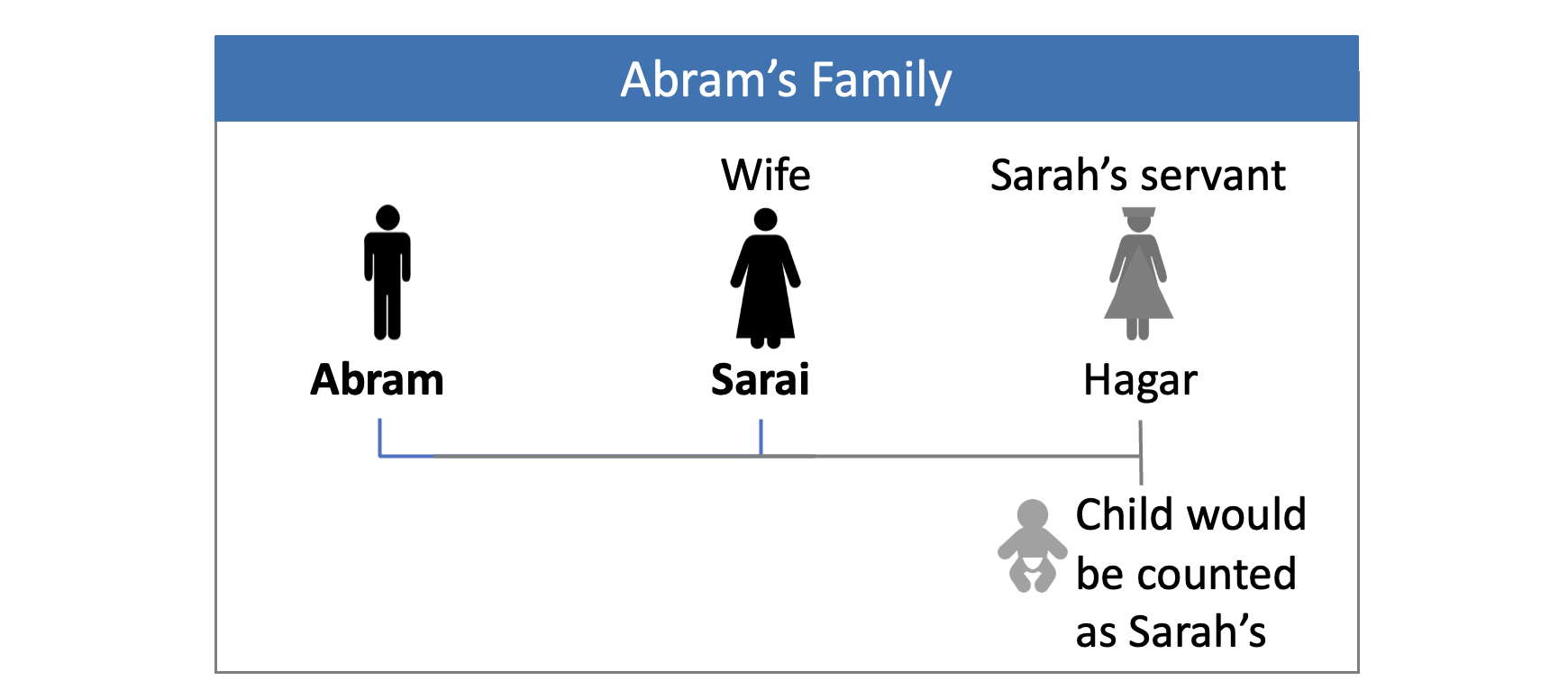
Once Hagar became pregnant, there was conflict between the two women. And Hagar ran away from Sarai who had become abusive towards her.
Yahweh heard and also saw Hagar in her pain and suffering, and He was incredibly gentle to her. He approached Hagar and comforted her. God told Hagar to name her child “Ishmael”, which means “God hears”. He had heard Hagar’s misery. And Hagar called God “the One who sees me”.

But notice God called Hagar “Sarai’s servant”. He did not recognise her as Abram’s wife even though Sarai had given Hagar to Abram. In God’s eyes, Sarai was Abram’s wife.
Actually, Yahweh also heard the cry of Abram’s and Sarai’s hearts for a child. If only they had cried out to Him instead of been impatient.
Ishmael became the ancestor of a great tribe of wild, hostile people living in the Arabian desert. And down through history, they have been hostile towards the Jews, who were also descendants of Abraham through his yet-to-be-born son, Isaac.
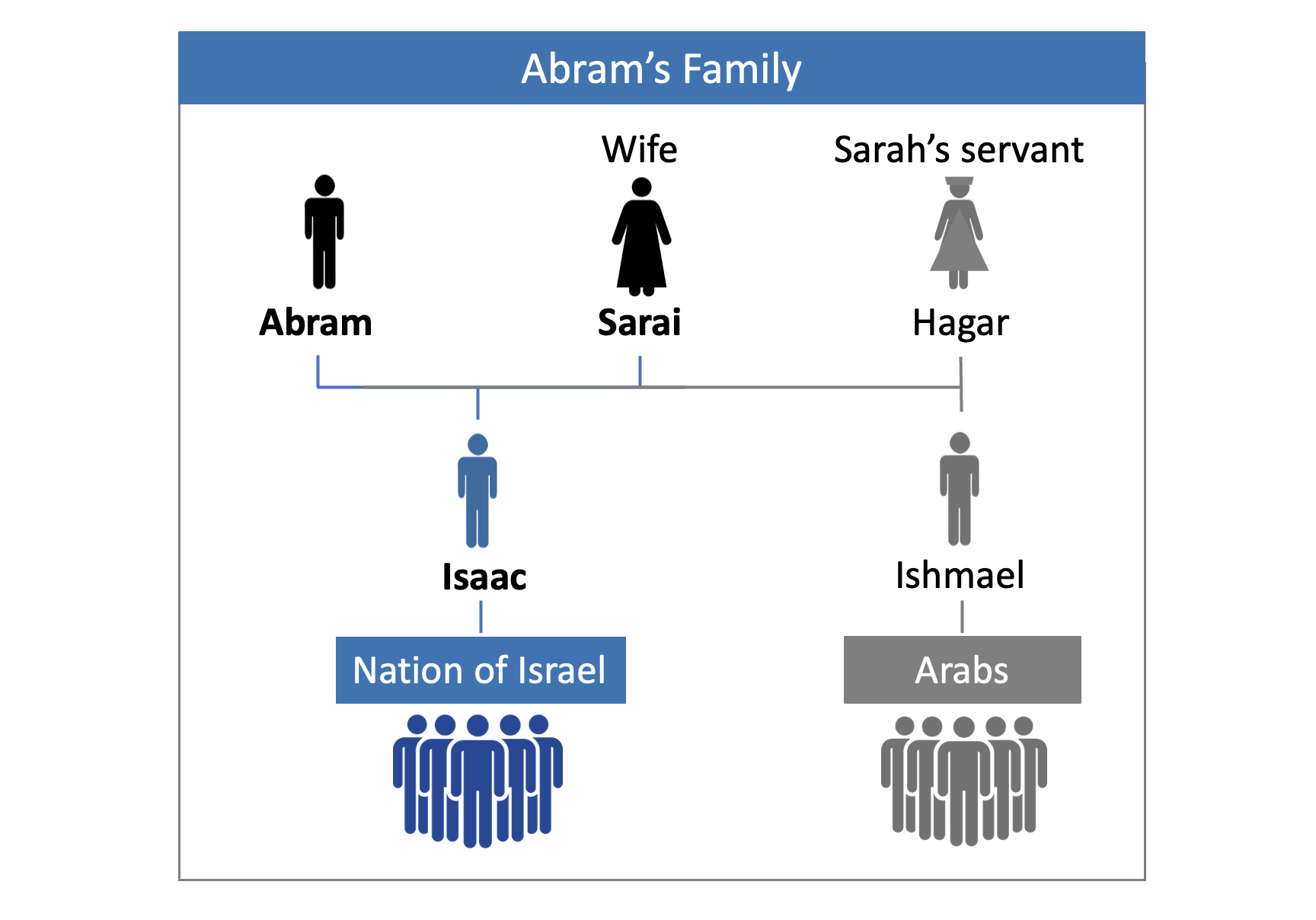
Abram and Sarai were impatient and took matters into their own hands. They failed to trust that God would give them a child who would be their biological child. Their human attempt at getting a child led to trouble. Till today, the Jews and Arabs (Ishmael’s descendants) are hostile towards each other.
What could Abram and Sarai have done differently?
They could have been patient, trusting that God was waiting for the right time to fulfil His promise.
They could have cried to God, as Hagar did. God showed that He heard Hagar’s cry. He would have also heard Abram and Sarai if they had cried to Him in their sorrow while waiting for their promised child.
When Yahweh makes a promise, He will fulfil it, but at His timing. His track record as written in the Bible shows that He is not flippant or casual about His words and promises. He is always serious about His words and He means what He says.
Often, when we try to help God out, we tend to make a mess of things. It’s hard to be patient when God’s timing doesn’t suit our liking. But we need to recognise that God is never slow or late. And He is never in a hurry. His timing is always perfect.
Part of the wait is the opportunity to learn patience. And we certainly need to practise patience while we wait for God to fulfil what He said He will do.
Are you going through any sorrow or challenge? God hears and sees you. Talk to Him about what is heavy on your heart. And wait expectantly for how He will respond. He is a God who hears you, sees you and loves you.
The Devotional Journey: Bible Reading 10
Yahweh makes a covenant with Abraham
Read Genesis 15:1–21.
In Genesis 14, Abram had rescued Lot who had been captured when he was caught up in the midst of a tribal battle between two warring factions, with four kings fighting against five. Perhaps Abraham was concerned there would be a counterattack for here in Genesis 15, Yahweh reassured Abram that He would continue to protect Abram and provide abundantly for him. But Abram pointed out that He remained childless. Whatever wealth God blessed Abram with would not benefit his family since he still had no children! Instead, the wealth would be passed to Eliezer, his chief servant, when he died.
But Yahweh reassured Abram that He would provide a son as He had promised. And to prove He was very serious about this, God instructed Abram to bring a set of animals and cut them in half. Yahweh was going to sign a contract, or covenant, with Abram, by following the common custom of the time. God asked Abram to cut the animals in half (but not the birds as they were too small) and then to arrange them over a trench so that the animals’ blood flowed into the trench. Then the parties of the contract would sign it by walking in the blood, between the animal halves.
The oath they were making was this: “May I also be cut in half like these animals if I fail to keep my promises in this contract.”

In this case, the promises were the ones Yahweh had made to Abram of land, descendants and that his family would be a worldwide blessing to all the nations. Only God “walked” between the animal halves by sending a smoking firepot and flaming torch to represent His glory down the trench. Abram didn’t move as Yahweh had put him into a deep sleep. But in a vision, Abram saw God “sign” this contract.
Yahweh was officially promising to fulfil His promises to Abram through a formal contract. God was putting Himself under a curse if He failed to deliver. God wanted Abram to be very confident that He would fulfil all the promises, particularly the one about having descendants.

What kind of God is this who would inconvenience Himself by placing Himself under contract? He is the God who wants people to know Him and His character, and by knowing Him well, to be able to trust all His words and promises. That’s why He was willing to let His actions be monitored through a contract.
This contract that Yahweh signed has become known as the Abrahamic Covenant. It is called an unconditional contract because only Yahweh signed it, meaning He is the only One with promises to fulfil. Yahweh placed no conditions on Abram and his descendants to do anything or meet any criteria before He would fulfil the covenant promises. This was very reassuring for it meant that the promises of the covenant would not depend on Abram or his descendants’ behaviour.

This covenant was very important, not just for Abram, but for the whole world too. Why? Because, God had promised to deliver a worldwide blessing through Abram and his family. We will see when God reveals more, that this worldwide blessing includes the Saviour of the world, Jesus, who would come as a descendant of Abram. So it is critical that Yahweh’s covenant promises can be relied upon because all of mankind is dependent on God fulfilling His plan for the world.
How well do we know God? Do we know what His character is like? Do we know if He can be trusted? For example, Jesus says in John 6:47, “I tell you the truth, anyone who believes has eternal life.” Are we able to be believe His words?
God wants us to have confident answers to these questions, so He recorded His historical actions and words so we can get to know Him well. When we read His Word carefully and learn about Him, we will be able to trust Him and the promises He makes to us. So let’s strive to get to know God better through His Word.
The Devotional Journey: Bible Reading 9
Abram’s faith in Yahweh allows him to be generous to Lot
Read Genesis 13:1–18.
At one point, there was a severe famine in the land where Abram lived, so he moved to Egypt (see Genesis 12:10–20). But now in today's passage, he has moved back to the land of Canaan, which Yahweh had given him. His nephew, Lot, moved back with him as well. At this time, there were still other people groups living in the land.

Abram and Lot were wealthy before the famine and now, leaving Egypt, they came back with even greater wealth. One portion of their wealth was livestock.
Because both Abram and Lot had so many animals and they stayed together, their herdsmen quarrelled over the pastureland and water for the animals. This gives us an idea of how many animals they both had!

Now, Yahweh had promised the land to Abram. And Abram was the uncle of Lot. He could have taken charge and told Lot what to do, but he did not. Rather, Abram wanted to be a peacemaker.
Abram generously asked Lot to chose the land he wanted and he would go wherever Lot did not choose. How could Abram be so magnanimous? Because he had learnt to trust God. He knew Yahweh was a promise keeper. He knew Yahweh would be able to provide for him, his flocks and herds, and his herdsmen. And that’s why instead of exercising his rights as the senior family member, Abram let Lot choose.
Lot, on the other hand, only trusted what his eyes could see. He could have deferred to his uncle, asking his uncle to decide. Instead, he looked out over the fertile plains of the Jordan Valley and thought that was the best land for the growth of his livestock and wealth. And that’s what he chose. When he had the opportunity, he took.
After Lot left, Yahweh spoke to Abram. First, He told Abram to look.
“I am giving you all this land, as far as you can see.”
Abram wasn’t taking; rather it was Yahweh who was giving.
Second, Yahweh told Abram to walk.
“Go and walk through the land in every direction, for I am giving it to you.”
How remarkable! Lot acted in self-interest. But Abram acted in faith. And Yahweh responded to Abram’s faith by reaffirming His promises to Abram.
Abram, who had faith in Yahweh and His promises, did not feel it was necessary for him to fight with Lot or be greedy, anxious or selfish. He trusted that because God had promised him the land, he didn’t need to guard it jealously or selfishly. He unselfishly trusted that God would keep His promise in His way and at His time. He knew that it would not be by his own human scheming that he and his descendants would get the land.

This is what faith in God looks like. When God makes promises, believers in Him do not need to use manipulation, human scheming or sly plots. God is a promise maker and promise keeper. Abram could be generous because he was secure in God’s promises towards him. We can see that his faith in Yahweh guided how he lived and how he made important decisions.
Today, many families fight over money, property, land and possessions. In our relationships with others, let’s not live like Lot, whose heart was focused on wealth. Rather, let’s have Abram’s attitude of being a peacemaker, of being generous, of focusing on pleasing God.
Let’s ask God today to help us have a heart attitude that would be pleasing to Him.
The Devotional Journey: Bible Reading 8
Yahweh chooses Abram
Read Genesis 11:27–12:9.
In today’s reading, we’ll look at three other books of the Bible to get a fuller picture of what Yahweh is doing with Abram (whom God later renamed Abraham). Though we are following the history of Genesis, additional information about Abram is found in later books of the Bible. So we will read three additional sets of verses.
In Genesis 11:27–32, we are introduced to a man named Terah and his family. The family worshipped other gods. We learn this from the book of Joshua.
Joshua 24:2
Joshua said to the people, “This is what the Lord, the God of Israel, says: Long ago your ancestors, including Terah, the father of Abraham and Nahor, lived beyond the Euphrates River, and they worshiped other gods.
We are also told that Terah’s family lived in Ur and then later moved to a place called Haran.

Why did they move from Ur to Haran? Genesis 12:1–9 tells us what happened. While they were in Ur, God spoke to Terah’s son, Abram. Abram was 75 years old, prosperous and very established.
We know that the initial information about God’s rescue plan, His gospel, had been told to Adam and Eve—that the promised offspring of the woman (the “seed” of the woman) would crush Satan and deal with the problem of sin (Genesis 3:15). This information had been passed down by Adam and Eve to later generations.

And we know God also revealed more information as time past because the New Testament tells us that Abram knew more about Yahweh’s plan.
The New Testament book of Hebrews tells us the following.
Hebrews 11:8–10
[8] It was by faith that Abraham obeyed when God called him to leave home and go to another land that God would give him as his inheritance. He went without knowing where he was going. [9] And even when he reached the land God promised him, he lived there by faith—for he was like a foreigner, living in tents. And so did Isaac and Jacob, who inherited the same promise. [10] Abraham was confidently looking forward to a city with eternal foundations, a city designed and built by God.
Hebrews tells us Abram knew from God about a great city that Yahweh Himself would build for believers.
But here in Genesis 12, all we are told is that Yahweh asked Abram to move out of Ur. And He also made Abram three very great promises: (i) his family would be given physical land; (ii) he would have many descendants; and (iii) God would provide a worldwide blessing through his family.

Abram chose to believe all the information he had about Yahweh—the gospel information available at the time and the personal instructions that Yahweh gave to him. Abram obediently left Ur. The family first moved to Haran and after his father Terah died there, Abram went on to the land of Canaan. There, at a place called Shechem, Yahweh appeared to Abram and told him that this was the land He was giving to Abram’s descendants (Genesis 12:7).

How did Abram respond? He built an altar right there in Shechem to worship Yahweh. And when he pitched his tent at another location east of Bethel, he also built an altar there to worship Yahweh.
Abram believed Yahweh and obeyed His instructions.
In the Bible, Abram is used as the picture of what faith, or trust, or belief in God looks like. We know this because the New Testament uses him as the example of faith in God.
Romans 4:22–24
[22] And because of Abraham’s faith, God counted him as righteous. [23] And when God counted him as righteous, it wasn’t just for Abraham’s benefit. It was recorded [24] for our benefit, too, assuring us that God will also count us as righteous if we believe in him, the one who raised Jesus our Lord from the dead.
Because Abram believed what Yahweh promised, Abram acted. And besides responding in faith, Abram also responded by worshipping Yahweh.
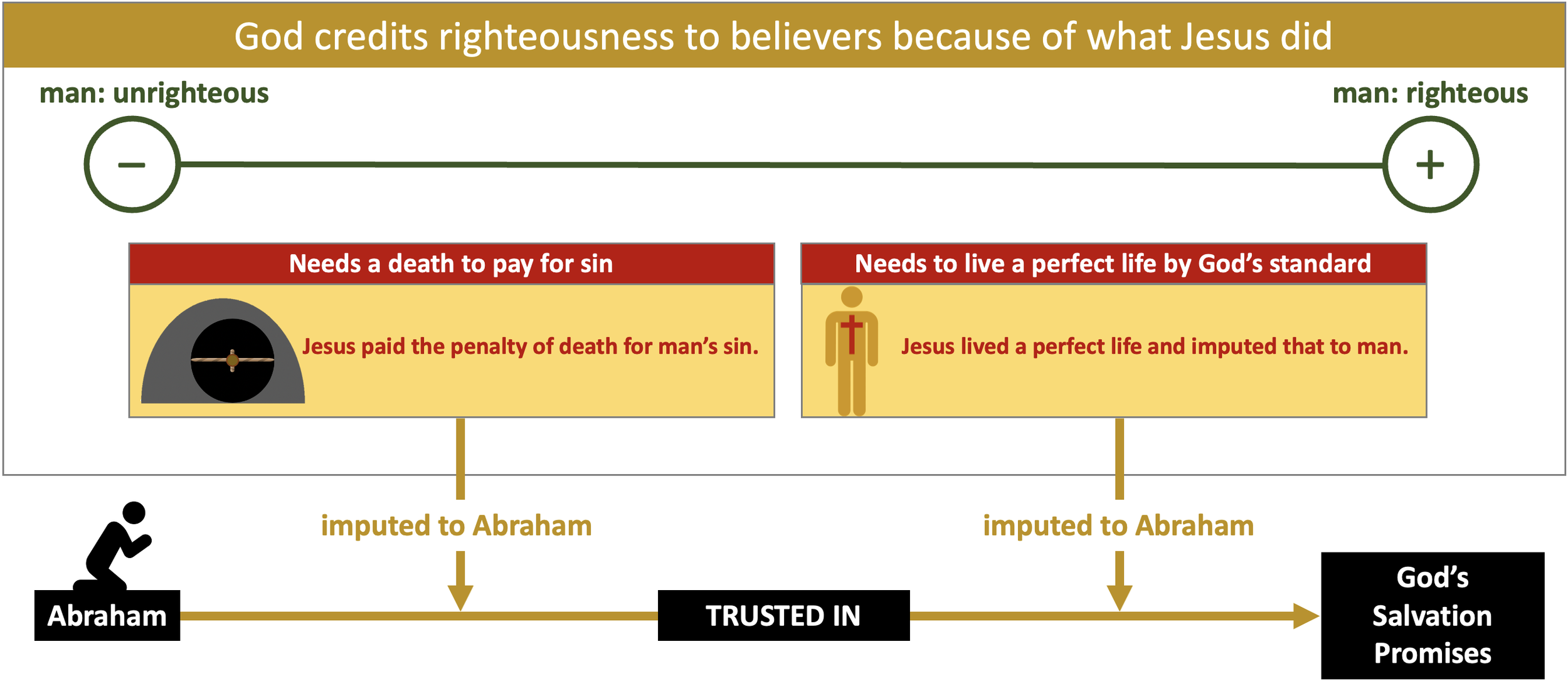
Remember that when we first trusted what God said about salvation through Christ, God had counted us as righteous too.
But let’s not just trust Yahweh, but also worship Him as well, for who He is and what He has done for mankind. Because through Abram, Yahweh initiated a chain of events that led to the start of the nation of Israel and later on, it led to Him sending Jesus, a descendant of Abram, to rescue the world from eternal death. This was all part of God’s long-term plan and we can thank Him daily for it.
Archaeological Note
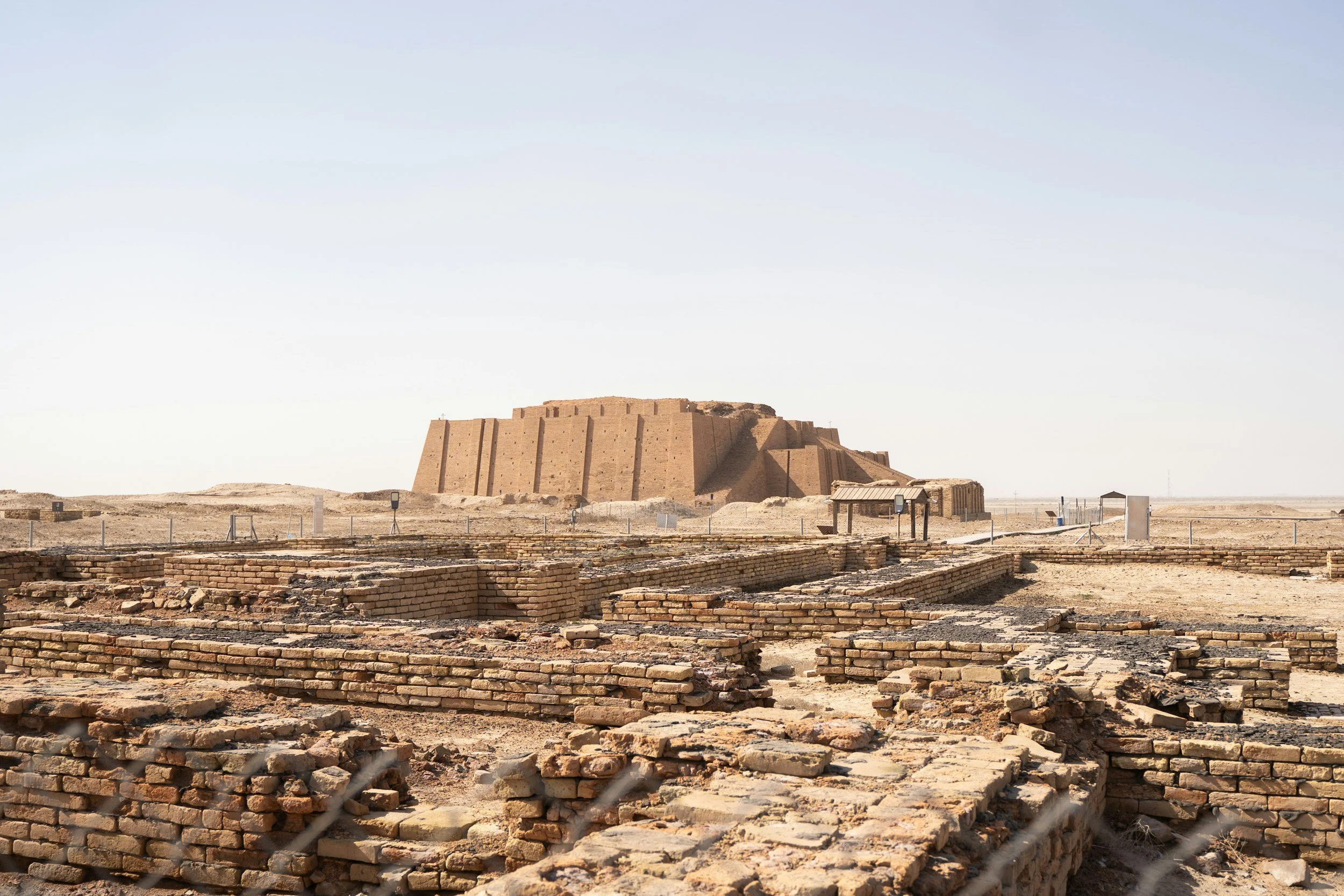
The Ziggurat of Ur located in the province of UR-Nasiriyah, Dhi Qar, Iraq. Photo by Hasan on Unsplash.
The city of Ur (in southern Iraq) where Abram lived was discovered by archaeologists led by Sir Leonard Woolley in the 1920s. He found the large metropolis and the ancient temple where the moon god Nannar (also called Sin) was worshipped. He uncovered treasures like the golden vessels of Queen Puabi and Prince Mes-Kalam-Dug, as well as many ordinary items like fluted dishes, chariot parts, silver ornaments and ornate harps. He also found a large school with countless clay tablets discarded by the students. Many of these artefacts from Ur can be viewed in places like the British Museum. The spectacular discovery of Ur corroborates what the Bible describes of history.
The Devotional Journey: Bible Tour Stop 1—Abraham’s Family

We’ve come to our first stop. So far, we’ve seen Yahweh working with the first man and woman, then communicating globally with all their descendants. In just the first eleven chapters of Genesis, Yahweh records about 2000 years of history starting at Creation. And we’ve seen how mankind collectively keeps rebelling against their Creator-God.
Since mankind as a whole is not listening to Him, Yahweh shifts His plan for humanity by focusing on one man, Abram. Through Abram and his descendants, God works out His plan for all of mankind. To show He is serious, Yahweh makes an unconditional covenant with Abram to provide him with physical land in the Middle East, many descendants, and that through him, Yahweh will provide a worldwide blessing. Yahweh also renames Abram to Abraham.
And so, the rest of Genesis (up to Reading 23) now focuses on Abraham’s family. We will see how Yahweh works with Abraham, then his son Isaac, then his son Jacob and down through the generations. Though Abraham’s family will fail God in many ways, yet we will see how Yahweh patiently and graciously keeps on working with them to ensure His global plan moves forward.
The Devotional Journey: Bible Reading 7
Yahweh judges mankind at the tower of Babel
Read Genesis 11:1–9.
This is the account of the Tower of Babel and it tells us where all the languages of the world came from. It also tells us why humans are found scattered all over the world.
After the Flood, Yahweh told Noah and his family to fill the earth once more. But sadly, the generations after them chose not to trust God. Just as it was before the Flood, mankind collectively chose to ignore Yahweh. Mankind wanted to be their own ultimate authority. They wanted to exclude Yahweh from their lives. This is an important reminder that we must be diligent in passing on God’s truth to the next generation. Otherwise, they will turn their backs on Him.

In this great building project that the people were undertaking together, they wanted to build a tower and a city so they could stay in one place. Besides rejecting Yahweh’s command to fill the earth, the people wanted to make something that would proclaim their own greatness. They wanted to be famous.
When Yahweh created mankind, He made mankind in His image, to be His representatives. As people lived all over the earth, God’s presence would be there through His representatives. Now the post-Flood generations were rejecting God’s plan and purpose for them.
But Yahweh demonstrated how intimately involved He is with His creation. He came down to closely examine what mankind was doing. As the all-knowing God, He already knew what they were thinking and doing. But by coming down, He was demonstrating that He was deeply interested in mankind and that He was a careful judge. Yahweh saw that mankind was building a life that excluded their Creator. This was actually disastrous for mankind.

In His love, Yahweh created in an instant, many intelligent languages. Imagine, suddenly, people started speaking in multiple newly created languages, all with proper grammar and vocabulary! Who could created so many languages in an instant? Only Yahweh could do that.
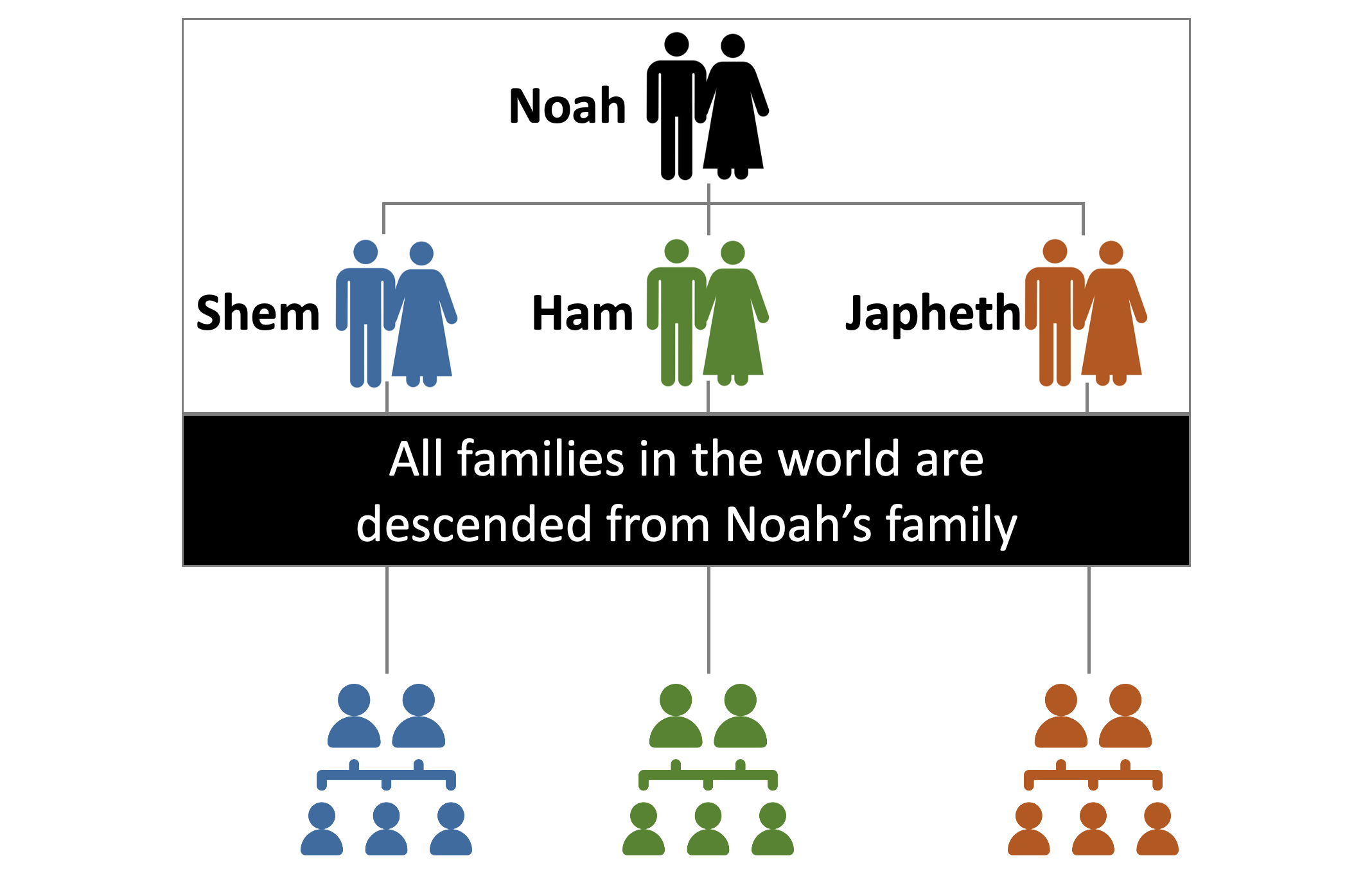
He did that to stop their collective rebellion against Him. Now, not understanding each other, they abandoned the building project. They scattered all over the world by splitting into their language groups and leaving together. This was how God divided up the people into nations. You can read where the different families went to in Genesis 10.

This is known as the fourth divine institution of tribal diversity. Yahweh separated the people to create nations independent of each other. This would prevent the people of the world from collectively rebelling against Him.

We see that Yahweh is powerful, but also loving. He stopped mankind from collectively plotting against Him because He wants all people in the world to have the opportunity to know Him. We see that God continues to be at work in the world He made. He is accomplishing His purposes in spite of the plans and projects of sinful people.
The people of Babel were not very different from the people of today. Fallen mankind doesn’t like the idea that there is a sovereign, righteous Creator-Owner-God of the universe. People don’t like to hear they are accountable to a God who is in authority. People don’t want to be answerable to a God who has standards. People would rather pretend there is no god, much less the God of the Bible.

Let’s examine our own hearts today. Are we interested to know the God of the Bible more deeply and do we want to know His good plans for us? Or would we prefer He didn’t interfere in our everyday lives?
Let’s remember that He loves us and is constantly calling us into deeper fellowship with Him each day. He wants us to live in ways that honour Him and bring us joy.
Let’s be thankful that He is really interested in mankind and interested particularly in each of us.
Also, let’s thank Him for the gift of language, that we can understand and also communicate our thoughts and feelings to our loved ones and they can do likewise with us.
The Devotional Journey: Bible Reading 6
Yahweh makes a covenant with mankind
Read Genesis 9:1–29.
After the Flood, Yahweh gave new information and instructions to Noah and his descendants.
1. Before the Flood, animals were not afraid of mankind. But now, land animals, birds and sea creatures would be afraid of mankind.
2. Before the Flood, God gave mankind plants as food. But now, mankind was also given the meat of animals as food.

3. Before the Flood, God had no instructions on what to do when a person was murdered. (Recall that when Cain murdered his brother Abel, God simply sent him away from society.) But now, Yahweh said that whether a human or an animal kills a person, the killer must lose their life. Why? All humans are made in the image of Yahweh. If someone kills an image of God, God demands that the killer’s life be forfeited as well. This was the beginning of capital punishment. God was saying that murder was such a serious crime that the only appropriate punishment was for the killer to forfeit their life.
4. Because capital punishment was serious, the guilt of the murderer had to be properly established. This meant that capital punishment was to be responsibly exercised by a civil authority, that is, by civil governments. Governments are God’s idea and the role of governments is to restrain or limit evil in a fallen world. Governments are to punish all who murder by taking away the murderer’s life. Civil governments are known as the fourth divine institution.

Then Yahweh did something really fascinating. He made a contract with all mankind. The God of the Bible is the only God who makes contracts with man. No other religion has a god who makes contracts with mankind. In the contract, Yahweh promised no more global floods. And He also promised in Genesis 8:22 that He would maintain the stability of the planet so that it would have regular seasons and food production would continue to be possible.

And then He signed the contract with His signature: the rainbow. Every time someone looks up and sees the rainbow, they would be reminded that Yahweh had a made a promise never to destroy the world with another global flood.

Why would the Creator-God of the universe bother to lower Himself to man’s level and tie Himself to mankind with a contract? Because He wants people to know that He is a God whose words have meaning. He is a trustworthy God whose promises can be relied on. And He is a God who is deeply concerned with the creatures He has created—mankind.
But God also recorded a sinful incident that happened to Noah’s family after the Flood. Noah got drunk and ended up sleeping naked in his tent. And then Ham saw what happened and mocked his father. This incident showed that even though Noah and his family believed in God and were saved from the Flood, they were still sinful, fallen people.
This early history of the world is not just a series of past events that have no relation to us. Rather, there are consequences from these events that affect us. Today, animals are afraid of mankind; people eat meat; nations have governments; and the death penalty or capital punishment exists in some countries to deter serious crimes. We also see rainbows in the sky.
And all humans on earth today are descendants of Noah and his family. This means that even though there are many people groups on earth today, all of us can trace our family lines back to one family—Noah’s family. We are all members of the same extended family even if we speak different languages, have different cultures and look different from one another. We are all image bearers of God.

God wants us to know how the world today came to be. In recording the Bible for us, God wants us to know real history and truth. And till today, we can see that there has never been another global flood that destroyed all the peoples of the world. Yahweh is actively keeping His covenant. Though He signed that contract more than 4,000 years ago, He still keeps His word. He is showing He and His words are trustworthy. This gives us confidence that we can trust the Bible.
Let us thank Him for being a God who communicates with us and who wants us to understand the world we live in.
The Devotional Journey: Bible Reading 5
Yahweh judges the world with a global flood
Read Genesis 7:1–8:22.
We continue the account of the Flood. Yahweh brought a global judgment on all the evil, rebellious people of the world. Every part of the planet was covered with water and all the people who did not believe God’s warning about the coming judgment died in the floodwaters. And all the air-breathing animals not in the ark also died.
The flood judgment lasted a year. When the waters finally subsided, Noah and his family emerged onto dry ground. The world was completely different from what they had known before. The landscape had been reshaped with newly formed continents with new mountain ranges, valleys and other features. And there were now new oceans, seas and bodies of water. Noah and his family would restart mankind on a changed planet. Yahweh’s original plan for mankind, as His image bearers, would continue. Noah and his family would repopulate the earth and look after it well to glorify God.
Here are some interesting facts about the Flood to ponder:
1. The global flood happened about 4,300 years ago (from 2349 to 2348 BC).
2. Seventy percent (70%) of the earth’s crust today is sediment leftover from the flood.
3. All around the world the rock layers are in straight lines (e.g., the Grand Canyon). This uniform appearance around the globe tells us these sediment layers were formed globally and quickly as silt, sand and mud settled, layer after layer, in the Flood and then hardened into rock layers. What’s more, there is no evidence of bioturbation (soil disturbances caused by plants and animals) in the layers, showing that the layers were laid down one after the other rapidly without any interference from plants and animals. (This would not be the case if the layers were laid down thousands or millions of years apart.)

Photo: Mather Point at Grand Canyon by Bigmacthealmanac, CC BY 4.0, Wikimedia Commons.
4. There was plenty of room on the ark for all the animals that Yahweh brought to Noah. Christian scientists estimate there were about 1,400 main “kinds” of animals on the ark, so there was a total of around 6,700 individual animals. (As a reference, a biblical “kind” is approximately like the term “family” or “order” in scientific classification.) From these animal kinds came all the animals we have in the world today. For example, when Noah went on the ark, he took one pair of the canid (dog) kind. From that pair of canids came all the other canine species like wolves, jackals, coyotes and later, breeds of domestic dogs. Isn’t it incredible that God put the genetic diversity in that first pair of canids so that so many species and breeds could emerge?

5. The floodwaters from the global flood are still here on the earth today. The Bible says that God caused the mountains to rise higher and the valleys to sink lower than before the flood began, so He created deep, large oceans to store all the floodwaters (See Psalm 104:6–9).

6. The Bible says Noah’s ark landed somewhere in the mountain ranges of Ararat. This is in the Middle East, in or near Türkiye today.
It is sobering to consider the global extent of God’s judgment of evil and rebellion on the earth. As the Creator-Owner, and as the righteous Judge, Yahweh had every right to exercise judgment on His rebellious creation.
At the same time, it is wonderful to behold God’s mercy. He saved eight people, Noah and his family, because they believed in Yahweh. Everyone else on the planet was judged in the floodwaters because they did reject God.

Today, let us thank God for saving us from eternal separation from Him. He provided one way to be saved: faith in Christ. Thank God that He has led us to come to know Him and be saved by Him.
And let us be sober-minded about the way Yahweh judges evil. The Bible says that in the future, God will judge the world globally once again, to bring another complete end to evil and sin in the world. He is not a powerless God, but an all-righteous God who is patient. At His timing, He will put a stop to evil globally.
As image bearers of God, let us learn to live in ways that will bring Him glory and get others interested to know Him as well.
The Devotional Journey: Bible Reading 4
Yahweh prepares to judge the world
Read Genesis 6:1–22.
Adam and Eve had many descendants but instead of learning from their original parents’ bad choices, most of the descendants chose to live wicked lives independent of Yahweh. In other words, they didn’t want God in their lives and so they rebelled against Him. As a result, there was more and more evil in the world. There was corruption and violence everywhere. This was not how Yahweh wanted mankind to live.
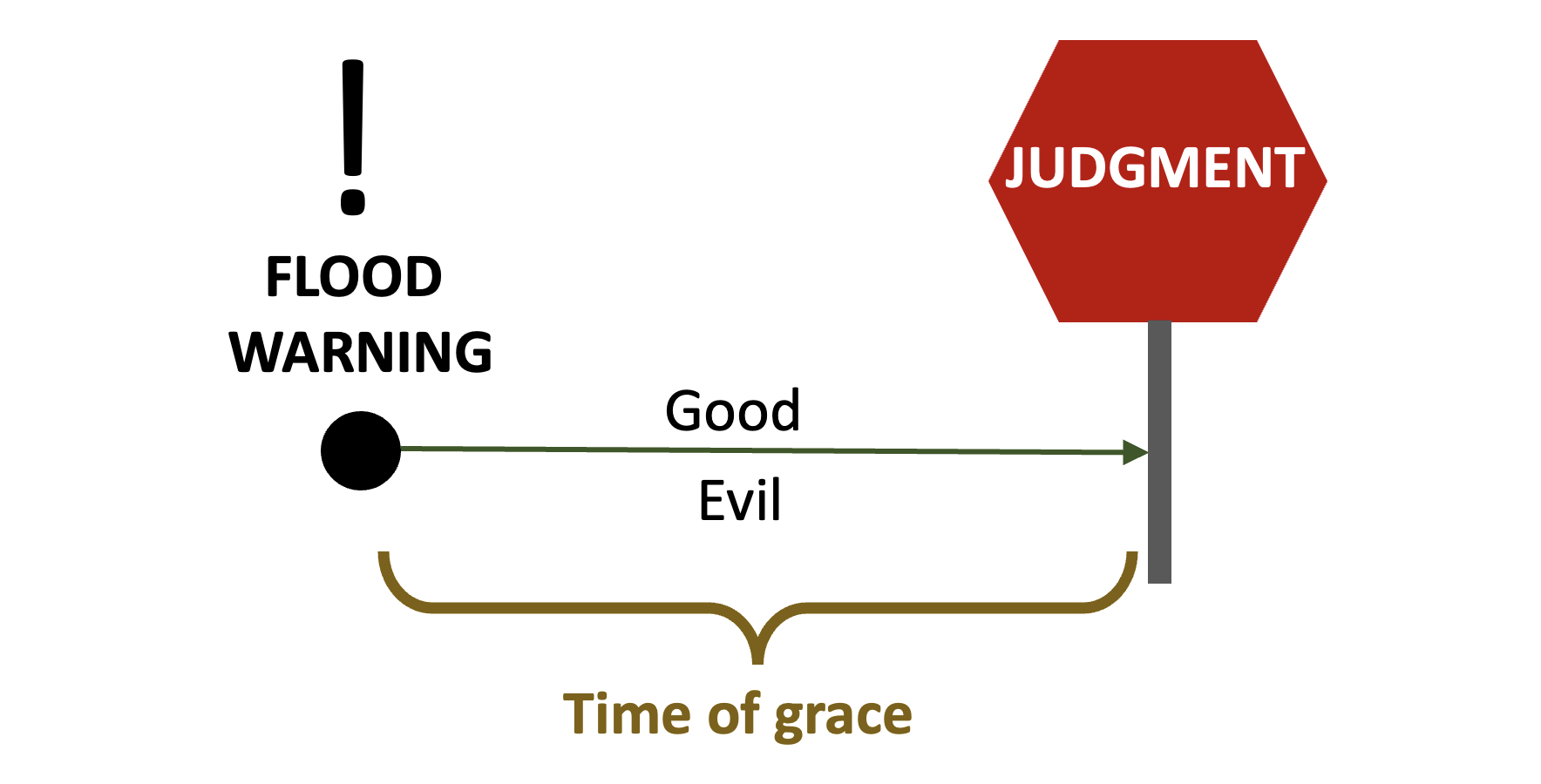
God has righteous standards and He doesn’t let evil get completely out of control. When the people on earth sinned beyond what God was willing to tolerate, He decided to judge their wickedness by sending a global flood to destroy all of evil mankind. But in His mercy, He warned the people about the coming judgment and gave them time to repent, that is, to change their minds about how they were living and to turn to Him.
Yahweh spoke to one of the few righteous people on earth: Noah. God gave him very clear and specific instructions on how to build an enormous boat that would save his family from the coming flood judgment. The boat was also to contain all types of land animals so that the world could be repopulated with animals after the Flood.
Noah and his family believed Yahweh’s words and they followed His instructions carefully and built the boat. And thus God prepared to destroy every last evil person in the world but He would save those who believed Him—Noah and his family, eight people in total.

Today, we see a smilier situation. Wickedness, violence, evil and sin are rampant across the world. And sometimes, we wonder if God is powerless to act against so much evil. But we learn something about God from the event of the global flood during Noah’s day. Yahweh is patient with mankind’s wickedness. Just because He is not punishing all sin right away, it doesn’t mean that He is powerless, and it doesn’t mean He will not judge the world for its evil. As the righteous Creator-God, He will bring about final judgment. He will bring an end to evil in His creation. As it was in the days leading up to the global flood, God is extending mercy to people everywhere, giving them time and opportunity to change their minds and turn to Him.

Let’s pray and thank God for His mercy and patience during this current age. And we should also ask Him to help us take Him seriously and live in a way that honours Him every day. And let’s pray for our unbelieving loved ones, that God will guide them to know Him and be saved so they will not be a rebellious person when God’s judgment comes.
Also, as we read the plans of how Noah was to build the ark, let’s thank God that He is a God of details. He cared enough to give specific building plans for the boat. God cares for each of us and all the details of our lives as well. He is intimately interested in us. Let’s thank Him for that.
The Devotional Journey: Bible Reading 3
Yahweh’s mercy towards the first family
Read Genesis 4:1–26.
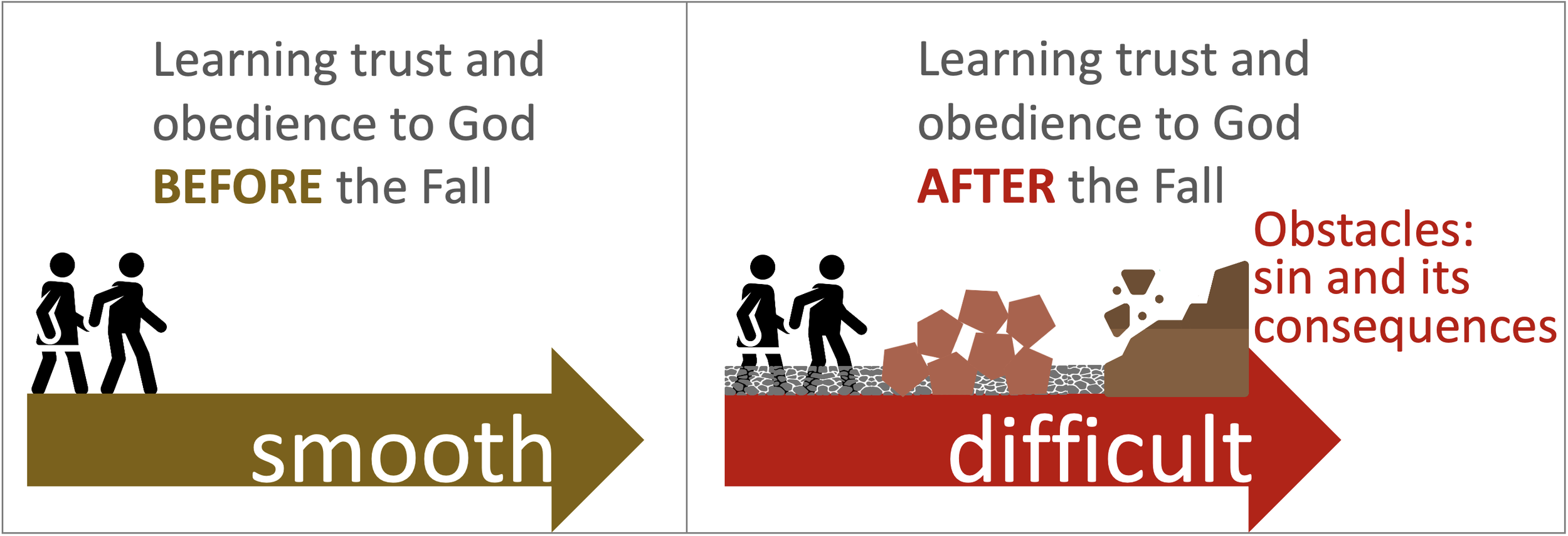
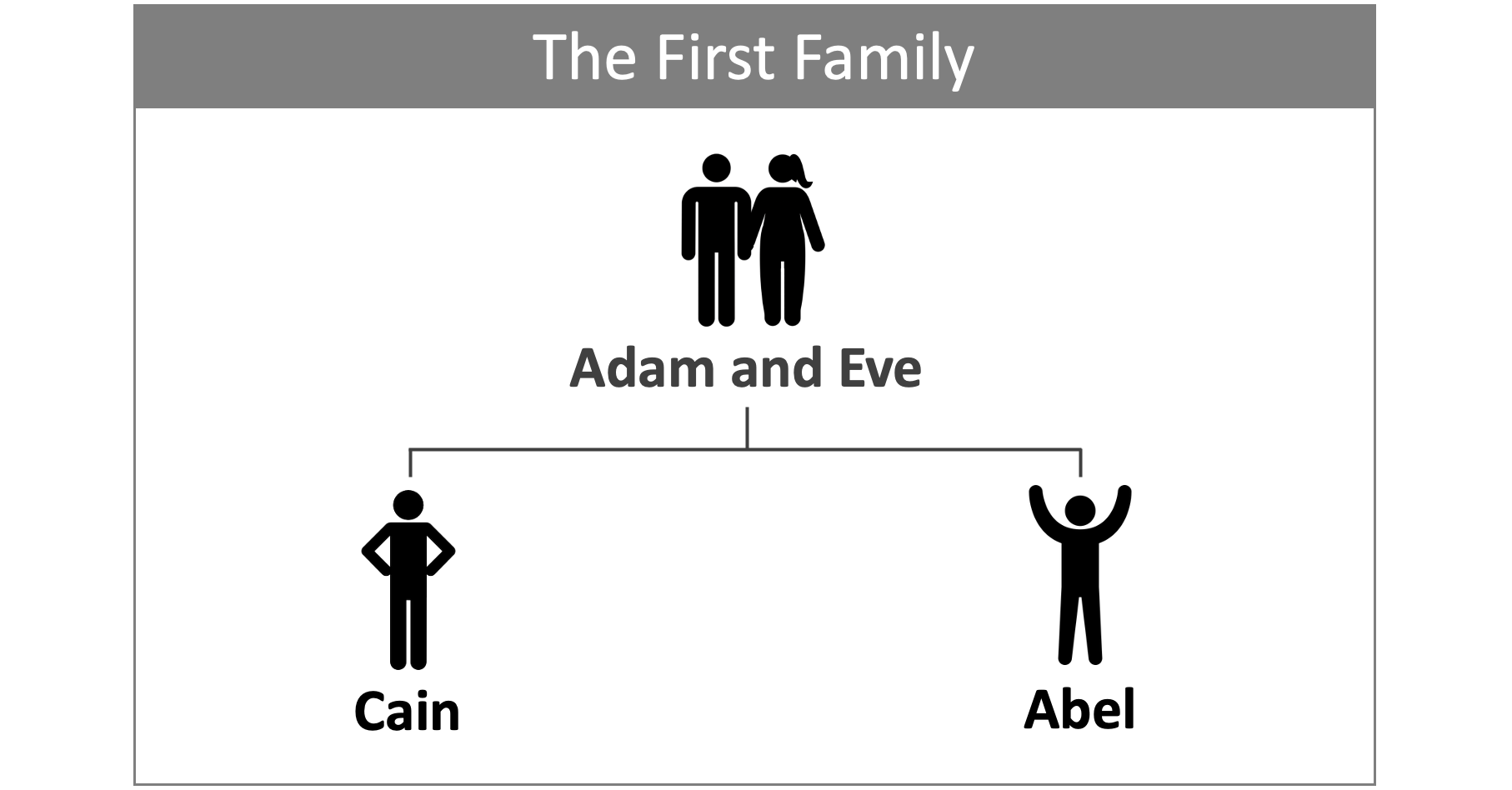
This chapter is the account of what happened to Adam and Eve’s family—the first family. Though they had rebelled against Yahweh and were suffering the consequences, yet Yahweh did not abandon His plan for humanity. God’s image bearers would continue with His plan. They would have children and take care of creation. But the task was now marred by sin.
Adam and Eve’s first two children were Cain and Abel. The two sons each brought what was theirs to give as an act of worship. Abel brought the best firstborn lambs while Cain brought what he cultivated—crops.
While Abel brought his best, (the fat portions means the best lambs), Cain didn’t seem to care about what he brought before God as the Bible didn’t say that Cain brought his best crops. Cain’s offering was not rejected because it was a non-animal offering, but because his heart, or attitude towards God, was not right. His worship of God was hollow. He was not really interested in God and it was just mere action.
So God did not favour Cain’s offering. But notice verse 6. God spoke to Cain and encouraged him to do what was right. God was being patient and encouraging. He told Cain why his offering wasn’t accepted and what he should do. He warned Cain that sin was like a predator—it was crouching at the door of his heart. Cain had to overcome the temptation to sin.
Yahweh presented Cain with a choice. He could choose to do what was right or rebel by doing what was wrong. God didn’t force him one way or another.

But Cain didn’t respond well to God’s encouragement. Notice that Cain didn’t actually have an argument with Abel. He was angry with God. But instead of examining his heart attitude, he chose to harbour jealousy and bitterness against his brother Abel. In the end, his bitterness took over and he chose to kill his very own brother!

At this point in history, Yahweh had not put in place capital punishment for murder, and so He banished Cain from society and cursed him so that the ground would no longer cooperate with Cain’s farming.
Yet, notice once more how merciful God was in verses 13–15. When Cain expressed fear that other people would kill him for what he had done, Yahweh said He would protect Cain from others. Though he had done something terrible (murdered his brother) and faced consequences for it (God cursed him), yet God still extended mercy by preventing others from harming Cain. Though his brother Abel had died because of him, God allowed Cain to continue his life, get married and have children.
But Cain never reconsidered what he had done and went on to have negative influence on his family members. The Bible records that in just a few generations, the pride and arrogance of Cain’s descendants got a whole lot worse! Cain’s descendant Lamech killed a man for simply hurting him. What an overreaction!
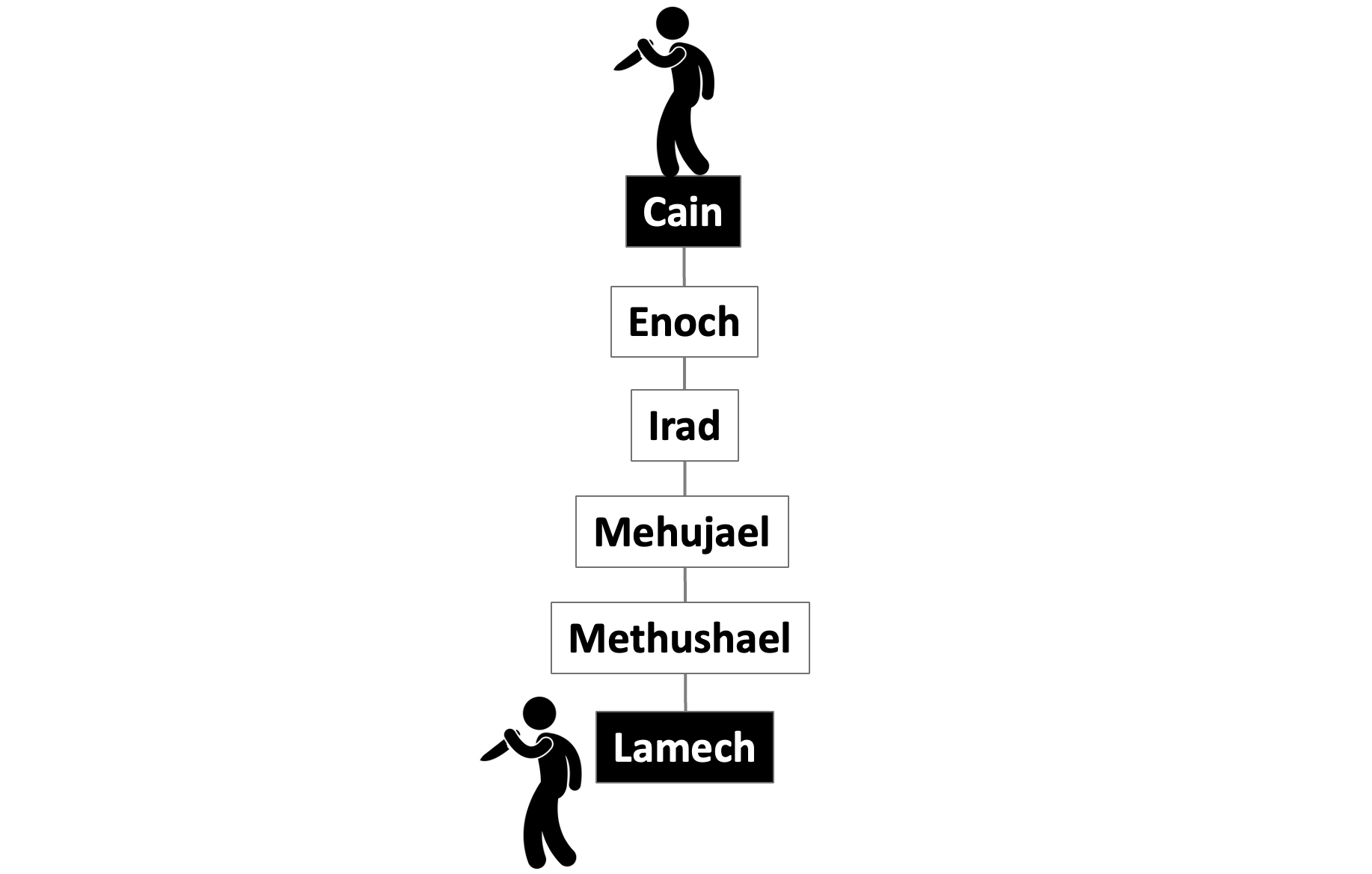
We can observe the negative influence that family members can have on each other so we ought to be careful in what we say and do.
We need to recognise how jealousy and bitterness have serious consequences if they aren’t dealt with. Let’s pray that God will help us to never harbour jealousy and bitterness in our hearts.
But can you also see what Yahweh’s character is like from this chapter? What do you think of Him?
God continually encourages us to do what is right. Pray that God will help us respond in the right way each day and in each situation.