
The Devotional Journey: Bible Reading 80
Yahweh blocks Balaam and his donkey
Read Numbers 22:1–41.
After the defeat of Arad, Sihon of the Amorites and Og of Bashan, and after being punished with poisonous snakes, the Israelites finally arrived on the east side of the Jordan River, across from the Canaanite city of Jericho.
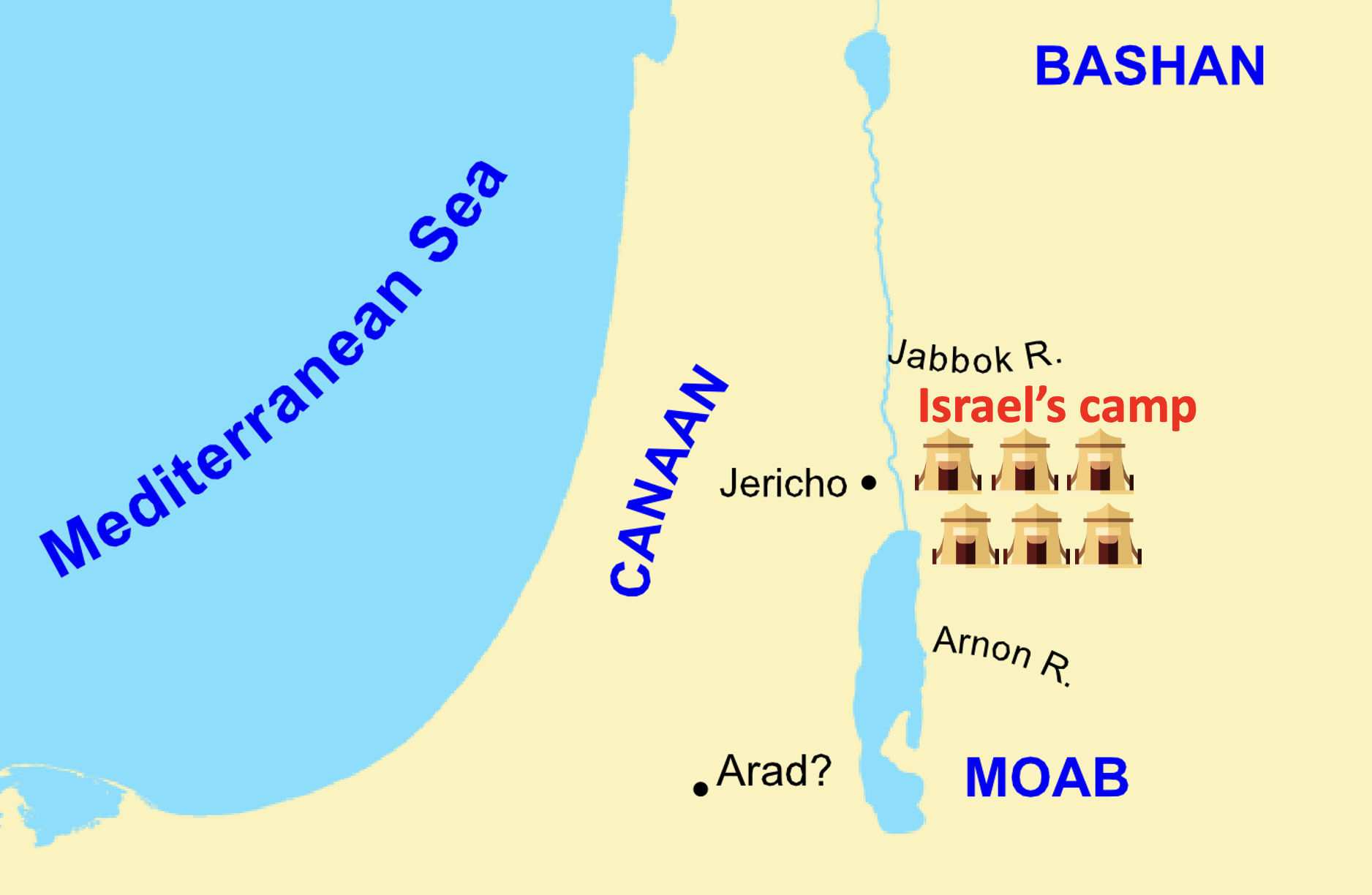
Israel camped just north of Moab and this worried Balak, one of the Moabite kings. He feared Israel but didn’t know they had no intention of attacking Moab. He did two things to protect his nation: He made an alliance with the Midianites and he tried to hired a diviner, Balaam son of Beor, to curse Israel.
Balaam claimed to be able to tell the future and to bless or curse nations. Moses recorded the rather comical events that brought Balaam to King Balak.
As a so-called diviner, Balaam’s profession was something that Yahweh condemned. For example, God commanded Israel:
Leviticus 19:26, 31
[26] “Do not eat meat that has not been drained of its blood.
“Do not practice fortune-telling or witchcraft.
[31] “Do not defile yourselves by turning to mediums or to those who consult the spirits of the dead. I am the LORD your God.
God forbade divination because it engaged with demonic forces. And God wanted His people to rely on Him, the One who is in control of all events, including the future.
Though Balaam practised divination, he actually knew Yahweh and called Him by name. Notice how Balaam used the name Yahweh (spelt as “LORD”) in verse 8 (and verses 13, 18, 19). But he didn’t acknowledge Yahweh as the one and only true God and his heart was self-centred.
When Balak’s envoys arrived, Balaam knew it was wrong to curse Yahweh’s chosen people but he told the envoys he would ask Yahweh. God warned him not to go with Balak’s men. Balaam initially obeyed, but when Balak offered more money, Balaam became greedy and bargained with Yahweh, although he already knew Yahweh’s answer.
And this is where we see another example of Yahweh dealing with people’s evil desires. Recall how Israel had whined about lacking meat. Yahweh’s response was to let them have what they wanted and He covered them in quail (Reading 72)! God’s punishments were to sometimes let people have their evil desires. And so it was with Balaam. Though God was angry with Balaam’s greed, He allowed the diviner to go with Balak’s men. But He warned Balaam to speak only the words that God would give him.

Along the journey, Yahweh mocked Balaam by making his donkey talk. This animal was known for being stupid and stubborn (much like Balaam’s behaviour!). As a diviner, Balaam was supposed to be able to see the future, but God allowed the donkey to see Him first. The “Angel of the LORD” is a title referring to an appearance of God Himself.
Yahweh was acting to keep His promise to Abraham.
Genesis 12:3
I will bless those who bless you and curse those who treat you with contempt. All the families on earth will be blessed through you.”
He would bless those who blessed Abraham and his descendants, but curse those who cursed Abraham. God was actively protecting Israel, Abraham’s descendants, by warning Balaam not to curse Israel.
When Balaam realised that it was impossible for him to curse Yahweh’s people, he ended up speaking blessings and prophecies as the Holy Spirit gave Him the words (Numbers 23–24). We’ll examine what he said in the next reading.
Questions for Reflection
There is much we can learn from Balaam’s bad example. Here are some thoughts and questions for us.
On the outside, Balaam looked spiritual. He talked to God! But in his inner life, he was driven by greed and idolatry. What about us? Do we acknowledge Yahweh as God but aren’t willing to submit to Him? Do we try to appear pious? Could the effort we put into appearing pious be better used in dealing with our poor motives and the sin in our lives?
Balaam already knew God didn’t want him speaking against Israel. Yet he went back to ask God about going with Balak’s men, hoping God would change His mind. When we go to God in prayer, do we seek His will for our lives, or do we ask only for what we want, or ask Him to bless our plans, or ask Him to let us have our way? Are we actually interested in what God has in mind for us?
Talk to God about your desires and motivations. Ask God to highlight areas in your life that need to change and be willing to submit all areas of your life to God. After all, He knows our future.
Archaeological Note
In 1967, archaeologists found a non-Hebrew temple in Deir ‘Alla (in modern-day Jordan). Dated between 840 and 760 BC, the collapsed plaster walls left a pile of plaster pieces on the ground. When the pieces were fitted together like a jigsaw puzzle, Aramaic words emerged. This was believed to be the oldest example of Aramaic writing and the inscription was dedicated to the “seer of the gods, Balaam, son of Beor.”

Photo of the Deir ‘All inscription. From Meyer, Tom. Archaeology And The Bible: 50 Fascinating Finds That Bring The Bible to Life. Lamplight Press, an imprint of ICR Publishing Group, 2023.
This temple linked to Balaam continued to function until the building was destroyed by an earthquake around the eighth century BC. In the inscription, Balaam cursed the gods who brought famine and death and he sought help from the fertility gods who could restore life and order to the region. The temple seemed to function as some kind of diviner school which could explain why Balaam continued to be revered for hundreds of years after his death.
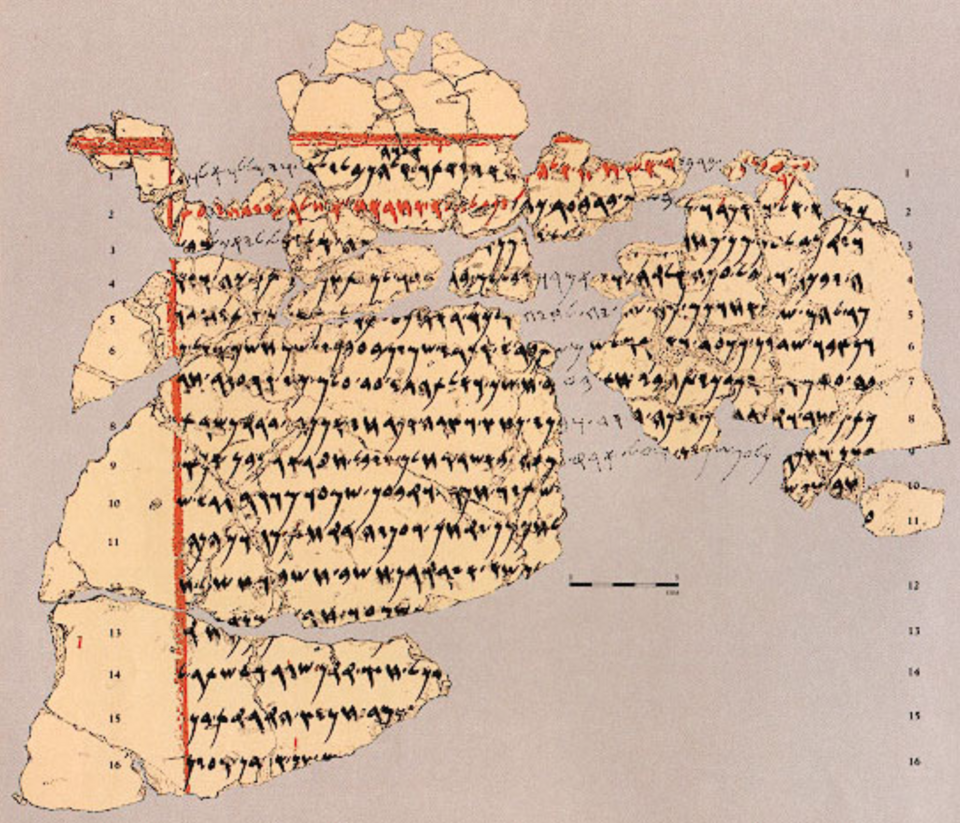
Drawing of the Deir ‘Alla inscription. By Disdero - Own work, CC BY-SA 4.0, Wikimedia Commons.
This Balaam inscription is another example of an archaeological find that affirms the details, accuracy and truthfulness of the Bible.