
The Devotional Journey: Bible Reading 82
Yahweh makes a covenant with loyal Phinehas
Read Numbers 25:1–18
This is the final chapter of events surrounding Balaam. He had failed to curse Israel but left the king of Moab with a way to cause Israel to sin: seduce the people to worship false gods.
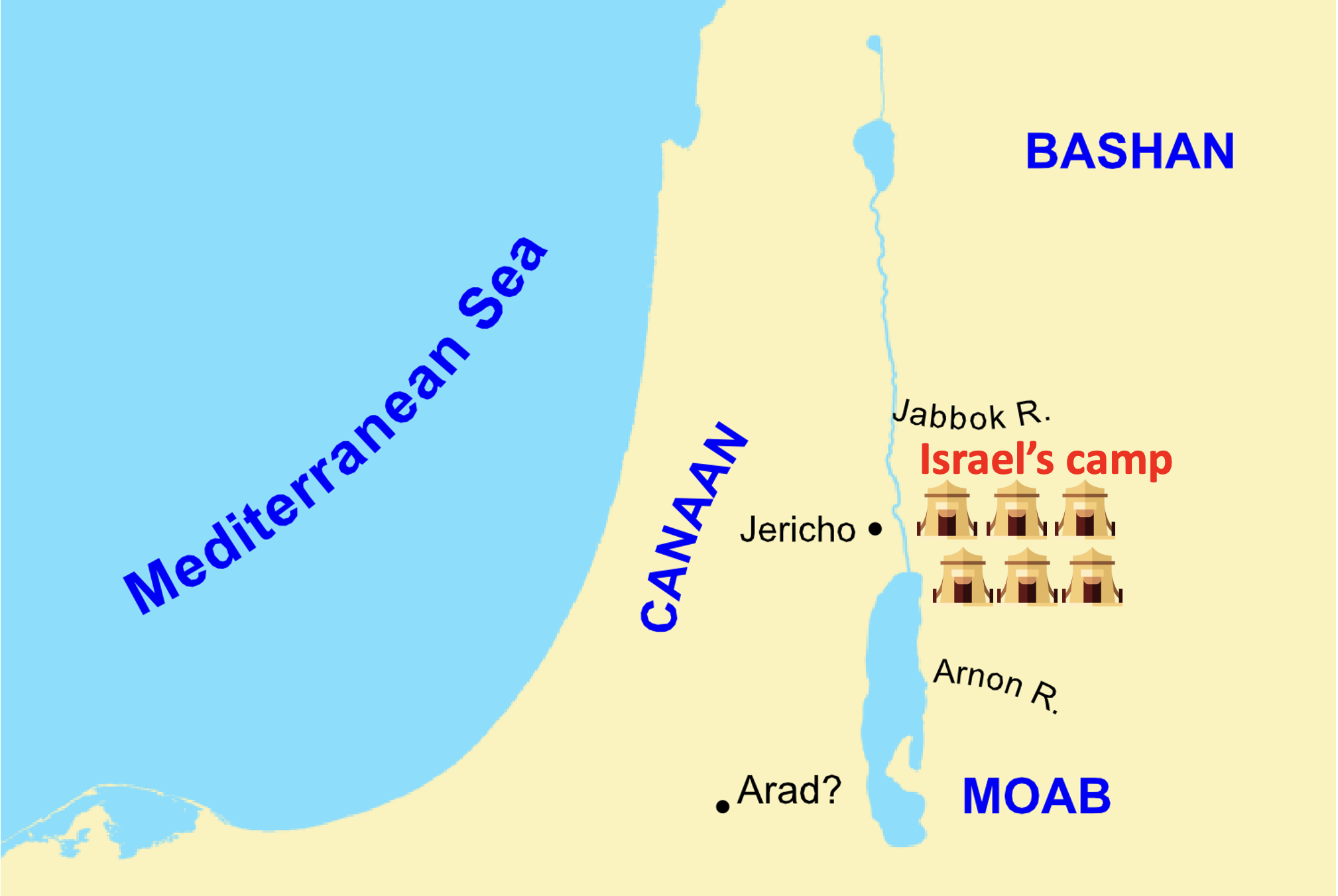
While the Israelites were camped near Moab, at a place called Acacia Grove (Shittim in Hebrew), the Moabites along with their allies, the Midianites, began their plot. They befriended and invited the Israelites to take part in the religious rituals of Baal of Peor, which included cultic sexual practices that supposedly encourage fertility in the land. (At the place called Peor, there was temple dedicated to Baal.)
Many Israelite men participated and Yahweh was swift to punish them with a plague. The Israelites started to die but the sinning did not stop.
God instructed Moses to gather the tribal leaders (also called judges) to execute any Israelite engaging in pagan worship. (Recall that worshipping any other god was violating the Ten Commandments.) During this time in history, hanging a criminal was done by impaling them on a pole.
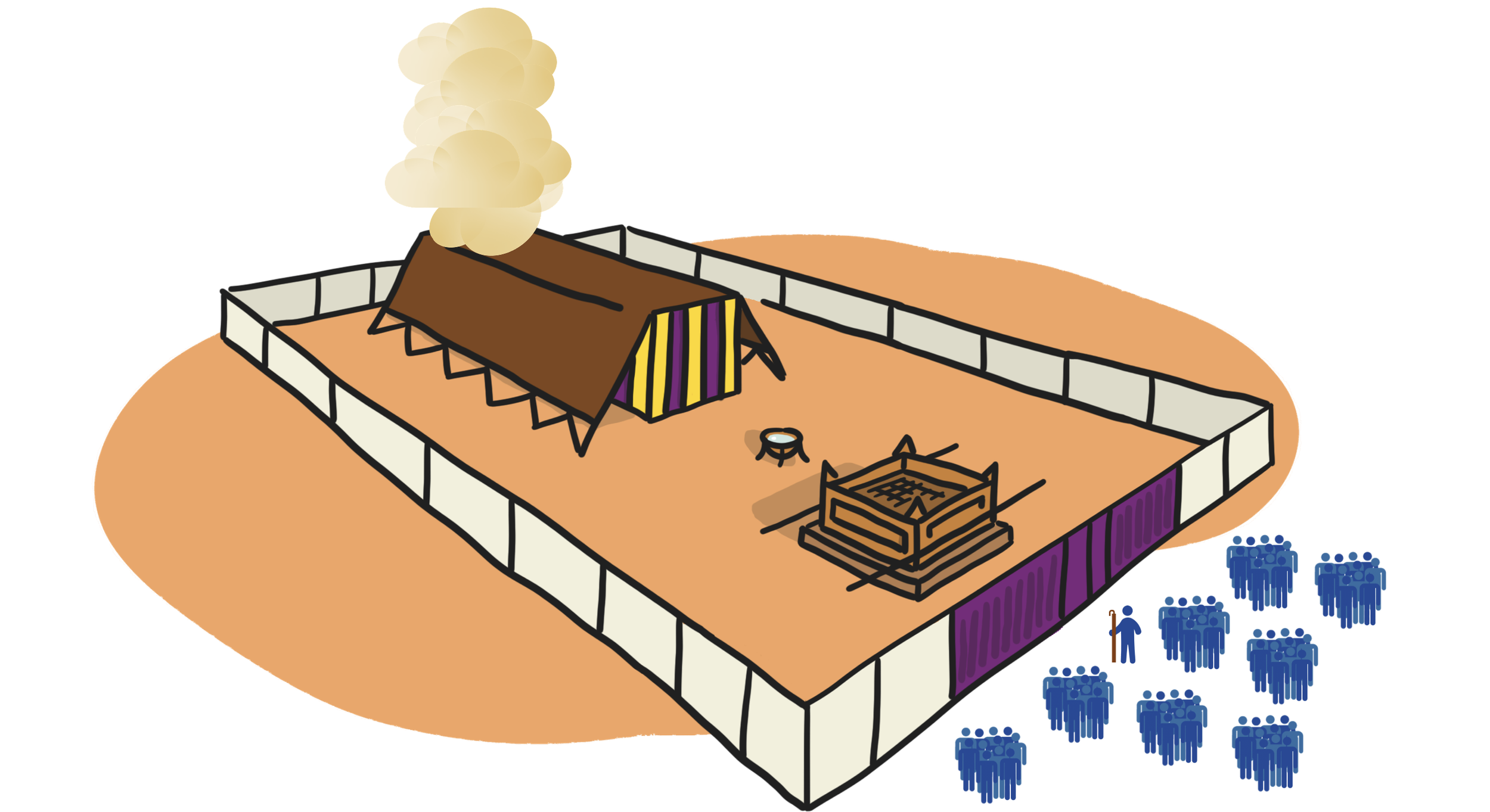
Then Moses, the leaders and others who had gathered at the entrance of the Tabernacle saw an Israelite man take a Midianite woman to his tent. This man was Zimri, the son of Salu, a leader from the clan of Simeon (Numbers 25:14). And the Midianite woman was Cozbi, the daughter of Zur, one of the leaders (or prince) of a Midianite clan (Numbers 24:15, 18). This was sin at the leadership level!
Thankfully, Phinehas, the grandson of Aaron the High Priest, reacted swiftly. With a zeal for God’s honour and holiness, he grabbed a javelin and entered the Zimri’s tent and killed him and the woman with one plunge of the weapon.
This was following God’s instructions and it stopped the plague. But by then, 24,000 sinning Israelites had already died. This was a sin that had spread throughout Israel.
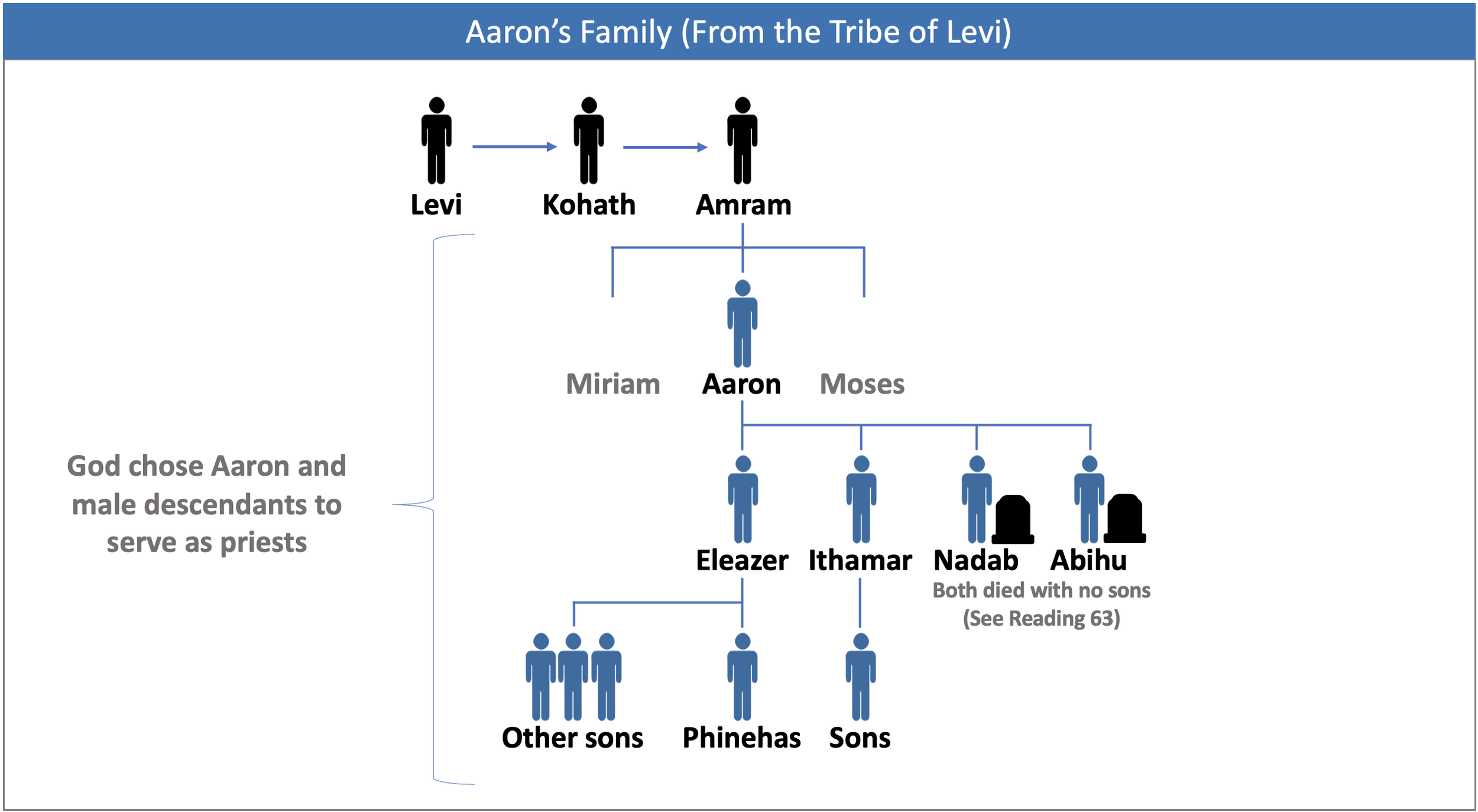
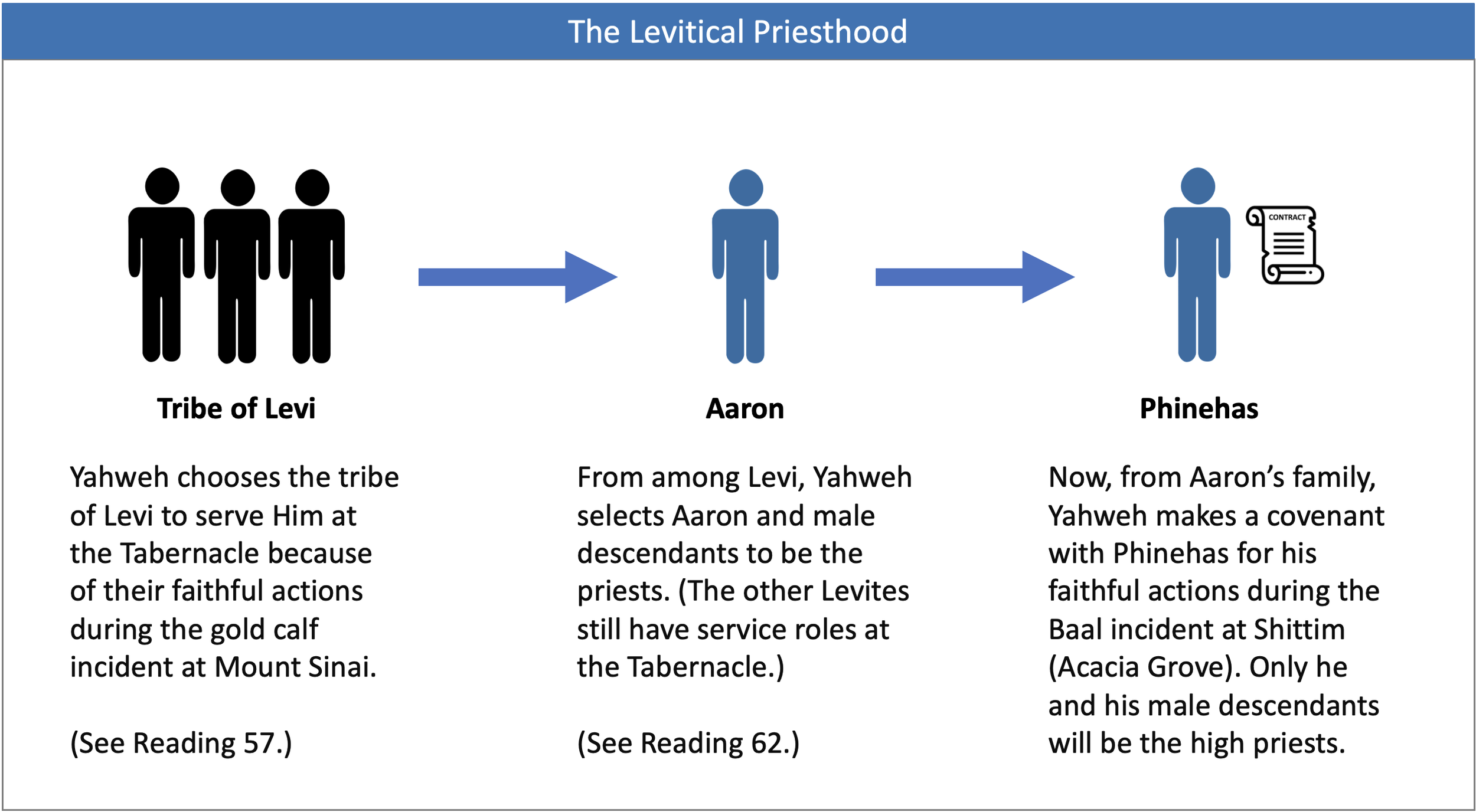
In response to Phinehas’s actions, Yahweh made a covenant with him. Only he and his descendants would be priests for Yahweh (Numbers 25:10–13). Phinehas was already a priest because he was a descendant of Aaron. But from all of Aaron’s descendants, God was promising that it would only be Phinehas’s family that would continue the priesthood. This is another example of Yahweh making a covenant with an man and his family. (In the future, we will see how God keeps this promise.)
This sinful behaviour of Israel happened near the end of the 40 years of wandering that Yahweh had sentenced Israel to after they refused to enter the Promised Land because of fear (Reading 74). This incident was a lesson for the second generation of Israel, similar to what their parents faced with the gold calf incident at Mount Sinai (Reading 57).
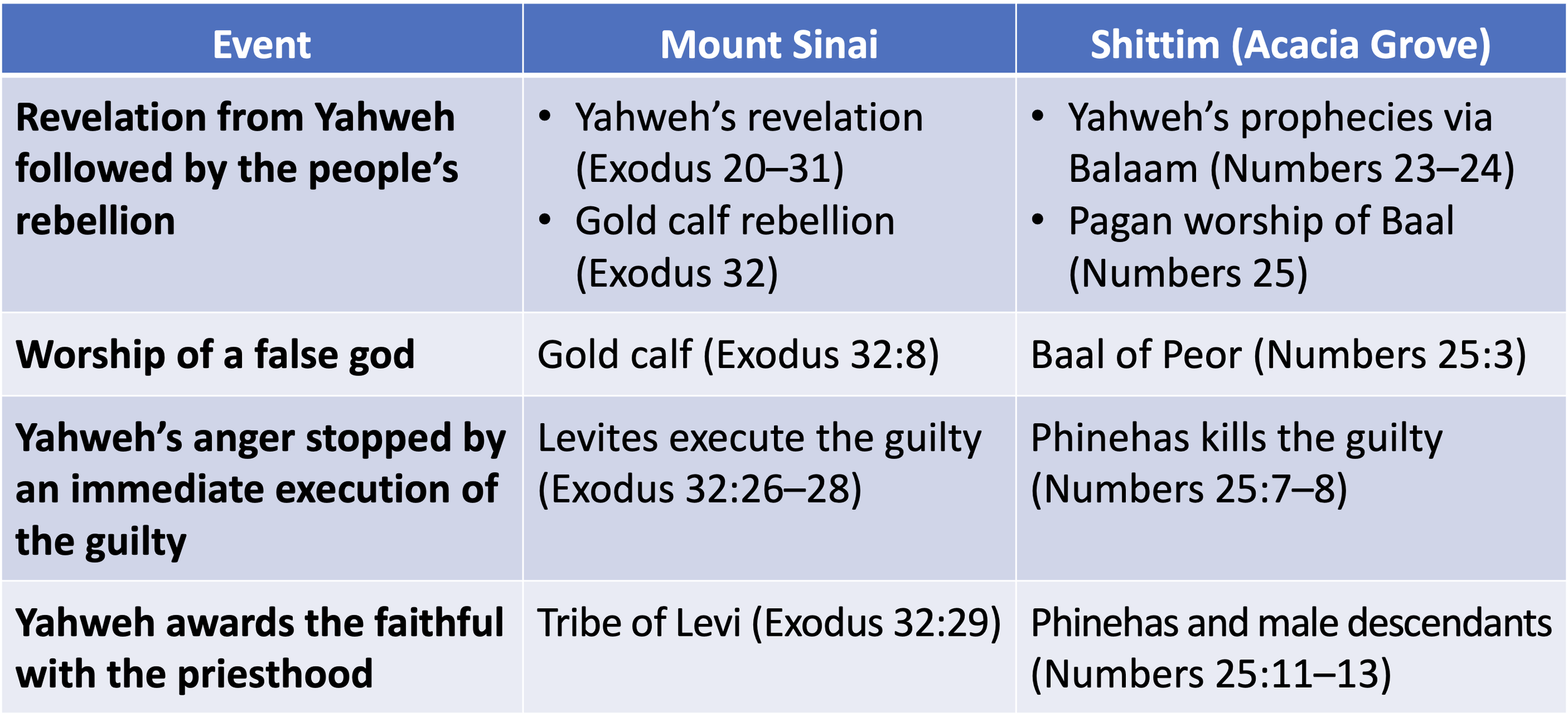
Later, we see the psalmist and the prophet Hosea recall this shameful incident.
Psalm 106:28
Then our ancestors joined in the worship of Baal at Peor;
they even ate sacrifices offered to the dead!Hosea 9:10
The LORD says, “O Israel, when I first found you,
it was like finding fresh grapes in the desert.
When I saw your ancestors,
it was like seeing the first ripe figs of the season.
But then they deserted me for Baal-peor,
giving themselves to that shameful idol.
Soon they became vile,
as vile as the god they worshiped.
Questions for reflection
First: The Israelite men probably didn’t start out wanting to worship idols. But they were enticed by the offer of feasting and then sexual relations with the Midianite women. One thing led to another and they ended up worshipping Baal. This is a sobering lesson for us. When we as disciples of Christ relax our standards just to enjoy ourselves or satisfy our desires, it can be a slippery slope leading us away from the Lord faster than we expect. Let’s examine ourselves. Have we relaxed our standards or our guard in some areas of our life: finances, inappropriate relationships, habits or activities?
Second: Phinehas had a swift reaction to the Zimri’s sin with Cozbi, the Midianite princess. His reaction was based on zeal for God’s holiness and that God had ordered capital punishment for the ones worshipping Baal. While we always need to watch when we react in anger or zeal, Phinehas’s example does set down some principles to think through when we get angry.
Ask yourself:
Why am I angry?
Whose rights are being violated? Mine or someone else’s?
Is God’s truth or principle being violated?
If it’s only our rights being violated, it may be wise to keep our emotions under control and not exert ourselves.
If we are reacting because someone else is being abused or taken advantage of, then we need to think how we can help.
If God’s truth is at stake, we need to think how we can stand up for God without being disagreeable.
These situations may be tricky to handle, but the more we know God and His Word, the wiser we will become about how to handle them. Pray for the Holy Spirit’s guidance before we react out of our emotions.