
Israel rebels against Yahweh’s command to enter the land
Read Numbers 14:1–45.
In the previous reading, ten of the spies reported that Canaan, the Promised Land, was too hard to conquer. They claimed Israel would be destroyed in the attempt. But Caleb and Joshua insisted that with Yahweh’s help Israel could conquer the land. The people had to choose between the two conflicting reports. Which report was right? More importantly, what they did think of Yahweh and His commands?

The nation chose to weep! Their fear overtook them. This was shocking because they had already experienced Yahweh’s power through the Exodus and they had experienced one year of His provision and protection in the wilderness. Not only that, they had Yahweh’s promise of the land in the unconditional Abrahamic Covenant. They should have known Yahweh would keep His promise. They should have trusted that He would lead them in the taking of the land.
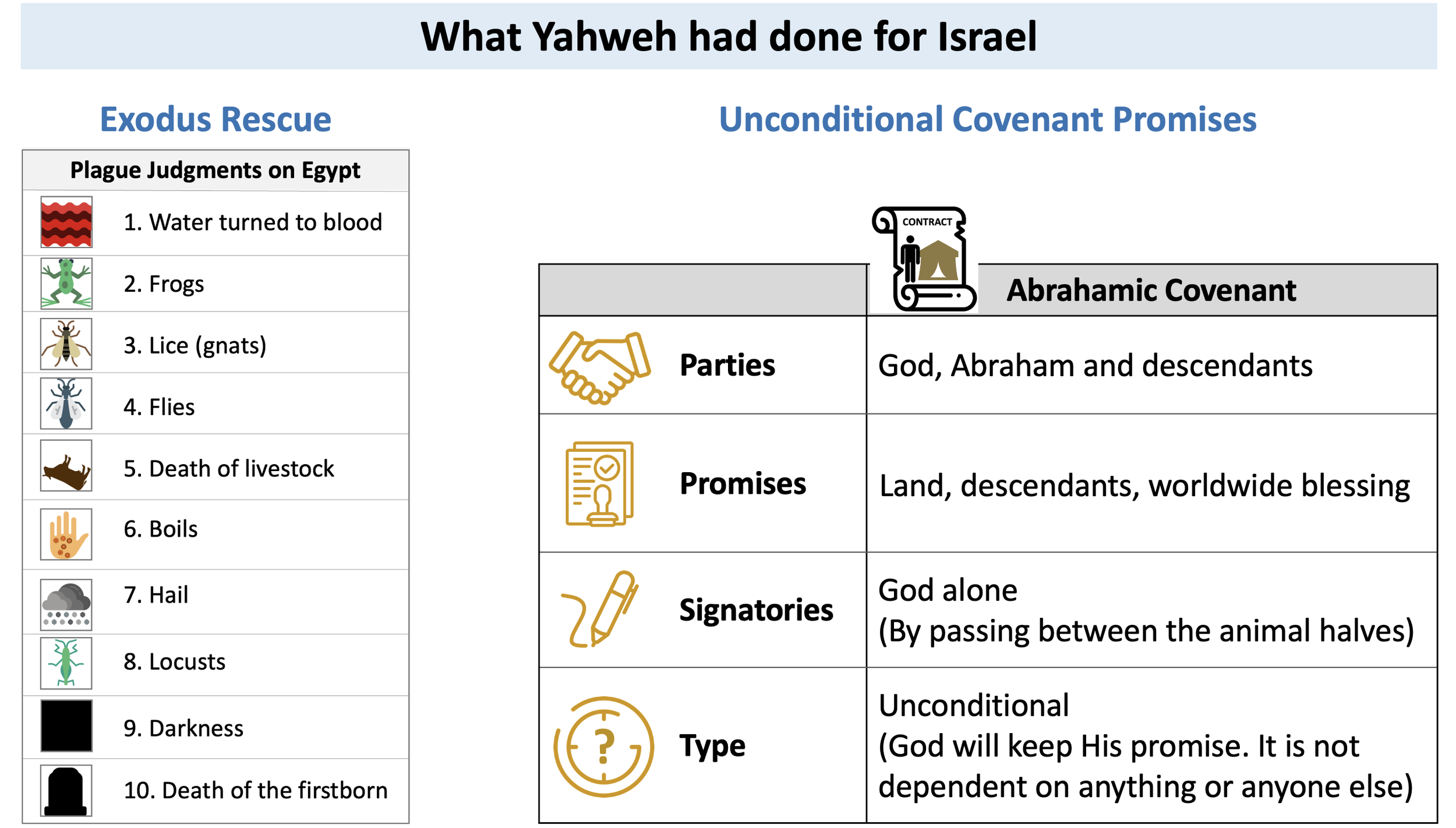
But instead of trusting Yahweh, they let their emotions take over. They panicked over a situation they had created in their minds. Their panic was so great, they wanted to choose new leaders and head back to Egypt, the land where they had been enslaved for 400 years! This was an example where an unreasonable fear of the future caused the people to shrink back. Fear and unbelief can lead God’s people down wrong paths of thinking.
Four men intervened. Moses and Aaron went before Yahweh and prayed for Israel. Caleb and Joshua told the people not to rebel against God’s instructions. He would give them the land. All they had to do was be obedient. Caleb and Joshua saw the people’s reaction for what it really was: it was sin against God’s instructions.
For the second time, God announced He wanted to destroy rebellious Israel. (The first time was the incident with the gold calf idol in Reading 57.) But Moses interceded once more, reminding God that Israel was His witness. If Israel were destroyed, the pagan nations would think Yahweh was powerless to keep Israel secure.
So God acted in accordance with His character. “The LORD is slow to anger and filled with love… But He does not excuse the guilty. He lays the sins of the parents upon their children…”
What did this mean?
God was merciful. He would not destroy all of Israel. But as the all-righteous God, He could not ignore sin. He would punish the disobedient adults. They would not be allowed to enjoy the Promised Land. Rather, they would live in the wilderness until they died. (Note that this punishment was about how the adults of Israel failed to walk in obedience during their lifetimes. It was a failure of sanctification. God allowed physical death to end their mortal lives. But their justification and eternal life are not in question as those were secured by God.)
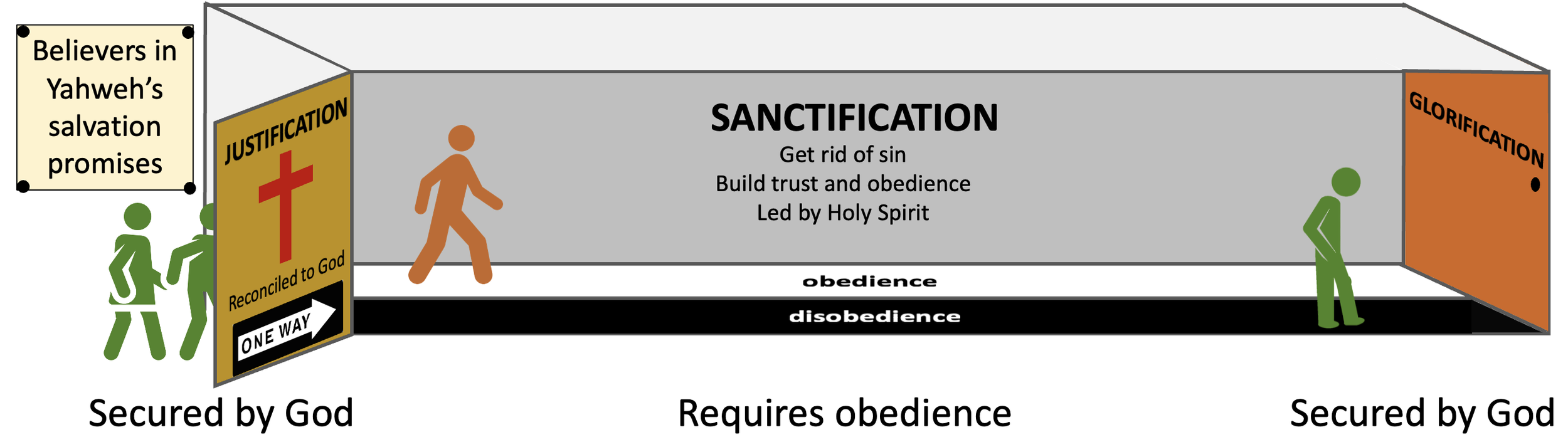
After the parents’ death, their children would conquer the land and enjoy it. But they would have to wait till their parents’ generation died. Though God was not punishing the children, He permitted the sad effects of sin to play out and in this way, the children were impacted. (That’s what it means to have the sins of the parents laid upon the children.)
The day after this, the rebellious Israelites didn’t want to accept God’s judgment on them and thought they could make things right by obeying God’s earlier command. But it was too late. Once God deals with sin and moves on, there is no going back. Though the Israelites charged into battle, they lost because God did not go with them.
What can we learn from this sad incident?
When the people of God are in the will of God, there is no place for complaining, even if the circumstances are difficult. When God directs our lives, we must be assured that God will never lead us where His love, grace, wisdom and help can’t reach us. Therefore, it’s important to know God well. For us, the study of His Word, and our daily obedience to His Word will build our experience with God.
For example, when we read in Romans 8:28 that God causes everything (both the good and bad things in our lives) to work for our good, do we personally believe this to be true for our lives? When we are in a difficult situation, do we still believe that the difficulty will eventually produce something good in our life, that God is doing something behind the scenes to grow us?
A believer who is slow to obey and who complains about God’s will is showing a heart that is not surrendered to Him. When we grumble about God’s guidance in our life, we are showing we think we know better than Him. We are questioning His love, wisdom and power. We will be rousing Him to discipline us!
When we walk only by what our eyes can see but not through the eyes of faith in God, we will forget who He is and stumble. We may shrink back and even give in to fearful emotions. Let’s not live this way. Instead, let’s be regular about learning more about God and to trust His Word and His character. Let’s also review how He has led us in life’s journey. When we exercise these spiritual disciplines, we won’t be so easily spooked when the paths that God leads us on become challenging.
Is there anything challenging or difficult in your life right now? Tell God about it. And turn to His Word for understanding of how He uses tough times to grow His people.
Take some time to read the following verses about endurance in tough times:
Romans 5:3–5
Romans 8:28
Hebrews 10:32–36
James 1:2–8.