
The Devotional Journey: Bible Reading 33
Yahweh moves forward with His plan for Joseph
Read Genesis 41:1–57.
Two more years have passed and Joseph was still working in prison. But when Yahweh began to move forward with His plan, things happened quickly. God demonstrated how He was sovereign not only over Joseph’s life, but also history.
Yahweh gave Pharaoh two dreams in one night. These dreams puzzled him and his wise men and magicians (persons who could supposedly interpret dreams and tell the future) couldn’t interpret them. That’s when God jogged the cupbearer’s memory. He told Pharaoh about the Hebrew man in prison who could interpret dreams. So Pharaoh summoned Joseph.
And for the third time, Joseph’s life took a dramatic turn when he had to give up his prison clothes. He was cleaned up and made to look more Egyptian before appearing before Pharaoh. Joseph told Pharaoh humbly that it was his God, Yahweh, who could explain the two dreams.
Joseph listened to Pharaoh describe his dreams and then interpreted them. Yahweh was revealing what would happen in the next 14 years! Now that Pharaoh was made aware of God’s plan, what would he do?
Here was where Joseph went beyond just interpreting the dreams. He suggested to Pharaoh that a wise person must be appointed to oversee the land and the abundant harvests that were going to happen immediately. And this appointed man would also need a team to help him take charge of different areas of Egypt in order to manage the surplus food properly. Joseph advised Pharaoh to take one-fifth of each harvest and store the grain in preparation for the seven years of famine that would follow the seven years of bumper crops.
Joseph’s humble manner, his skill at interpreting Pharaoh’s dreams, plus his excellent proposal made Pharaoh realise he was already looking at the perfect man for this big job.
Over 20 years ago, Joseph’s brothers had ripped his special robe from him. But now, Pharaoh dressed him in a robe of far greater significance and gave him a signet ring and gold chain as symbols of his new authority. Joseph was now second-in-command of Egypt, reporting directing to Pharaoh!
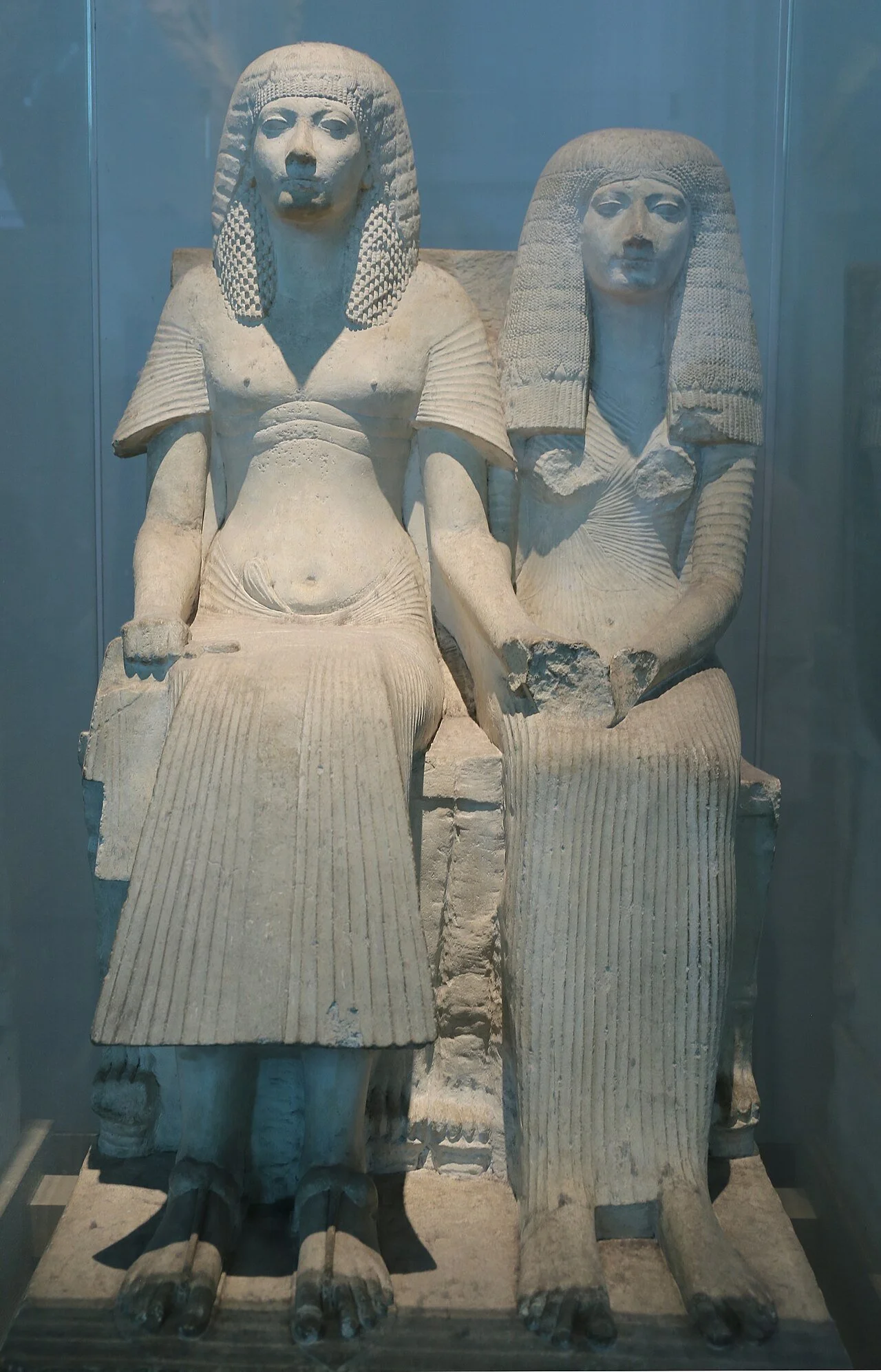
Limestone dyad featuring Horemheb and wife Armenia. Horemheb was a high-ranking general under three Pharaohs. Joseph would have been dressed similarly when Pharaoh promoted him to second-in-command. Photo by Pymouss, CC BY 3.0. Wikimedia Commons.
Joseph was also issued a special chariot and wherever he went, the Egyptian officials commanded the people to bow down before Joseph. Having interpreted other people’s dreams correctly, Joseph no doubt understood the two dreams that Yahweh had given him years before. And now with all of Egypt bowing before him, Joseph must have known that it was only a matter of time before his family would appear before him and bow down.
Pharaoh gave Joseph a wife, a daughter of one of the leading Egyptian priests, who were considered the ruling class of Egyptian society. This was Pharaoh’s way of ensuring Joseph would be of the right high rank.
Yahweh blessed Joseph with two sons. He named the first Manasseh, which meant “forgetting”. Joseph said his first son helped him not dwell on the suffering of the past years. We see that he didn’t let past hurts make him bitter and resentful. And he didn’t blame God for the past. Rather, he knew God had been working in and through his life.

His second son he named Ephraim, which meant “twice fruitful”. Joseph had suffered greatly, but God blessed him twice: he had a family now and he was in authority over Egypt.
The years of suffering were not wasted. It was the time needed to train Joseph to be the right leader for the right moment. He had grown to be wise, humble, faithful and loyal to Yahweh. And God had prepared his heart to be ready to forgive his family when it came time to meet them again. Joseph recognised that though evil people had made many decisions that impacted him over the course of his life, God was overall in charge and had a reason and plan for all that had happened.
There is much we can learn from Joseph’s life journey. It is wonderful when we can go through trials with the same attitude that Jospeh had. He forgave those who were evil towards him, buried his past hurts and was able to focus on moving forward with God. He was able to be “forgetful” about the hard circumstances and declare that God was making him “fruitful”.
In our own lives, it is a real tragedy if we only remember painful things that have been done to us. Sinking into bitterness robs us of the peace and joy that God offers. Just as Joseph laid aside his prison clothes and made a new beginning, we too can “take off” old hurts and put on a new attitude of faith.
Have we been hurt in the past? Make a decision to forgive those who have hurt us. And if it is hard to do, ask God for help to work in our hearts and minister to us. Let us seek God’s help to move forward each day with His guidance and help. May we be like Joseph, forgiving and trusting in God through hard times and good times.
The Devotional Journey: Bible Reading 32
Yahweh guides Joseph’s life in Egypt
Read Genesis 39:1–40:23.
The last time we saw Joseph, he had been sold off to Ishmaelite traders and then sold as a slave to a high-ranking Egyptian official named Potiphar, who was in charge of Pharaoh’s guards and prison that housed important prisoners.
Though Joseph had been naive, pampered and arrogant as a teen, he grew up fast as a slave. In fact, his terrible circumstances caused him to become a mature, responsible, hardworking and wise adult.
No doubt fortified by what Yahweh had shown him in his visions of people bowing down to him, Joseph decided to live righteously before Yahweh. He could have accused God of injustice. But he conducted himself well and God blessed him.
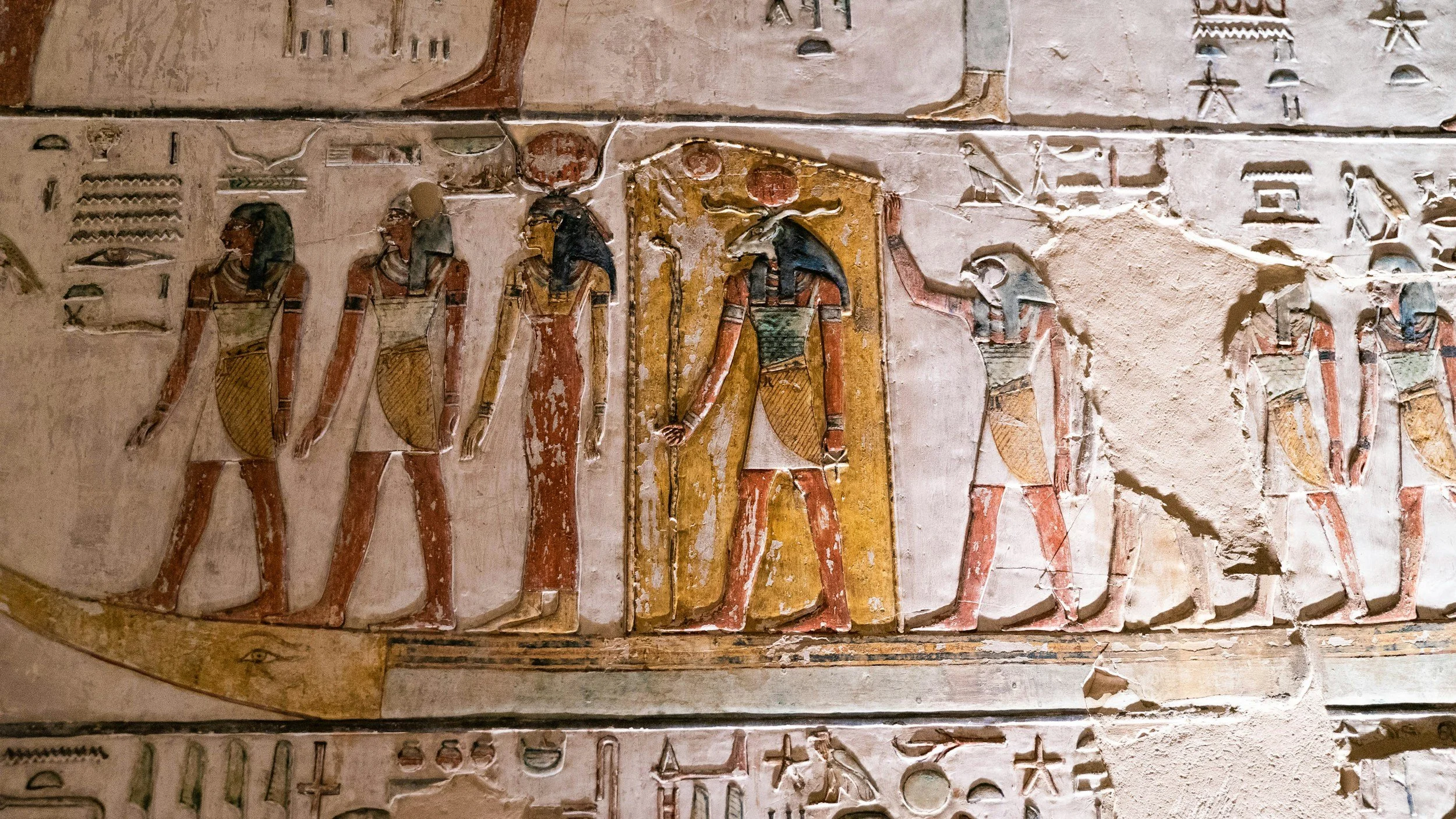
Tomb of Seti I in Valley of the Kings. Photo by 2H Media on Unsplash.
The phrase “the Lord was with Joseph” tells us Yahweh was working behind the scenes in Joseph’s life. The Egyptians worshipped as many as 2,000 idols and Pharaoh himself was considered a god. So when Joseph, who steadfastly worshipped Yahweh, was blessed by his God, Potiphar and his household took notice of Joseph and his God.
Potiphar ended up promoting Joseph to be in charge of the running of his household and business (his farm and livestock). Just like the person mentioned in Psalm 1, when Joseph decided to stay close to Yahweh, God Himself blessed the work of his hand.
But also equally true, when believers walk closely with God, evildoers tend to attack. In Joseph’s case, it was Potiphar’s wife who, through her own lust, made life difficult for Joseph. She probably regarded him as no more than an object and wanted her way with him. To his credit, Joseph honoured both God and his master by keeping away from her as best he could.
Potiphar’s wife eventually found a way to get Joseph alone and was blatant in her sexual advances. The attempt ended badly for Joseph for he was falsely accused of rape and Potiphar threw him into prison. (Yet another item of clothing gets Joseph into trouble!)
Despite being in worse circumstances, Joseph continued to trust God. And God caused the prison warden to look upon Joseph with favour as Joseph continued to behave righteously. In fact, the warden gave him responsibility after responsibility, till Joseph was in charge of the other prisoners. All this unjust treatment helped to build Joseph’s character and prepared him for the bigger plans God had for him. He had time to ponder on the two dreams that God had given him. He had time to become wise and mature about the ways of God. He had time to understand that God’s plans had to unfold at God’s timing.
When two important prisoners ended up in prison, Joseph was put in charge of them. He was an observant man for he noticed how upset the two men were after their dreams. While Joseph had been pondering about his own dreams for years, God now gave him insight into the cupbearer’s and chief baker’s dreams. (The cupbearer was a very important role. He was responsible for ensuring that Pharaoh’s wine and food were not poisoned. It was a position of high trust.)
As Joseph had interpreted, the cupbearer was restored to his position but the chief baker was executed. At this moment, there was a rare faltering of Joseph’s faith in God when he made a plea to the cupbearer: “Please remember me and do me a favor when things go well for you. Mention me to Pharaoh, so he might let me out of this place.”
Though his life had thus far been very difficult, Joseph had experienced Yahweh’s hand leading him. But he tried to hurry up God’s plan by putting his trust in the cupbearer instead of waiting for God. But as soon as the cupbearer was restored to his position, he promptly forgot all about Joseph. People may fail us, but God doesn’t. God will act according to His perfect timing.
There is much we can learn about Yahweh through this 20-year period of Joseph’s life (the same years that Judah and Tamar’s account unfolded.) When God places us in difficult circumstances, we should not be too quick to ask for rescue but ask if God has something for us to learn. Perhaps He is wanting to stretch and grow us. Just as Joseph became mature and wise through adversity, God may likewise be training us by placing us into challenging circumstances.
Let’s consider our life situation. What difficulties are we are facing? Ask God to strengthen us so that we can continue to honour Him with our thoughts, words and deeds. Ask Him for strength and wisdom so that He can work through us. He has a plan and a reason for what is happening to us. May those observing us during our trials end up taking notice of the God whom we worship.
The Devotional Journey: Bible Reading 31
Yahweh works through Judah and Tamar
Read Genesis 38:1–30.
The Bible leaves Joseph for a time and focuses on his older brother, Judah. The events of Genesis 38 span about 22 years.
After the incident of selling off Joseph, Judah moved away from the family. He married Shua, a Canaanite woman whom he liked. With her, he had three sons: Er, Onan and Shelah.
His great-grandfather Abraham and grandfather Isaac had been careful not to choose Canaanite wives for their sons because the Canaanites had such immoral lifestyles and were very much into worshipping false gods. Abraham and Isaac knew the ungodly influence that the Canaanites would have. But Judah didn’t seem to care.
Yahweh had specifically chosen Abraham and his descendants to preserve His history and truth but Judah was threatening God’s plan with his unwise behaviour. When Er was old enough, Judah found a Canaanite woman, Tamar, to be Er’s wife. Again, we see Judah’s foolishness and lack of concern for God’s plan for his family.
Er was an evil man and God put him to death. According to the culture of that time, if a widow had no children, the custom was to protect her and her dead husband’s property by getting an unmarried brother of the dead man to marry her. This way, the brother would produce an heir for his dead brother and the widow. This child would be known as the child of the dead brother and his wife and thus inherit the dead brother’s property. This ensued the widow would be protected and provided for. (This custom is known as levirate marriage, from the Latin word levir which means “brother-in-law”.)
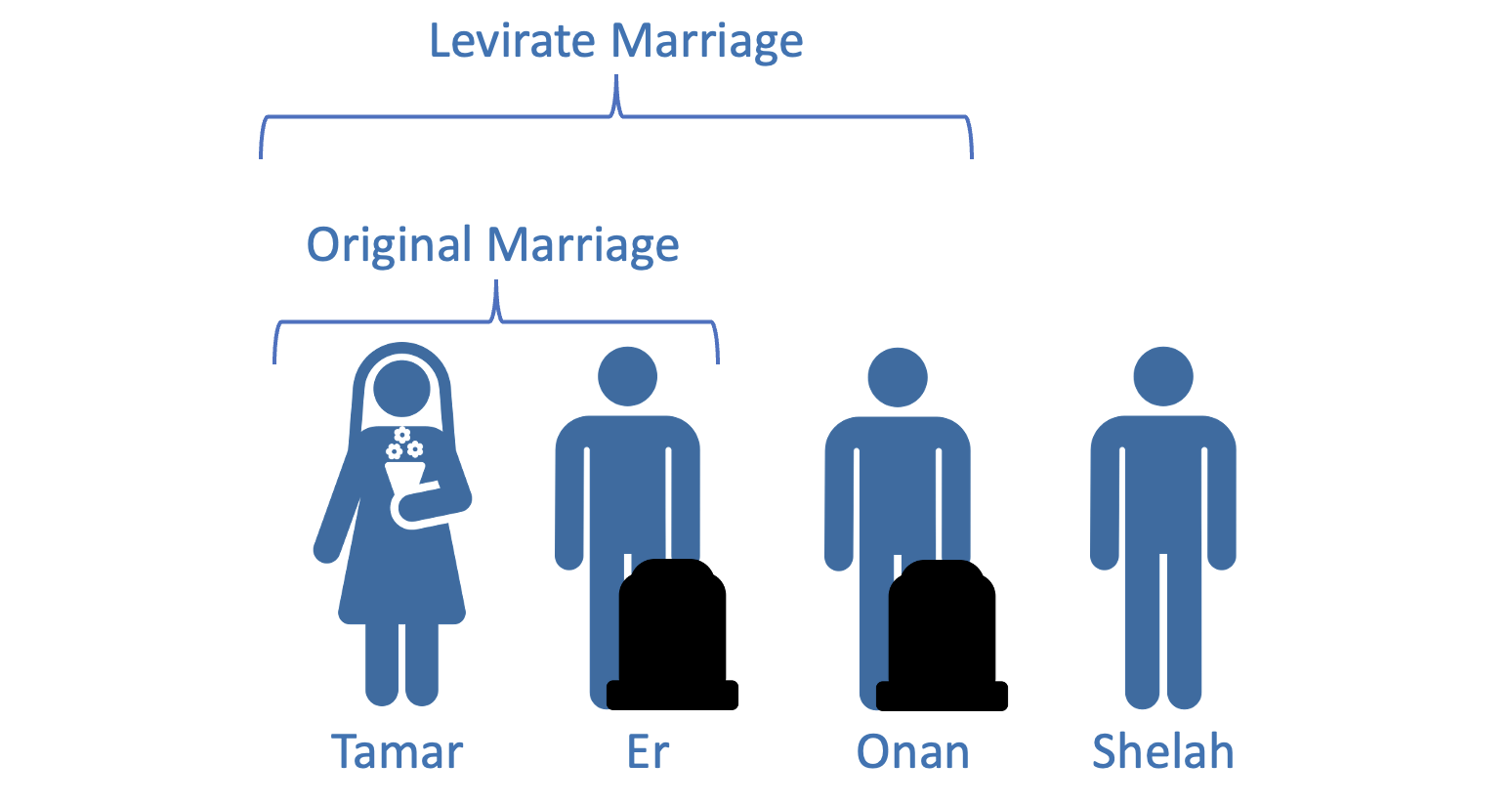
So Judah made his second son Onan take on that responsibility. Onan was willing to have sexual relations with Tamar, but he made sure he didn’t get Tamar pregnant. Perhaps he reasoned that if Tamar had no heir, then his share of the family inheritance would increase. But God was displeased with his behaviour and also put him to death.
Now the duty to help Tamar went to Judah’s remaining son, Shelah. But Judah feared that Shelah might also die. And so he sent Tamar away with the excuse of wanting Shelah to grow older first.
This was when more deception fell upon Jacob’s family. Jacob had tried to deceive his father Isaac with Esau’s clothing and the skins of goats. Then Judah himself deceived Jacob by covering Joseph’s robe with goat’s blood. And now, Tamar deceived Judah, her father-in-law, by hiding her face with a veil and asking for a goat as payment for sex.
Judah’s moral character was very flawed. He had deceived his father about Joseph, he had cheated Tamar of the right to have a child by one of his remaining sons and a share of the family wealth, and now he had no qualms about paying for sex with a stranger! And Tamar too, had chosen a risky, immoral move to get an heir (and preserve her right to her husband’s inheritance) through her father-in-law!
Amazingly, through these poor decisions, Yahweh was also doing something. The men and women involved in God’s plan were not perfect, not morally right much of the time, and often made poor decisions. Yahweh did not approve of their sins, and He ultimately revealed and judged their sins. But God can take the weak things of this world and use them to accomplish His good purposes.
What did God do through Judah and Tamar? In the future, their son Perez would produce a long line of descendants that ultimately led to the earthly parents of the Saviour, Jesus. This was why Judah and Tamar’s account was significant. Their life story reminds us of God’s patience, grace and sovereignty. God has purposes for all His people.
If we have made poor choices, don’t think that God cannot redeem the situation. Go to Him with a humble, repentant heart and seek His help and guidance. Even when we make sinful choices, God is not stuck. He is able to work with and through us, especially when we are repentant.
When Judah realised his unrighteous behaviour, he said of Tamar, “She is more righteous than I am, because I didn’t arrange for her to marry my son Shelah.” Judah repented of his behaviour. When we see him again later in Genesis, he will be a changed man.
The Devotional Journey: Bible Reading 30
Yahweh speaks to Joseph through his dreams
Read Genesis 37:1–36.
The scene shifts back to Jacob and his family. The last time we saw him, Jacob was getting ready to meet his estranged brother Esau and he had ended up spending the night wrestling with Yahweh and being renamed by God. We skipped over his meeting with Esau but to summarise, Esau and Jacob restored their relationship, and Esau moved away. Jacob settled back into the land God had promised Abraham.
As we enter the final section of Genesis, we start to see Yahweh carefully moving history forward so that His plan for mankind’s salvation can be advanced. The focus was now on Jacob’s sons and in particular, Joseph. He was the son of Rachel, Jacob’s favourite wife and he was born late in his father’s life. So Joseph was Jacob’s favourite among 12 brothers and one sister. (Joseph had a full brother named Benjamin.)
Jacob gave Joseph a special robe or tunic that was beautifully decorated. Every time his brothers saw him wearing it, they were reminded of their father’s favouritism and it made them resent him more and more.
As the all-knowing God, Yahweh began to work to ensure the survival of Abraham’s descendants so that His promises in the Abrahamic Covenant would be fulfilled. But even as Yahweh acted, He did not violate the freedom and free will that He had given His creatures.

Yahweh acted by speaking to young Joseph through two visions. In both of them, the family bowed in submission to Joseph. Joseph made the prideful mistake of telling his family about his dreams and this caused greater resentment among his brothers against him. And even Jacob was not pleased with Joseph’s boasting but he suspected God was starting to work through his young son.
Later, Jacob sent Joseph to check on his brothers who were taking care of the family's herds in distant pastureland. When his brothers saw him from afar, their jealousy boiled over and they plotted to kill him. Imagine how they must have resented Joseph!
But Reuben, Jacob’s firstborn son, convinced the other brothers to throw Joseph down a dried-out cistern (an underground water storage chamber) with the secret plan of coming back later to rescue his little brother. But this plan didn’t work because while he was away, another brother, Judah, proposed selling Joseph off to Ishmaelite traders who were passing by. (The Ishmaelites were descendants of Abraham’s son, Ishmael, and so were actually distantly related to Jacob’s family.)
So Joseph was gone. His brothers covered up their evil act by smearing his precious robe with goat’s blood to make it look like a wild animal had killed him. Jacob was overcome with grief and the rest of his family were unable to comfort him. Meanwhile, Joseph was sold by the traders to Potiphar, an officer of the Egyptian king, the Pharaoh. Joseph was now a slave in Egypt.
Here are sobering lessons for us. We can witness the terrible effects of favouritism and jealousy. And this is God’s chosen family, the family He was working His salvation plan through!
Jacob had repeated the mistake of his parents in showing favouritism. (Jacob’s mother, Rebekah, had favoured him, while his father, Isaac, had favoured his brother Esau.) We need to watch our hearts and behaviour so as not to create such strife in our families.
But at the same time, notice what Yahweh was starting to do. He had hinted through visions to Joseph about the future—his family would bow in respect to him.
Yahweh was able to work through and around young Joseph’s naivety in crowing about his dreams to his family. God was able to work through and around Jacob’s favouritism. And Yahweh was more than capable of working through and around the brothers’ jealous and vicious actions to harm and abandon their young brother. Though people can use their God-given free will to make poor and evil decisions, God is still able to work out His good plans for mankind. We will see more of how God can do this as we read more about Joseph’s life.
The Devotional Journey: Bible Tour Stop 3—Joseph and His Brothers

We will return to the lives of Abraham’s descendants and how God is working with them. In the next eight readings, we will read through the final chapters of Genesis and follow the lives of Jacob’s sons, particularly Joseph, his second youngest, and Judah, his fourth son.
God has already decided that His plan for the world goes through Jacob’s family and God wants to show us how He is more than capable of working with fallen, frail people who are prone to sin and mistakes. We will see that though the people make up their own minds, God is not thwarted by their decisions.
In these early stages of history, God is carefully putting the pieces in place, moving people, controlling the environment and more. Eventually, God moves Jacob and his family into Egypt, ready for the next stage of His unfolding plan. Through this process, we see the growing understanding and faith of the those who trust God.
The Devotional Journey: Bible Reading 29
The joys of the godly
Read Psalm 1.
For this next reading, we go over to the book of Psalms, which is the book after Job. This book is a collection of poetry and songs used for personal and public worship in Israel. (Today, churches also use modern tunes to sing these psalms.) The 150 psalms in this book were written over a span of 1,000 years. Some of the psalms have no known author. Others have their writers mentioned.
These songs are timeless and describe the broad range of human emotions: sorrow and joy, anger and peace, doubt and faith, repentance and praise. The songs also give us many details about Yahweh’s character, Israel’s history, and general observations about the world. Some psalms describe personal struggles, others about Israel as a nation, and still others contain prophecies about the future of the world.
This first psalm begins the collection by linking the blessings of God to taking delight in “the law of the LORD”. The “the law of the LORD” is a Hebrew expression referring to the first five books of the Bible which were all written by Moses: Genesis, Exodus, Leviticus, Numbers and Deuteronomy. These books contain the origin of the universe, the early history of mankind, Israel’s history and the laws that God gave Israel. Collectively, they are known as “the law of the LORD” or “the law of Moses”. So to delight in the law of the LORD is just a way of saying to delight in the Bible, God’s Word.
What are the delights or joys or blessings that come from knowing God’s Word well? Knowing God’s Word well allows the believer to know God’s character well. It would be like getting to know a spouse or best friend well. Such a relationship produces intimacy, trust, good fellowship, peace and joy. Knowing what pleases God helps to direct how we should live and make decisions. It helps us avoid sinful behaviour (which leads to pain and suffering).

In Psalm 1, the believer who lives by to God’s Word is pictured as a tree planted by streams of water. Such a tree will not suffer from a lack of water and can continually produce fruit. The fruit is not about material wealth but about spiritual success in life. The psalm writer (or psalmist) is saying that living in obedience to God’s Word produces the kind of life that God delights in.
On the other hand, “the wicked” in this psalm refers to unbelievers because in verse 5, the wicked will be condemned at the time of God’s judgment. Unbelievers ultimately live either for themselves or with no eternal purpose in mind. Their lives are pictured as chaff (the husks of the grain that are useless) that is blown away.
Psalm 1 is an encouragement for all believers to develop their relationship with God through the study of His Word. The Bible will guide us into living lives that not only please our Creator, but deepens our intimacy with the One who made us, loves us and wants us.
The Devotional Journey: Bible Reading 28
Yahweh shows Job is a sincere believer
Read Job 42:1–17.
This is the last chapter of Job, where we see the conclusion of Job’s trials and what happened afterwards. It’s been many rounds of discussion. And Yahweh Himself has come to address Job. At the end of it all, Job’s understanding of God is deeper, bigger and clearer than before. Job is more humble now that he’s even more aware of just how powerful and sovereign Yahweh the Creator-God is.
Job suffered but he never sinned during his trials. Though his belief in God was firm throughout, cracks were starting to develop in his faith as he struggled to understand why God would allow all this tragedy to happen to him.
His friends didn’t help with their comments. Yahweh told Eliphaz the Temanite (the friend who spoke first) that He was angry with him, as well as Bildad and Zophar, because they said things about God that were not accurate. For example, they mistakenly insisted that Job’s suffering was because of sin. They reduced God to a simple, mechanical formula. But Yahweh and the world He created are far more complex.
But Job was commended by Yahweh even though he complained about God’s supposed injustice. Why the difference? It was because God could see Job’s heart and Job was quick to admit when he spoke wrongly about God (see Job 42:6).
On the other hand, Job’s friends needed to be instructed by God to repent. God was angry with Eliphaz, Bildad and Zophar for saying incorrect things about Him, so He ordered them to bring sacrifices. But He didn’t want to hear their prayers of repentance! Instead, He asked Job to pray for them.
When we face tremendous suffering, we can be overwhelmed not just by our pain, but by our questions. Why is this happening? How can this suffering be reversed? But quick answers, even correct answers, don’t necessarily satisfy when we are in pain. But knowing God is close, God is aware, and God is directing us through the suffering can be of greater help and comfort.
God didn’t answer Job’s questions. Instead, God gave Job a bigger understanding of Himself. He reminded Job that all of creation was under His control, even Job’s trials. He was not uncaring and He guided Job through his suffering.
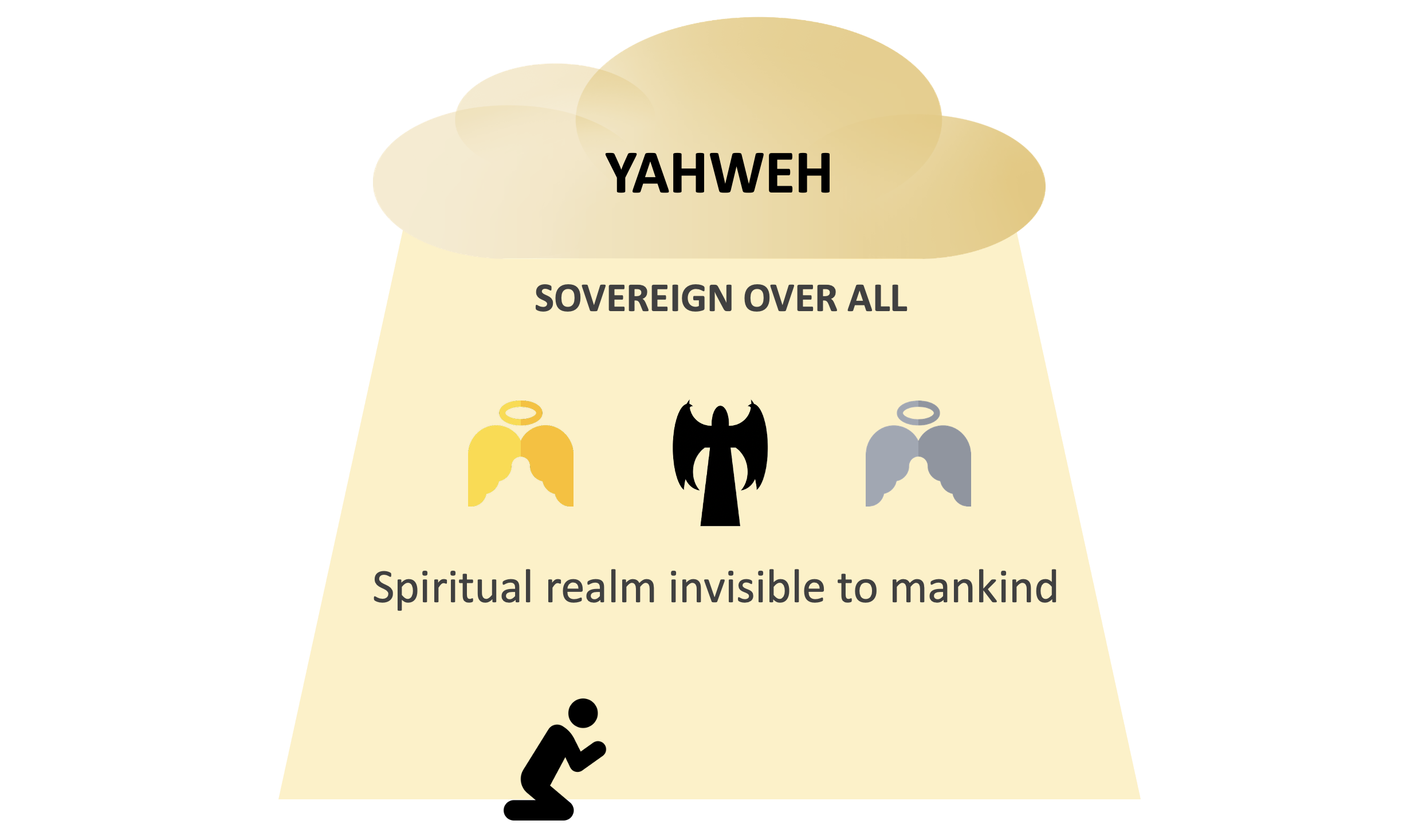
Yahweh never told Job the exact reason for his suffering. He never explained how there was a challenge between Him and Satan over Job. In the same way, God doesn’t need to tell us all the behind-the-scenes reasons for the suffering in our lives. But God wants to hold our hand through the suffering and pain. Will we walk with Him through life’s trials? Will we trust Him for the outcome? Will we be as steadfast as Job was?
In the end, Yahweh proved that Job was a sincere believer. Job never wavered in his faith and in fact, his faith grew through these awful trials. And God blessed him again afterwards. In fact, God doubled his wealth. But note how God blessed Job with 10 more children rather than 20. Why? Because his first 10 children were never lost. Though their mortal lives were over, they continued to live on after death. These 10 later children and the earlier 10 children make 20 in total. God indeed doubled the number of Job’s blessings in every way.
The Devotional Journey: Bible Reading 27
Yahweh questions Job
Read Job 40:1–41:34.
So far, we’ve witnessed Job’s friends trying to convince him that he had committed some sin in his life and that’s why he was facing so much suffering and tragedy (loss of wealth and reputation, loss of his children and loss of his health).
But Job kept insisting he had not sinned against God (which was true). But he began to wonder where was God’s sense of fairness and justice?
Then Yahweh spoke to Job (Job 38). In His first speech, He started with a long series of questions, asking Job if he knew how the universe came to be and how the universe was sustained. The questions were aimed at getting Job to realise that the Creator-God was extremely powerful and nothing was beyond Him, and no one was like Him.

Then here in Job 40 Yahweh began a second speech. He asked, “Do you want still want to argue with the Almighty?” Since Job wasn’t the one who sustained the universe, did he know enough about what was happening that he could accuse God of not being fair? (Recall from Reading 24 that Job was completely unaware of Satan trying to get him to turn his back on Yahweh.)
God continued by asking Job to consider two powerful creatures: the behemoth and the leviathan. What were they? We had discussed the leviathan in Reading 25 and now Yahweh was discussing the behemoth, a second massive creature. (The behemoth’s description would appear to match that of a type of dinosaur.) It would seem that Job was familiar with both these creatures, otherwise, God’s challenge to Job regarding both creatures would be meaningless.
In referring to them, Yahweh was challenging Job to subdue these big and powerful creatures. Obviously, Job couldn’t do that. God was making the point that if Job couldn’t even control animals He had made, what made Job think he could control evil in the universe? But Yahweh, the Creator-God, was the One who made these animals, which suggested that evil forces were also not beyond His control.
So who was Job, a mere man, to be powerful enough, or to know enough to tell Yahweh how to run the universe? God was saying Job was not qualified to take over the Creator’s job or to criticise how He was controlling and conquering evil in the world.
And that’s something for us to consider. As humans, there are many things outside of our control. Though we may be like Job, working hard and being faithful to God as best we can, still we can be impacted by evil, sin and suffering. There are many things beyond our control and awareness and they are not necessarily related to our behaviour.
Instead of accusing God of being unjust, uncaring or unfair, we need to learn to be humble before the Almighty Creator-God. Until we are humble before Him, He won’t do for us what needs to be done. As long we keep complaining and defending ourselves against Him, He won’t work for us to accomplish His plan through us.
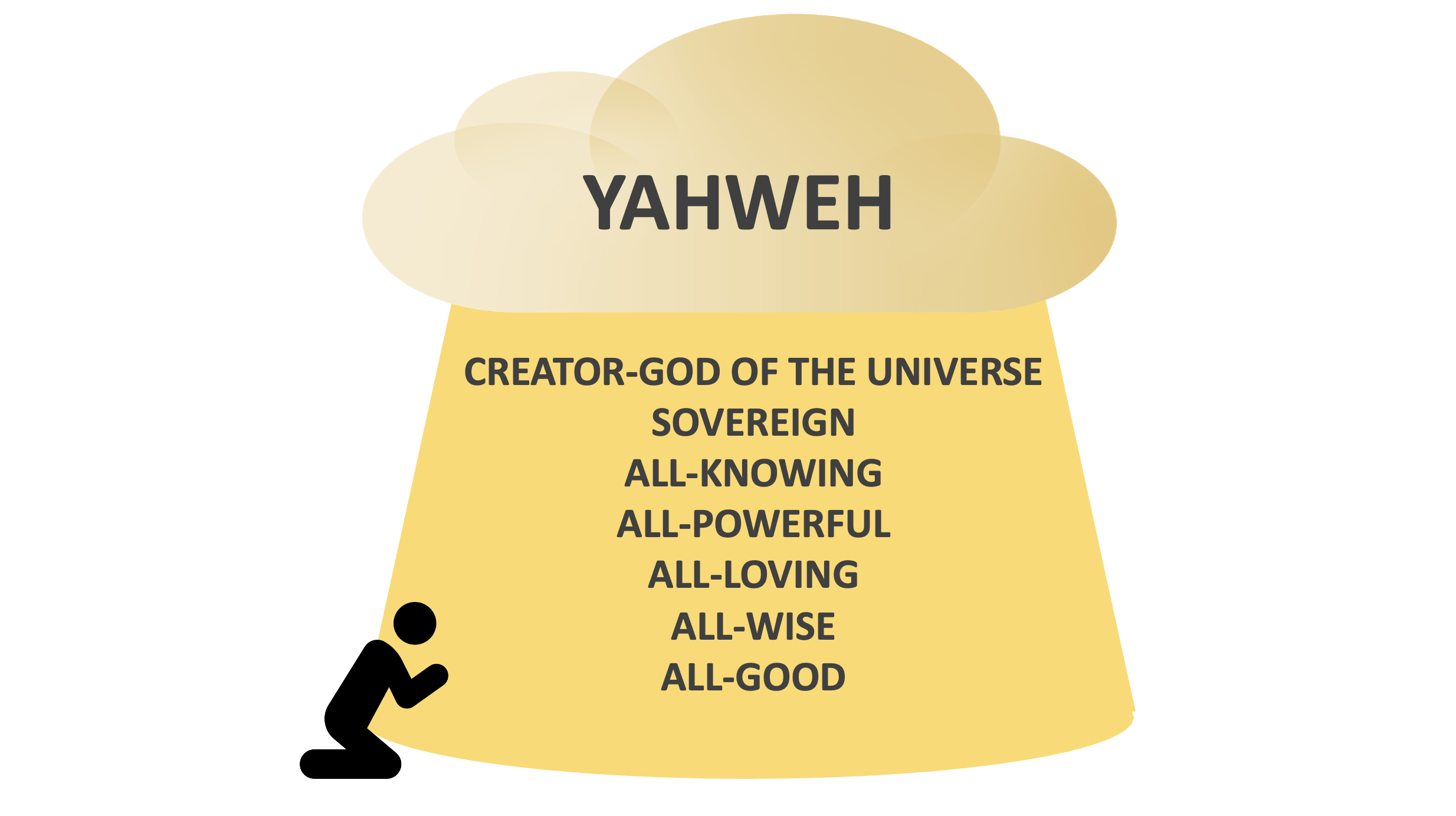
As we consider the difficult challenges in our life, what is our attitude? Are we grumbling against God? Or are we making ourselves humble before Him, asking Him to do what we ourselves cannot?
Let us examine our own hearts and ask God for help to have the right attitude towards Him.
The Devotional Journey: Bible Reading 26
Job clings to Yahweh through his suffering
Read Job 19:1–29.
Recall how Eliphaz was suggesting, based on his own human thinking, that Job’s suffering was a result of some sin that he had committed. Then Job replied to Eliphaz. And after that, there were several more rounds of speeches as Job and the others tried to figure out the cause of Job’s suffering.
Now here in Job 19, Job burst out at his friends’ accusations. Job used a series of powerfully emotional word pictures to describe his intense frustration.
He felt like an animal trapped (verse 6).
He felt like a criminal in court (verse 7).
He felt like a traveller fenced in (verse 8).
He felt like a king dethroned (verse 9).
He felt like a building that was being torn down (verse 10a).
He felt like a tree being uprooted (verse 10b).
He felt like a city under attack (verses 11–12).
He was describing himself as a man utterly rejected by Yahweh. We can feel his pain and deep emotions through these vivid descriptions.
Job’s suffering was sending him to the depths of despair, but even in the midst of pain, he had flashes of hope. He said, “But as for me, I know that my Redeemer lives, and he will stand upon the earth at last. And after my body has decayed, yet in my body I will see God! I will see him for myself. Yes, I will see him with my own eyes. I am overwhelmed at the thought!”
He remembered that all believers in Yahweh will get to see Him. And he wasn’t talking about seeing God as a spirit but as a complete and whole person with a new body. Because he said that though his current sore-ridden body would die and rot, yet in a new body he would see his Creator-God.

Job was talking about the resurrection body! Even at this early stage in history, we see that Job understood what awaited the person who trusted in God for salvation. Mortal death would not be the end for the believer because Yahweh would provide a new, imperishable body. God would reveal more details about the resurrection in the New Testament, but we can already see that even Job had information about what would happen to the believer in Yahweh.
Job’s hope in Yahweh would see fulfilment in Jesus Christ. Job had asked for a mediator (Job 9:33), a witness in heaven to help him (Job 16:19) and a redeemer (Job 19:25). Jesus Christ would perform all three roles for those who believe in Yahweh!
Job was clinging on to God’s truth. This kept him from total despair. This helps us see that when life is going smoothly, we need to learn God’s Word well so that we have a right understanding of Him and of His truth. Then when we are suffering, the truths we have learnt can strengthen and comfort us. God’s truth will be an anchor that prevents our emotions from sweeping us into despair.

As for Job’s friends, they thought they were being helpful. But their insistence of trying to figure out what was Job’s sin was not helpful at all!
Our words can either hurt others or help heal them. Job’s friends were making him feel worthless. We need to be careful that our words are not making a friend’s suffering worse! Even if people need to be corrected, we should learn to do it in a loving and gentle way.
Notice also how Job said that his family, friends and even servants were avoiding him. Being isolated really added to his pain.
When someone we know is suffering and others are mocking him or her, and making accusations like “He’s getting what he deserved” or “This is the result of the way she’s been living”, can we have the heart not to shun the suffering person but extend a hand of fellowship and comfort?
Let us be the kind of people who turn to God daily by reading His word and praying. And when hard times come, let us recall His truth in Scriptures. And when we have friends who are suffering, let us pray to God for wisdom on how we can best comfort and minister to them in their time of need, so that they too, will turn to the One who can truly help: God Himself.
The Devotional Journey: Bible Reading 25
Some insights into suffering
Read Job 3:1–4:21.
Job’s friends have spent a week mourning with him in silence. Then Job began to speak. Satan had claimed that if Yahweh took away the blessings He had given Job, then Job would curse God. Now when Job spoke, he did not curse Yahweh, but rather he cursed the day he was born.
He complained that it would have been better not to have been born, or to have been stillborn rather than to have suffered the things he had just experienced. What we see is that even a person who trusts God and is obedient to God can sometimes be overwhelmed by grief when tremendous tragedy strikes. It’s not weakness but part of the fallen human condition.
Job’s lament was very different from the wise and comforting advice that he had given to others in the past. This tells us that though we may know how life works, sometimes in the midst of our own suffering, our emotions can overwhelm our reasoning.

Then the first of Job’s friends spoke. Eliphaz was probably the oldest of the group and so he spoke first. He gave his own opinion: Those who are innocent and morally upright are not destroyed by God. He was implying that Job had done something wrong and that’s why God was punishing him.
Eliphaz claimed this understanding was given to him in a vision by a spirit. He said this to give his personal opinion authority. As the discussion continued further in the book of Job, we see that Eliphaz was pushing across his own ideas of morality.

We have seen that since Adam and Eve rebelled against Yahweh in the garden, all people on earth have a sin nature and are sinful before the all-righteous Creator-God. But then God demonstrated to Adam and Eve the sacrifice of animals and how a person could have a right standing with God because a sufficient substitute had died in place of the guilty person.
Job understood this principle because as a God-fearing man, he performed many such sacrifices for himself and his family. Job knew His God and His righteous requirements.
But Eliphaz was insisting that Job had some sin that he did not account for. What Elizphaz didn’t realise was there was a challenge between Yahweh and Satan. Job’s suffering wasn’t directly related to sin but was a result of this challenge.
The first speeches of Job and Eliphaz start to give us insight into the nature of suffering. Eliphaz was not wrong to state that a person’s sin will be dealt with by the Creator-God. But as we’re starting to see, not all suffering is the direct result of sin.
In our own lives, when suffering comes our way, we should examine ourselves to see if there is any sinful cause to our suffering. But after close examination and prayer to God, if we are convinced that we are have walked uprightly before God, there may be more to our situation then the “first level” principle of “you reap what you sow”. We shall learn more as we continue with Job’s account.
Also, when we see the suffering of a dear friend or loved one, we mustn’t immediately jump to assigning blame or looking for the sin that caused the suffering. Rather, we should extend compassion and understanding to our friend or loved one.
Historical note
In the midst of his complaining, Job mentioned a creature named leviathan (Job 3:8). This Hebrew word is used at least five times in the Old Testament. It is also mentioned in Job 41:1, Psalm 74:14, Psalm 104:26 and Isaiah 27:1. These verses describe leviathan as a great, serpent-like creature that is capable of living in the water and on land (semi-aquatic). Throughout the book of Job, Yahweh, Job’s friends and Job described things and animals that were familiar to them. This tells us that the leviathan was perhaps a creature that Job was familiar with but now extinct.
Read Job 41:1–34 for a detailed description of the massive leviathan and note how similar it is to what scientists today would call “semi-aquatic dinosaurs". While we won’t see in the Bible modern words like “dinosaur” which was coined in 1841 by Sir Richard Owen, Scripture does have its own vocabulary, like leviathan, to describe the great variety of creatures that Yahweh created during Creation week.
The Devotional Journey: Bible Reading 24
A man named Job
Read Job 1:1–2:13.
We now jump across the Bible to another book entitled, Job. Though the book of Genesis and Job are quite far apart in our Bibles, in terms of history, the events in the book of Job happened around 2000 BC, which is around the time Abraham lived.
So the main character of the book, a man named Job, lived around the same time that Abraham did. But Job did not know Abraham. While the Bible talks about Abraham coming to faith in Yahweh, it appears that Job had been a believer in Yahweh for a long time.
The book of Job explores a very important topic—suffering! Why do believers who trust in Yahweh suffer? In chapter 1, we see that Job is a very faithful man. And God had blessed him with 10 children and many, many livestock. Job was the wealthiest man in the land of Uz.
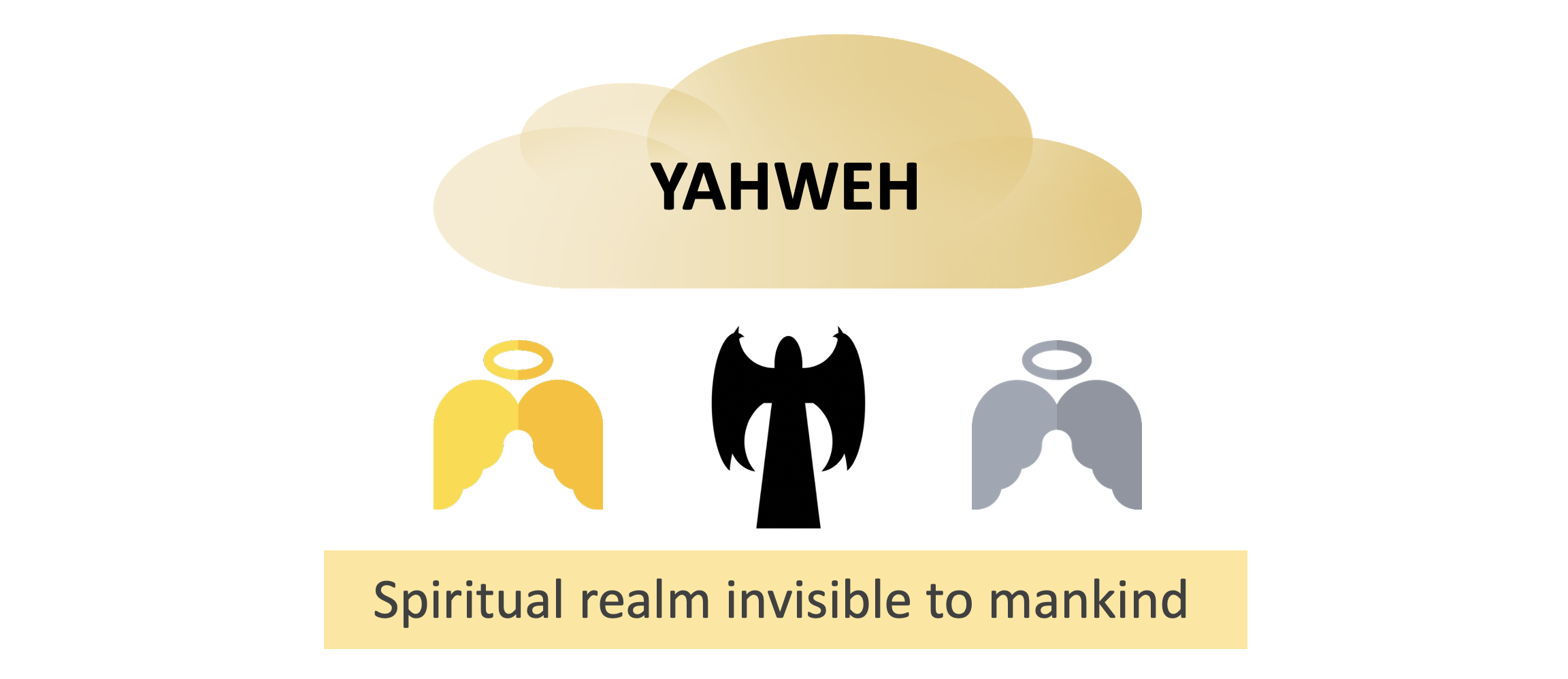
Unseen by Job, there was a confrontation in the spiritual realm that affected him. In Yahweh’s heavenly court, we see the appearance of Satan. We last saw him in the garden tempting Adam and Eve. Satan is a Hebrew name that means “accuser”. But notice that it is Yahweh who first bought up the subject of Job. Satan claimed that Job only worshipped Yahweh because God had blessed him richly. Take away the blessings and Job would turn against God! To see if Satan’s claim was true, Yahweh gave Satan permission to harm Job but not kill him.

Satan’s plotting was meticulous. He influenced two groups of people, the Sabeans and Chaldeans to kill Job’s workers and steal his animals. And Satan was powerful enough to manipulate the weather and natural elements to send fire from heaven and a windstorm that destroyed the house where all of Job’s children were gathered for a feast. And all of this happened in a single day!
There is no mistaking that Satan is real and he is a real threat to people. But he cannot act beyond the boundaries of what God permits.
Despite this first incident, Job did not turn his back on God. Instead he recognised that Yahweh gives and Yahweh takes, and Job was ready to accept whatever God would do to him.
Then with the second attack, Satan afflicted Job with very painful sores. At this point, even Job’s wife began to doubt God’s goodness.

But Job told her, “Should we accept only good things from the hand of God and never anything bad?”
Job was acknowledging that Yahweh is sovereign and His people needed to trust Him in the good times and the bad. (But note that Job had no idea that what was happening to him was the result of a challenge between Yahweh and Satan!)
Final observation: When Job’s three friends Eliphaz, Bildad and Zophar heard what had happened to Job, they came from a distance to comfort him. They saw that his suffering was so great that they initially had no words for him. Instead, they comforted him by their mere presence. They sat with him for a week and grieved with him in silence.

How do we react when tough times or bad things happen to us?
Do we immediately respond by asking, “God, why are you doing this to me?” If that is our first thought, is it because we feel that God somehow owes us a life of comfort and security just because we believe in Him?
Or, can we accept that even believers will go through tough times while in a fallen world—financial ruin, health problems, even the loss of loved ones.
Are we able to remain steadfast and trust that God knows what’s happening to us and that He knows what He’s doing in our lives.
Can we recognise that sometimes, there are events happening in the spiritual realm (like the conflict between Yahweh and Satan) that will impact us and we might never know about them. Can we have this bigger perspective of life when we go through hard times?
When suffering hits us, can we say with Job, “The Lord gave me what I had, and the Lord has taken it away. Praise the name of the Lord!” Can we praise Yahweh through all the circumstances of our lives?
And finally, can we be like Eliphaz, Bildad and Zophar, who put their lives on hold, travelled the distance to be with Job and just sat with him to mourn and comfort him?
Are there people in our lives who could use our presence and comfort?
Reflect on these questions and speak to God about them today.
The Devotional Journey: Bible Tour Stop 2—Job and suffering

While the Bible has been focusing on Abraham and his family, God also wants us to be aware that there are lots of people in the world during this time and among them are also other Yahweh believers. In the next five readings, we will stay in the same era as Abraham but observe the life of another believer named Job.
Through Job’s life, we not only learn how believers of that time relate to God and what they thought of Him, we also learn there is more to life than what our eyes can see. There is a spiritual battle happening over Job’s life that he and his friends cannot see but that battle has great influence over them.
Another observation we can make is though we may think of early people as primitive, we’ll see that these early people were sophisticated and they had substantial knowledge about God.
The Devotional Journey: Bible Reading 23
Yahweh wrestles with Jacob
Read Genesis 31:1–55.
This was a fascinating incident in Jacob’s life. So far, we’ve seen Jacob’s life struggles. We’ve witnessed him scheming and deceiving, and we’ve seen him being deceived in return. But now we see an unusual incident that pictured how Jacob’s life has been.
The passage began with Jacob sending his family across the river to keep them safe from his upcoming encounter with his brother Esau. Then he spent the night alone. But a man appeared and wrestled with Jacob all night! Who was this man?
Jacob realised that the man was Yahweh Himself and he clung to Him, refusing to let go. The “man” then merely touched Jacob on the hip and dislocated it. Then the “man” changed Jacob’s name. “Jacob” means “deceiver”, but now his name was changed to “Israel” which means “God strives”.

This man could hurt by a mere touch and he had the authority to change Jacob’s name. This tells us this was God Himself.
Recall how God named what He made at creation and how He also renamed Abram and Sarai to Abraham and Sarah to reflect the promises He was making to them.
In the same way, Yahweh was telling Jacob, now named Israel, that He would always strive for Jacob and his family because of the Abrahamic Covenant promises that He had made with Jacob’s grandfather.

Though Jacob had tried to succeed through underhanded ways, God demonstrated with a mere touch that Jacob’s destiny was ultimately in His hands. It would be God who would guide, provide and lead Jacob. Yahweh would fight for Jacob! And to reflect this reality, God changed his name to “God strives”. God would work hard for Jacob and he didn’t need to live in the scheming way that he had.
As a result, Jacob called the place Peniel, which in Hebrew means “face of God” because he really did see, touch and even wrestle with God face to face. From that day on, Jacob limped. It would be a moment-by-moment reminder that God was far more powerful than Jacob’s scheming. It would be God’s grace and promise-keeping character that would provide for Jacob.

When Jacob was all alone that night, it was the perfect opportunity for Yahweh to meet with him. Without any distractions and at the end of his strength, God could command Jacob’s full attention. Jacob had spent his life wrestling with people—Esau, Isaac, Laban and even his wives—so it’s interesting that God came and wrestled with him as well and in fact, overpowered Jacob.
Jacob had spent his life fighting and scheming but the way to work with God was through surrender. God asked Jacob, “What is your name?” Previously, when his father Isaac had asked him the same question, Jacob had lied and said, “Esau.”
But before God, he admitted who he was. Only when he faced himself and admitted to Yahweh who he really was, the deceiver, than God really worked with him. Only when he yielded to Him could Jacob experience God’s grace.
It is the same for us.
When facing life challenges, often, our first response is to rely on our own resources—our wealth, our human wisdom, our connections and our schemes. We forget that our loving Father not only has all the resources we need, but He has the way forward for us.
Can we make it our instinct to run to Him for help rather than strive on our own?
Jacob did that for many years of his life and it only created one challenge after another.
But when he learned to surrender his life to God, then God could work with and through him. Rather than serving himself, Jacob learned to serve God.
Can we do likewise? Can we yield to God not only our life challenges but our life itself so that God can work with and through us?
The Devotional Journey: Bible Reading 22
Jacob’s dealings with Laban
Read Genesis 31:1–55.
Yahweh was protecting and blessing Jacob and he grew in wealth. This didn’t go unnoticed among Laban’s sons who began to be concerned that Jacob would soon overrun the family. Knowing this, Yahweh instructed Jacob to return to the land that He had given to Abraham’s family.
Jacob wasn’t sure if his wives would leave with him so he had to tell them how Yahweh had been blessing him and how God had reminded him of the vow he made at Bethel years ago, to honour Yahweh and return to his father’s land (Genesis 28:20–22). His wives readily agreed to leave with him.
Afraid of what Laban might do if he asked for permission to leave, Jacob took all the people, animals and goods that belonged to him and quietly ran away from Laban.

When Laban found out, he immediately started chasing after Jacob. It took him seven days of travel to catch up with Jacob and his family.
As He had promised, Yahweh protected Jacob by appearing to Laban in a dream and warned him to leave Jacob alone! So when Laban finally caught up with Jacob, he pretended to be hurt that Jacob had ran away. Laban pretended that he would have thrown a farewell party for Jacob had he known his son-in-law wanted to leave.
Laban also told Jacob that he had the power to harm him. But Laban said that Yahweh had warned him not to and so he refrained himself. But Laban demanded to know why Jacob had taken his household idols.
The household idols appeared to be very important to Laban, even more important than losing his daughters or livestock. Perhaps he thought that the idols protected him and had brought him wealth. With the idols gone, he was possibly afraid that he had now lost his protection.
The Bible doesn’t tell us why Rachel stole her father’s household idols. Was she punishing him? Or did she think that the idols were helpful? Stealing the idols seemed to indicate that just being in Laban’s idol-worshipping home had impacted or influenced Rachel negatively.

But Jacob didn’t know that Rachel had stolen her father’s household gods and so he allowed Laban to search through his whole camp to look for them. Laban failed to find them and Jacob took the opportunity to scold his father-in-law, reminding him of how he had mistreated Jacob for 20 years.
Without the household idols, Laban was afraid that in the future, Jacob might decide to attack him. After all, Laban was guilty of all the accusations that Jacob had laid on him. He had not been nice to Jacob at all!
And so, to protect himself Laban asked to make a contract with Jacob. The contract was mainly to say that both men would agreed not cross over to each other’s land. It was like a border treaty.
As a sign of the treaty and the border, the men built a pillar with stones to mark the location that separated each other’s territories. And then ironically, Laban called on Yahweh, Jacob’s God, to watch between them. Even though Laban was an idol worshipper, he didn’t call on his own “gods”.

We see in Laban a confused man, one who was willing to acknowledge Yahweh as God but at the same time worship handmade, manmade idols. In Laban, we learn a sobering lesson. We need to watch ourselves to make sure that we know and understand Yahweh properly through diligent study of the Bible. A right understanding of God would prevent us from also worshipping other “gods”. If we don’t study God’s Word, we might end up like Laban, where our own thinking becomes our final authority, and that would lead us to making wrong decisions and trusting in the “wrong gods”.
This was one reason why Yahweh had Jacob separate from Laban. God didn’t want Jacob’s family to have more pagan influence especially since He was going to work with Jacob’s family to build the nation of Israel.
Sometimes, people have the idea that Yahweh will only work with those who already know Him or worship Him. But here, we see that God intervened in the situation to talk to Laban, who was an idol worshipper. Whether a person believes in Him or not, God is able to work things out so that His plans will be fulfilled.
If we are having problems with people who don’t believe in Yahweh, we can still pray to ask God to intervene and help us. Yahweh really is the God of all people and the whole universe, regardless of whether people acknowledge Him or not.
The Devotional Journey: Bible Reading 21
Yahweh oversees Jacob’s life
Read Genesis 30:25–43.
As soon as Rachel gave birth to Joseph, Jacob told Laban that he wanted to return home to Canaan. Jacob now had eleven sons and one daughter and had worked for Laban for many years.
Because Yahweh had blessed Jacob in all he did, when Jacob was looking after Laban’s animals, Laban became a very rich man. Laban knew that it was because of Jacob’s God that he had become rich.
Though it appears that Laban acknowledged who Yahweh was, his heart was not loyal to God.(See Genesis 24:31 when years ago, Laban acknowledged that Yahweh had blessed Abraham’s servant who had come seeking a bride for Isaac.) In his daily life, Laban now worshipped idols. Yet, he was happy to benefit from Yahweh’s blessings but he did not make Yahweh his God.
When Laban asked what Jacob wanted for his salary for working for him, Jacob said that he would take:
all the sheep and goats that had spots or specks on them
all the black sheep. This kind of sheep was rare and in general, accounted for only ten percent of the animals.

Why did Jacob ask such a strange thing? Taking only the spotted, speckled and black sheep would make it easy to distinguish his flock from his father-in-law’s. Laban readily agreed because he thought that he would be getting away with paying Jacob very little. But even then, before Jacob could do as he had asked, Laban deviously removed all such animals and gave them to his sons. Then he made his animals and sons take a three-day trek to keep them far away from Jacob! Laban was really trying to make sure he would not need to pay Jacob much at all!
Jacob did something unusual and perhaps superstitious by taking sticks and tearing off the bark so that the sticks would have two colours. Some Bible scholars think that this superstition is like the thinking where if a pregnant woman keeps looking at boys then she will likely have a boy. Or perhaps Jacob knew something of the animals’ behaviour. Whichever the case, we are not sure. But Jacob also cleverly practised selective breeding by getting the stronger, healthier females to mate and therefore produce stronger lambs.
In any case, Yahweh prospered Jacob not because Jacob did these things but because of God’s own promise to him.
Actually, Jacob himself knew that. Later on, he himself said that it was Yahweh who increased his flocks. He knew that God was the One who gave him all that he had. He did not credit it to the sticks nor his clever breeding methods.
Yahweh helped Jacob when Laban was trying to cheat him. God made sure that Jacob was well compensated for all the work he did for Laban. God didn’t allow Laban to succeed in continually cheating Jacob.
We continue to see human striving and manipulation in this account between Laban and Jacob. But we also continue to see God’s control over all that happens.
Yahweh is sovereign over all and He can triumph over any human effort. This is the kind of God we worship. Nothing is out of His control. Let us ponder on this. No matter what mankind does, good or bad, God is watching and can intervene according to His will.

We can go to God in prayer about any situation we are facing.
Those who don’t know Yahweh won’t go to Him in prayer.
But for those of us who do, we rejoice and are thankful that we have a God who has access to all the resources in the world. He controls birth and life, the animal world and all He created. And He watches over us in every detail of our lives.
There is also a caution for us from today’s reading. We note that Laban, though knowing who Yahweh is, also worshipped idols and in fact, didn’t think much of God at all. We ought to examine our own thinking to ensure that we are not mixing ideas about Yahweh, the true God, with false ideas or false superstitions. The only way to know God accurately, is to read and study His Word regularly. Then we would be relying on a clear understanding of Yahweh and not on truth that has been mixed with falsehoods.
The Devotional Journey: Bible Reading 20
The sons of Jacob
Read Genesis 29:15–30:24.
Earlier on, we saw trouble in Isaac and Rebekah’s family when Jacob deceived Esau to gained the birthright. Now Jacob himself was deceived by his uncle, Laban, when Jacob lived with him for 20 years.
Through these events, Yahweh used this challenging period to discipline Jacob as well as grow him. And God also advanced His promised plan of building the nation of Israel from Jacob.
Laban had two daughters, Leah and Rachel. Jacob loved Rachel and wanted to marry her. But in their culture, the groom would have to pay a bride price. That would be about 30-40 shekels of silver. The average worker’s income was one shekel per month. Because Jacob didn’t have money, he and Laban agreed that he would work for seven years to pay the bride price for Rachel.
This was actually a poor deal: working seven years meant Jacob would have earned 84 shekels, more than double the average bride price. Nevertheless, he loved Rachel so much he was not only willing to do that, he felt that the seven years went by quickly.
However, Laban deceived Jacob. On his wedding night, Leah was given to Jacob instead of Rachel!
Leah would have been veiled, so Jacob wouldn’t have been able to see her face. Earlier, Jacob had pretended to be Esau in order to trick his father Isaac. Now, Jacob experienced how it felt to be deceived by Laban: he was intentionally given the “wrong” girl! Jacob must have recognised that he had done the same thing before. So he had to accept it.
After finishing the bridal week with Leah, he also married Rachel. So Jacob had two wives in seven days: Leah at the start of the week and Rachel at the end of that week. But to pay the bride price for Rachel, he now had to work another seven years for Laban.

When God created mankind, marriage was supposed to be between one man and one woman. But we see that mankind perverted it. Even Jacob ended up with two wives!
There are serious consequences when people don’t follow God’s good design. The wives were jealous and competitive. They started a contest of child-bearing, competing for Jacob’s love and recognition. What a terrible situation! But we will see that God was not thwarted. He used this bad situation to bring about good. He created the nation of Israel.
How did this happen?
It started when Jacob favoured Rachel but was cold towards Leah. God saw that Jacob didn’t love Leah as much as Rachel and in His compassion, gave Leah children. Rachel became jealous because she was barren. So she came up with a plan and gave her servant to Jacob as his wife.
When both Leah and Rachel got married, their family had given each of them a servant girl as a wedding gift. This was the custom during that time. One servant girl, Zilpah, belonged to Leah and another, Bilhah, belonged to Rachel. Just as it was earlier, when Jacob’s grandmother, Sarah, had given her servant girl, Hagar, to Abraham as a wife to help her bear a child who would be treated as Sarah’s, Leah and Rachel could choose to do the same.
So both women, aside from trying to have children with Jacob themselves, gave their servants to Jacob to increase the number of children they could count as their own! What a mess! So much heartache, competition and jealousy between the sisters! They even gave their sons names that communicated the struggle they felt. For example, Leah named her first son Reuben, which means “the Lord has seen my misery” as well as “now at last my husband will become attached to me”.
In this reading, 11 sons of Jacob were born. Ultimately, he would have 12 sons and a daughter. And God used all 12 sons to create the nation of Israel.

Through these events, Jacob was learning to submit to Yahweh’s loving hand of discipline. He also grew in faith and character. He had four women in his life and two were actively manipulating him. He received tough lessons on how it feels to be on the receiving end of deception and manipulation.
Sometimes, Yahweh allows people to experience what they themselves have done to others. His discipline on His people can be very ironic. The Bible says that a person will reap what he sows. This means that what one does, one will receive the fitting result.
Ponder about our own lives. Have we been on the receiving end of something nasty or miserable? Have we experienced how it feels to be treated in a certain way?
First, let’s determine not to do to others what we did not like receiving.
Secondly, ask God to reveal if we have ever treated others in this way. See if He impresses some situation or someone onto our hearts. Pray and ask for His forgiveness.
God could make something good (the 12 tribes of Israel) come out of something not good (two wives, two concubines and a miserable family life for all).
Are we or our loved ones in a situation that we would say is “not good”?
Pray and tell God about it and ask for His help. God is able to work His good even in the worst of situations. He is never stuck. Go to Him in prayer.
The Devotional Journey: Bible Reading 19
Yahweh gives Jacob a vision
Read Genesis 28:10–29:14.
Rebekah told Jacob to escape from an angry Esau by going to her brother Laban’s home. And Jacob left in a hurry. It would be an 800 kilometre (500 mile) trek to Haran in Paddan Aram (Genesis 28:6), and he could only rely on the blessing his father said over him.

On the way there, Jacob stopped for the night and slept in the open. While he slept, Yahweh graciously gave Jacob a vision. He saw a ladder or stairway reaching up all the way to heaven. Angels were going up and down the stairway and at the top, there was Yahweh Himself!
The vision showed Jacob that Yahweh was with him. Though he had gone along with his mother’s scheme, God didn’t scold him for what he had done. Instead, Yahweh spoke and reassured Jacob of His continued presence. In the culture of the time, people thought that the false gods they worshipped were only in charge of certain areas and moving away meant leaving the protection of their god. But Yahweh is not like that. He is the true God of all the earth and He would be with His people wherever they were. This would be reassuring to Jacob. It should also be reassuring to us for it shows that God will also be with us wherever we go. He is not limited.
The same God who had cared for his grandfather Abraham and father Isaac, and had made them promises was now passing the same promises to Jacob (the promises of land, descendants and that through the family would come a worldwide blessing). He is a faithful, promise-keeping God.
But as we will also learn in the next few readings, while God did forgive Jacob for how he had schemed and lied, as the God of justice and righteousness, He would also let Jacob suffer the consequences of his actions. (God’s forgiveness doesn’t mean He supernaturally removes the consequences of our actions.)
When Jacob woke from his vision, he immediately started to worship Yahweh. How?
He feared Yahweh, meaning that he recognised that Yahweh is the great Creator-God whose power is without limit. He had the proper respect for God.
He erected a memorial stone as a sign of God giving him a vision at that place. (It is good to make the effort to remember God acting in one’s life.)
He consecrated the stone by pouring oil over it (to consecrate means “to set something apart” as special).
He named the place Bethel, which means the “house of God”.
He made a vow, expressing his faith in God for the first time.
He promised to give God ten percent of all he had.
The vision God gave Jacob had such a great impact on him!

When Jacob finally arrived at his mother’s home region, he met Rachel, his mother’s brother’s daughter. (In other words, she was his cousin. It was still common during this time to marry relatives). He kissed her because the kissing of relatives was the proper way of greeting. He had made it to Laban’s house as his mother had wanted. Rachel and Laban welcomed Jacob immediately. It was customary to show hospitality to one’s family, even to a member they had just met for the first time.
When Jacob encountered God, he naturally and spontaneously started to worship Him. It was the right and good response to the Creator-Ruler-Owner of the universe. Yahweh deserves all honour and worship!
How do we respond to Yahweh when we think of Him?
Is He of any consequence to us?
Is His Word important to us?
Do we ignore Him most of the time?
Or is our heart filled with worship for Him?
Let’s reflect on who God is and on all He has done and thank Him for being all-good and all-loving.
The Devotional Journey: Bible Reading 18
Trouble in Isaac’s family
Read Genesis 27:1–28:9.
There was trouble in Isaac’s family and everyone was at fault.
Isaac was now an old man. From the details in today’s reading, it seemed he was now bedridden (Genesis 27:19). Even though he knew that Yahweh had told Rebekah years ago that the descendants of their eldest son, Esau, would serve the descendants of the younger son, Jacob, Isaac tried to spoil God's plan by blessing Esau. Throughout his life, Isaac had seen God at work but now as a old man, his own human thinking got the better of him and he wanted to bless his favourite son instead of obeying God’s plan.
Esau had previously exchanged his birthright for a bowl of lentil stew. He had showed disdain for the privilege and responsibility, but now it appeared he wanted to wrestle it back by getting his father’s blessing. His heart was never truly with God but he wanted the blessings of God.
Rebekah and Jacob tried to get Yahweh’s blessing through deception. Both of them knew what Yahweh had already decided years ago. But here they were, thinking they could help God out with human scheming. But scheming only ever brings sorrow and causes all kinds of trouble. In their attempt to fool Isaac, they succeeded, but they had to live with the consequences. The relationship between Esau and Jacob relationship completely broke down. And Rebekah would never get to see Jacob again on this earth. Jacob had to flee for his life.

None of them showed any faith in Yahweh or love for each other! Everyone tried to use human means to manipulate the situation to get what they wanted. What a disaster!
However, just as Jacob was about to leave, Isaac did bless him with the blessing that Yahweh had given to Abraham. Isaac finally recognised that the birthright and blessing belonged to Jacob as God had already said. So he told Jacob not to marry any Canaanite women. The Canaanites were a pagan people group who worshipped false gods so it was important that Jacob not get influenced by them. It would now be through Jacob that God would fulfil His promise that Abraham’s descendants would deliver a blessing to the world.

One main problem in this whole messy situation was that Isaac and Rebekah played favourites between their sons. This tore their family apart. Their marriage, which had begun so well, had also deteriorated to the point where they were scheming instead of cooperating together with God.
In our own lives, how are we treating our loved ones or those close to us?
If we are to examine our own words, actions and behaviours, do we think we may be showing favouritism, causing strife and hurting others?
Ask God to reveal to us if we are unintentionally hurting others. Let us be sensitive and loving towards others.
Another thing we can reflect on is how Jacob tried to gain God’s blessings through human means and deceit. He did not pray for God’s help nor did he trust that God would do what He had promised.
Even though he got what he wanted, he ended up with broken relationships with his father and brother and he never got to see his mother again. Jacob lost a lot because he wanted to do things his own way.
Is there something on our hearts that we want to talk to God about or ask God for?
Let us go to God in prayer and determine never to use human means, schemes, deceit or manipulation to get what we want. God wants His people to live trusting Him and loving others.
The Devotional Journey: Bible Reading 17
Yahweh gives Isaac sons
Read Genesis 25:19–34.
Abraham was 138 years old when Sarah died at 127 years old (Genesis 23:1). After her death, Abraham took another wife, named Keturah, and had six sons with her (Genesis 25:1–2). But he knew that the promises Yahweh had made to him were to be fulfilled through Isaac alone for Isaac was the miraculously-born son that God had given Abraham and Sarah.
It was not uncommon for sons to bicker over the father’s inheritance. In order to protect Isaac and possibly also to prevent fighting among his sons, Abraham gave gifts to his other sons and sent them to live elsewhere. Earlier, Yahweh had also told him to send Ishmael away possibly for the same reasons (Genesis 21:8–20). Abraham died when he was 175 years old (Genesis 25:7).
Isaac’s wife, Rebekah, was barren, so he prayed to Yahweh for children. Here we see Isaac’s faith in action. He knew full well that Yahweh had promised his father Abraham many descendants. And Isaac knew he was the son given by promise. So he knew he could ask God for a child. He was actually asking for God to act on His plan. The only thing he didn’t know was God’s timing.
Yahweh answered Isaac’s prayer by allowing the couple to conceive twins. Rebekah’s pregnancy was not easy and she also prayed to God about it. She demonstrated how one could go to God with any concern. And He revealed to her what was happening. He told her that both her children would become great but competing nations. God would work through the younger son’s nation to fulfil the promises He made to Abraham.

Esau was the older son while Jacob was the younger. In natural order, Esau, being the firstborn, would have the birthright. It was the right and privilege of the firstborn son to take on the father’s authority and responsibility when the father was not around or dead. In addition, the firstborn would also inherit a double portion of the father’s property compared to the other sons so that he would have the resources to take care of the extended family.
However, Esau despised his birthright. Instead of viewing his privilege and responsibility as valuable and important, Esau treated it with disdain. He had such low regard for his birthright that he was willing to exchange it for food, which he viewed as more important!
Jacob, on the other hand, knew the value of the birthright and he wanted it.
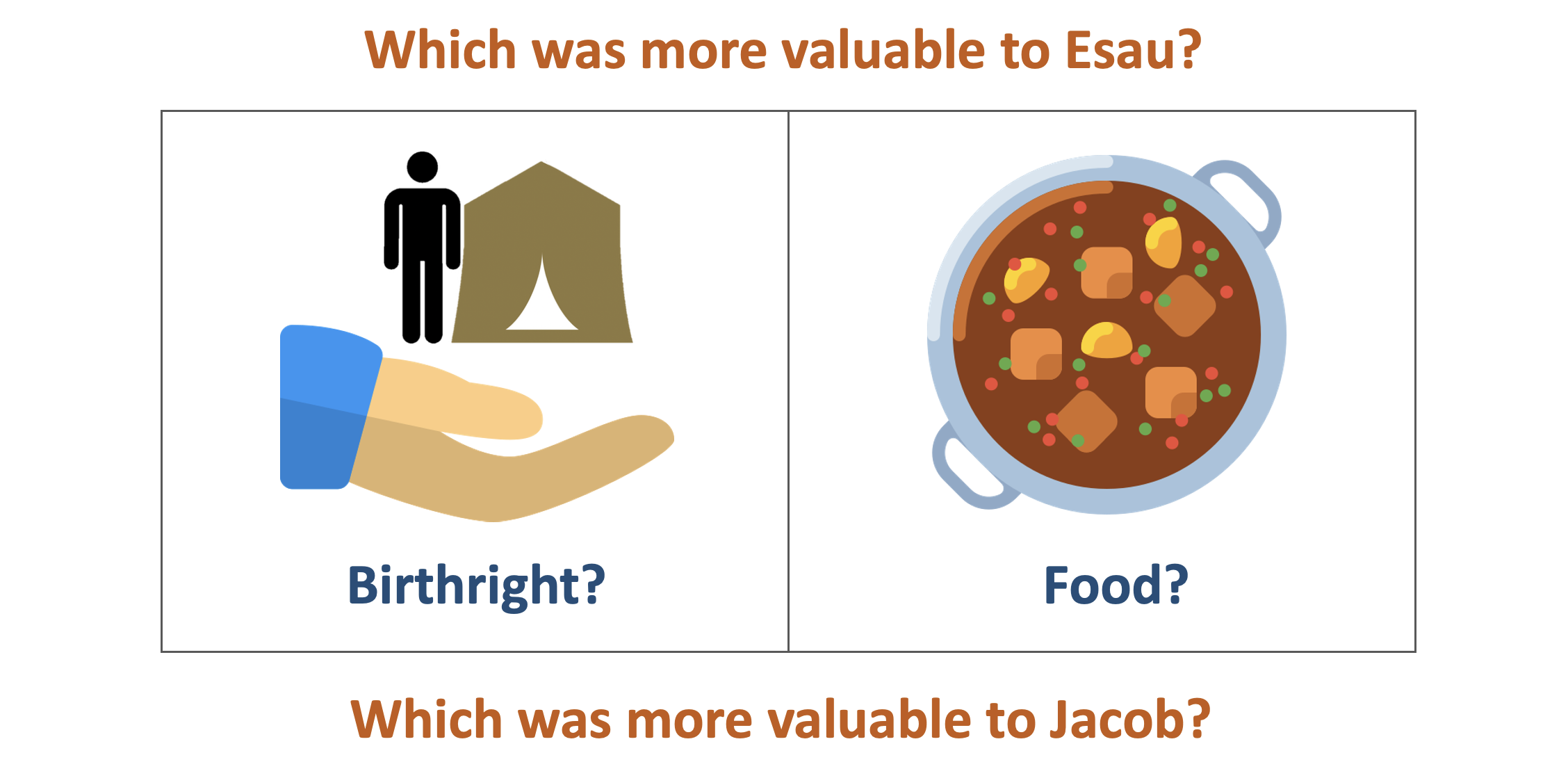
It’s very possible that Jacob knew what God had said to his mother when she was pregnant with the boys. He probably knew how God had already determined to work out the promises to Abraham through him. So Jacob didn’t need to scheme in this way, he just needed to trust God and His timing. (Though Jacob loved God, the Bible records incidents where he schemed to keep himself safe but he really didn’t need to behave in that way since God was in charge.)
As we reflect on today’s reading, what would we say is truly valuable in our life? Do we value God’s plans for our life? Do we trust His plans for us? Or do we value our own desires? Esau valued food as more important than his birthright. Jacob valued the birthright as he saw it was part of God’s plan for Abraham’s family.
In our lives, what do we value as important?
Spend some time thinking this through.
After that, consider what God would think about our list of priorities. What do we think are His priorities for us? Do our values and priorities align with His?
Then think about how we are allocating our time, effort and resources.
Do our daily decisions reflect the priorities we have?
Pray and talk to God about this. (And consider how God responded to the prayers of Isaac and Rebekah. He is a God who responds!)
The Devotional Journey: Bible Reading 16
Yahweh provides a wife for Isaac
Read Genesis 24:1–67.
This is the historical account of how Yahweh chose a bride for Isaac, who was now an adult. Interestingly, unlike some other accounts in Genesis, there is no special word from Yahweh, no miracles and no supernatural signs. Instead, we see God deliberately working “behind the scenes”. This account shows us how God often works in the lives of believers, quietly guiding and answering prayers.
God led Abraham to ask his chief servant, Eliezer (see Genesis 15:2), to find a wife for Isaac from among Abraham’s own relatives, and not from among the Canaanites, who worshipped idols. Abraham wanted to find a bride for his son who believed in Yahweh, the true God. Abraham didn’t want Isaac to go himself because he knew that God wanted the family to remain in the land that God had given them. So Abraham sent his chief servant on this mission.
Following the custom of the time, Eliezer put his hand under Abraham’s thigh, to show he was a making a serious promise. If he did not do what Abraham asked, Abraham’s children could punish him for his unfaithfulness.
The journey north to where Abraham’s family lived was a two-week journey, about 800 kilometres (500 miles). Eliezer had to take enough provisions for the long trip. He needed ten camels and accompanying camel drivers to go with him.

When Eliezer arrived at the town where Abraham’s family lived, he prayed to Yahweh to show him a woman with a heart for others. Specifically, he asked God to lead him to a woman who was willing to go out of her way to provide water for a stranger and his ten thirsty camels. Knowing that the average camel could drink about 100 litres of water at one time, Eliezer was asking for an exceptional woman! But he knew the importance of finding a woman with the right heart and so he asked Yahweh for help.
Yahweh worked quietly on this occasion. This is how the life of faith often works. Through prayer, we bring our concerns and requests to God, we move in obedience to His Word, and we look for the evidence of God’s working. This was exactly what Eliezer was doing. He was following the example of his master Abraham.
Over the years, by observing Abraham, Eliezer had learnt to have his own faith in Yahweh. What are the people in our lives learning about God from watching us?
When Rebekah showed up to draw water, we see that she was exceptionally generous. Not only did she provide water for Eliezer, she volunteered to get water for the camels. Imagine the number of trips to the well that she had to take to satisfy the animals. Rebekah demonstrated true kindness to strangers: first to Eliezer and then to his camels. This incident showed her character—her kindness and willingness to work hard.

At Rebekah’s home, Eliezer related to her family what God had been doing in Abraham’s life. He was not shy or afraid to talk about Yahweh and His goodness. We can learn from him how not to be shy but to share about the goodness of God with wisdom and tact.
Rebekah’s family recognised that Eliezer was sent by Yahweh and her brother, Laban, acted as the chief negotiator in the marriage contract. The family was willing to obey God’s will in this matter. And Rebekah also chose to be obedient to God’s plan.
Throughout this incident, we see God directing and working with the different people, yet allowing each of them to make their own decisions of what they would do. Ultimately, God’s sovereign will was accomplished while all the individuals involved made genuine choices.
This account is so helpful for Christians today.
We see faith in God.
We see praying and seeking God’s will.
And we see God quietly directing and guiding, so that eventually, Rebekah became Isaac’s wife.
This should encourage us as it shows how our typical daily life with God often unfolds. Even when there are no dramatic supernatural signs, God is working behind the scenes using our faith and prayers to direct us.
Let’s thank God for His provision even in our everyday life, in big and small decisions. He is ever watching and taking care of His children. He is involved in the lives of His people.
One more point to note is how Isaac took Rebekah as his wife and loved her. Isaac loved the one he married. He didn’t marry the one he loved. Love is also a decision.
Do we choose to love the people God has given to us like our parents, siblings, relatives, spouses, children, classmates, neighbours or coworkers? Do we struggle with loving some of them? Let’s pray, sharing with God our challenges and asking Him to help us love the ones in our lives.