
The Devotional Journey: Bible Reading 75
Yahweh reaffirms His choice of Aaron and Moses when Korah, Dathan and Abiram rebel
Read Numbers 16:1–50.
We had learnt that Yahweh originally chose the firstborn sons of the nation to serve Him. But when Israel rebelled at the golden calf idol incident (Reading 57), the Levites remained loyal. As a reward, Yahweh gave the Levites the special role of serving Him at the Tabernacle instead of the firstborn sons (Reading 69). In addition, from among the Levites, Yahweh also appointed Aaron and sons as priests and all subsequent priests were to come only from Aaron’s descendants.
Now, another rebellion had formed. Angry that the present adult generation couldn’t enter the Promised Land, a group challenged the religious authority (Aaron) and the political authority (Moses) that Yahweh had installed.
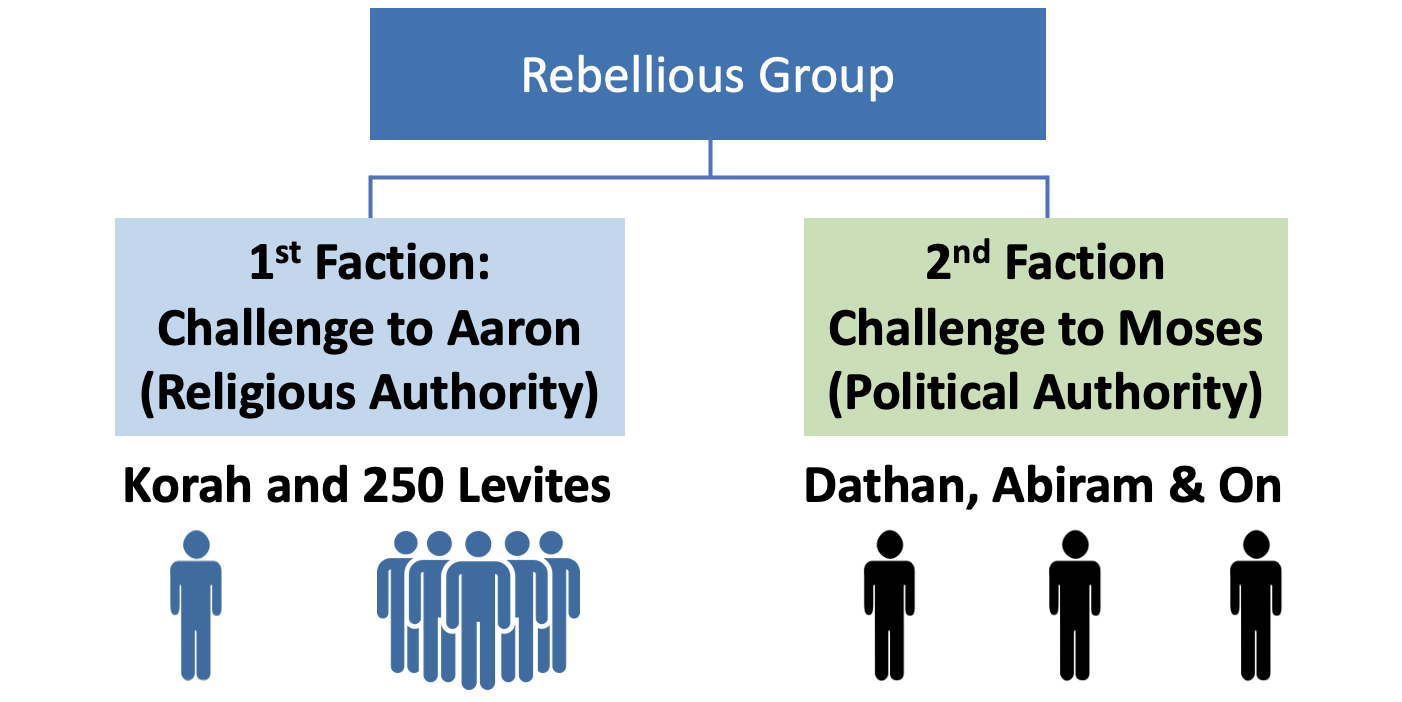
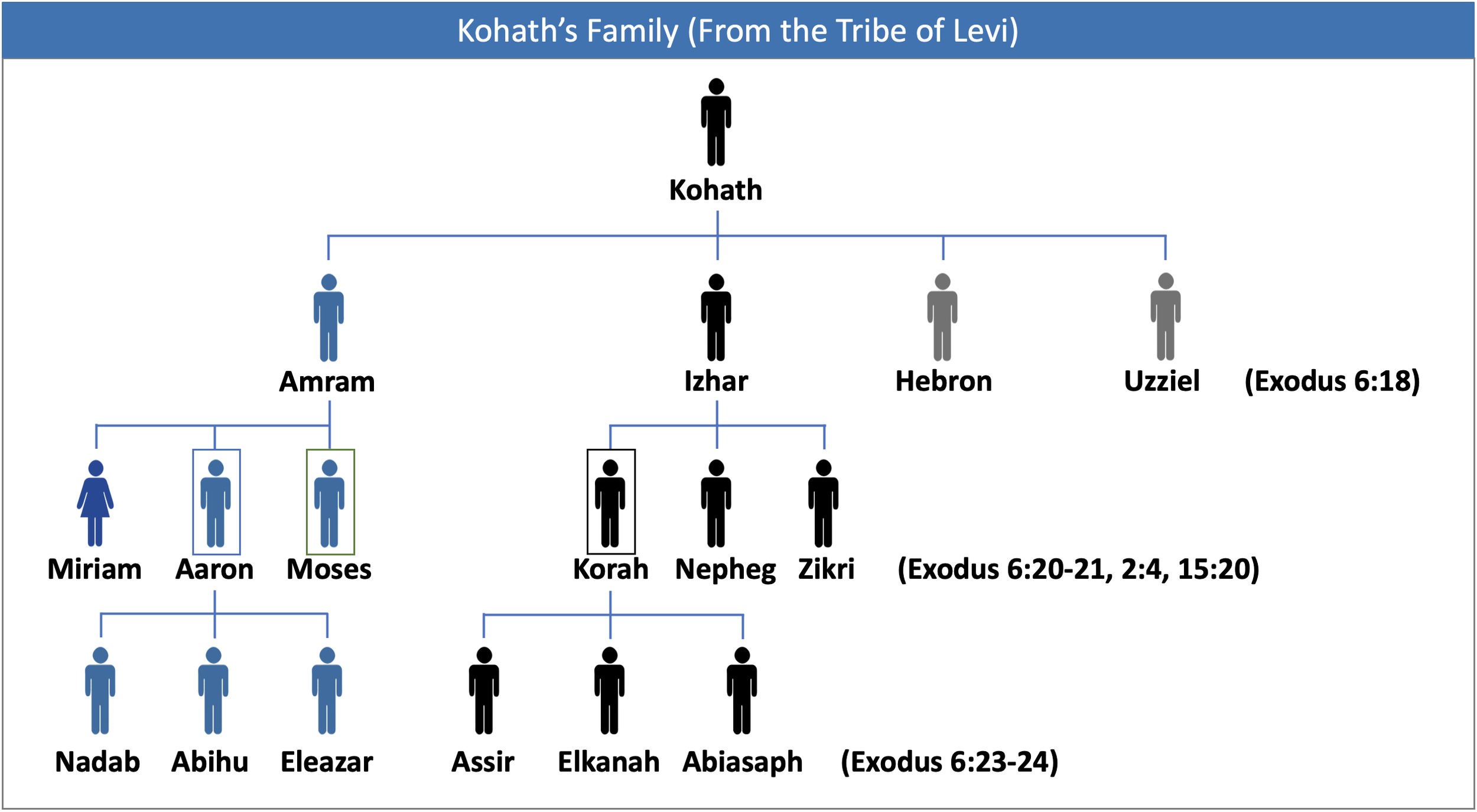
One faction was led by Korah and 250 Levites. Korah was a cousin of Aaron and Moses and might have thought he was as qualified as Aaron to be high priest.
The second faction was led by Dathan, Abiram and On, from the tribe of Reuben (Jacob’s oldest son). They probably felt that coming from the eldest tribe, they had as much right to lead the nation as Moses did.
Their accusation was threefold:
Moses and Aaron were no better than anyone else
Everyone in Israel was part of the chosen nation
They didn’t need to obey Moses and Aaron.
While the first two statements were true, they drew the wrong conclusion. They completely ignored the fact that Moses and Aaron were Yahweh’s choice of leaders.
Moses brought the leadership challenge before Yahweh. He told Korah and his Levite followers to bring censers. The bronze censers were shallow bowls with long handles used for burning sweet-smelling incense. The incense represented the prayers of the people and were part of the worship of Yahweh. Moses said God would make His choice of high priest clear.

As for the political challenge to Moses’ leadership, he summoned Dathan and Abiram to appear before God. But they refused! (Nothing more is said about On, the third challenger. Perhaps he had changed his mind.)
Dathan and Abiram made baseless accusations, including calling Egypt a “land of milk and honey”. They were envious of Moses’ position. Moses’ response shows us what we ought to do when there are leadership challenges. He prayed, asking God to clear his name. The anger Moses had wasn’t a selfish irritation but the righteous indignation of a man who only cared about Yahweh’s glory and His ways.
Yahweh responded dramatically the next morning. Korah and his followers showed up with their censers and stood with Moses and Aaron at the entrance of the Tabernacle.
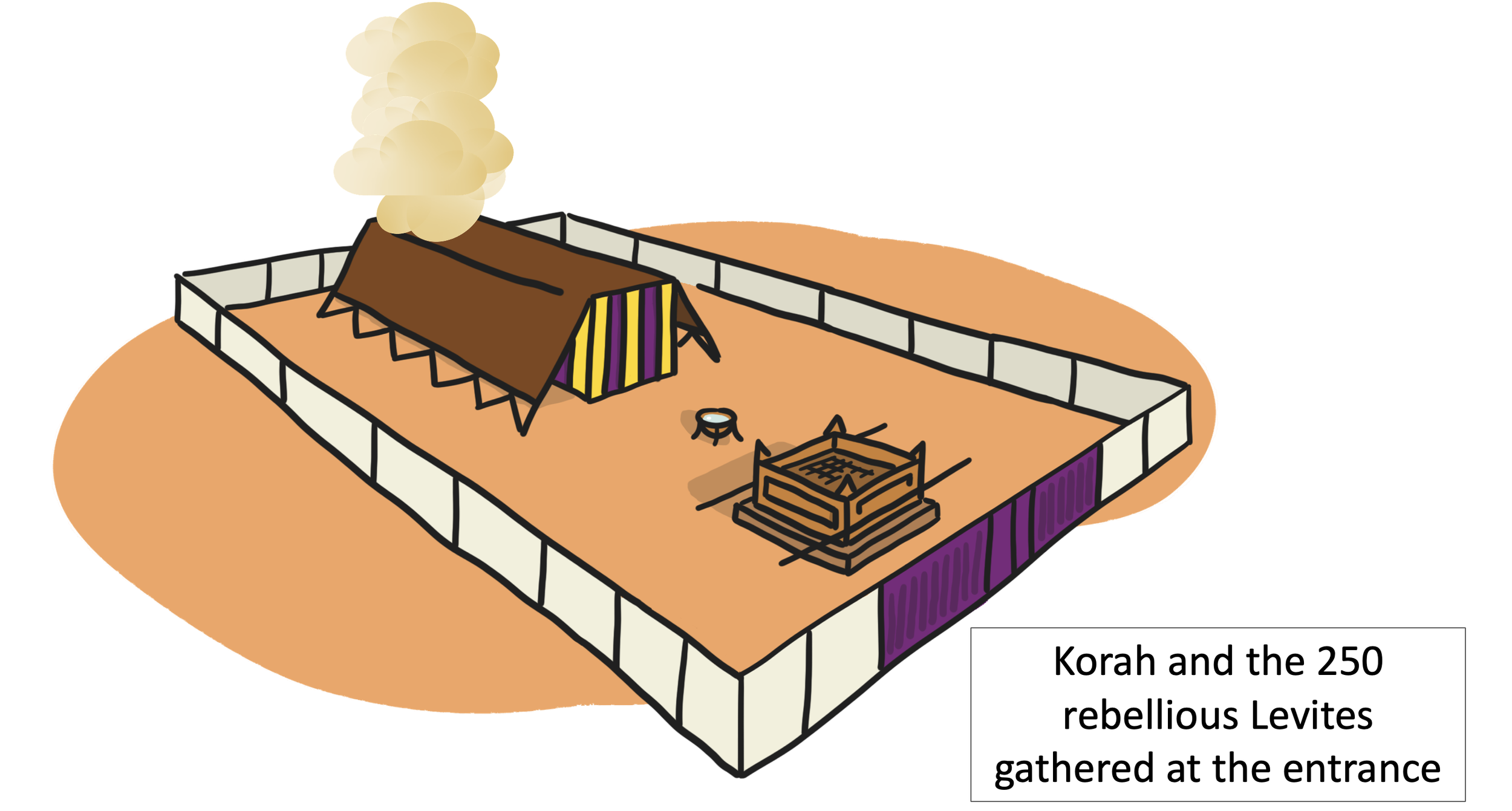
Meanwhile, Dathan and Abiram stood with their families at the doors of their tents, within sight of the south side of the Tabernacle.
Yahweh’s visible glory appeared and His voice could be heard. Moses and Aaron fell to their knees in reverence and prayed for the nation. Why should the nation suffer because of these two rebellious factions?
God warned the people to move away from the tents of Korah, Dathan and Abiram. Then the ground opened up and swallowed the evil men and their households! And fire or lightning from the sky flashed down from God and destroyed the 250 Levites. This was a dramatic end to the rebellion. Yahweh made it very clear that the Israelites were to accept His appointed leaders and respect their authority.
God told Eleazer the priest to collect the bronze censers of the rebels and make a cover for the altar where the sacrificial animals were burnt. The covering would remind Israel about this rebellion.
The next day, the rebellion wasn’t quite over. Now there were others accusing Moses and Aaron of getting fellow Israelites killed. Yahweh intervened again, sending some kind of plague that began killing the complainers. Moses commanded Aaron to take his censer, burn incense and run among the people, letting the incense smoke spread among them. When he did that, the plague subsided, but not before another 14,700 died that day. (Instead of simply praying to intercede for the people, Aaron physically used incense which represented prayer. See Psalm 141:2 and Revelation 8:3–4.)
Whether it is ancient Israel or a modern city, every society functions with an authority structure. Someone has to be in charge. Parents are in charge of the children. Teachers are in charge of the class. Managers are in charge at work. Elected officials and civil servants run society. When order breaks down, there will be trouble.
Moses and Aaron were appointed by God to lead the nation and rebelling against them was rebelling against Yahweh. It brought serious division. The selfish desire for authority is a common theme in Scripture. Every follower of Christ needs to learn that the most important place for us to be is the position of God’s choosing, the place and role He wants us to serve. Every member of Christ’s body is given a spiritual gift that is meant for serving others. We do well to use our gift in building up the body (see 1 Corinthians 12:14–18).
One other interesting observation is that despite what happened to Korah, God was still willing to use his sons. In Numbers 26:11, we learn that the sons of Korah didn’t die in the incident. In fact, his sons went on to be musicians for Yahweh and wrote psalms that are now part of the Bible (Psalms 42, 44–49, 84, 85, 87 and 88). This shows that the arrogance of the father didn’t pass down to his sons and God doesn’t hold the sin of the father against the children.
Think about who God has placed over us in this season of our life. What is our attitude towards them? Do we willingly submit to these ones knowing that will please the Lord? Or do we feel superior to them and are arrogant in our attitude towards them? Pray and ask God for help that we might have a God-honouring and cooperative attitude towards those whom God has placed over us.
Also think about who we are responsible for in this season of life. Do we share Moses’ and Aaron’s attitude of concern where they passionately pray and intercede for the people? Do we have a good heart attitude towards them that guides our words and actions? Do we serve them in the way that God wants us to? Let’s talk to God about this.