
The Devotional Journey: Bible Reading 76
Yahweh causes Aaron’s staff to blossom
Read Numbers 17:1–13.
Numbers 17 continues with what happened immediately after Korah’s rebellion. Yahweh had disciplined the Israelites because of their grumbling and rebellion, but the problem wasn’t yet resolved. Complaining was a persistent problem among the Israelites.
Yahweh had already shown that Aaron was His choice of high priest and that all priests would come from his family. But it didn’t seem enough so God provided one more act of authentication to put a stop to the grumbling against His appointed leaders.
He told Moses to get each tribal leader to bring a wooden rod with their name, representing their tribe, written on it. For the tribe of Levi, Aaron’s name would be inscribed on the staff.
The Hebrew word for rod or staff is matteh. And matteh also means “tribe”. This wordplay was God’s way of using the rods to confirm His choice of the family of priests.
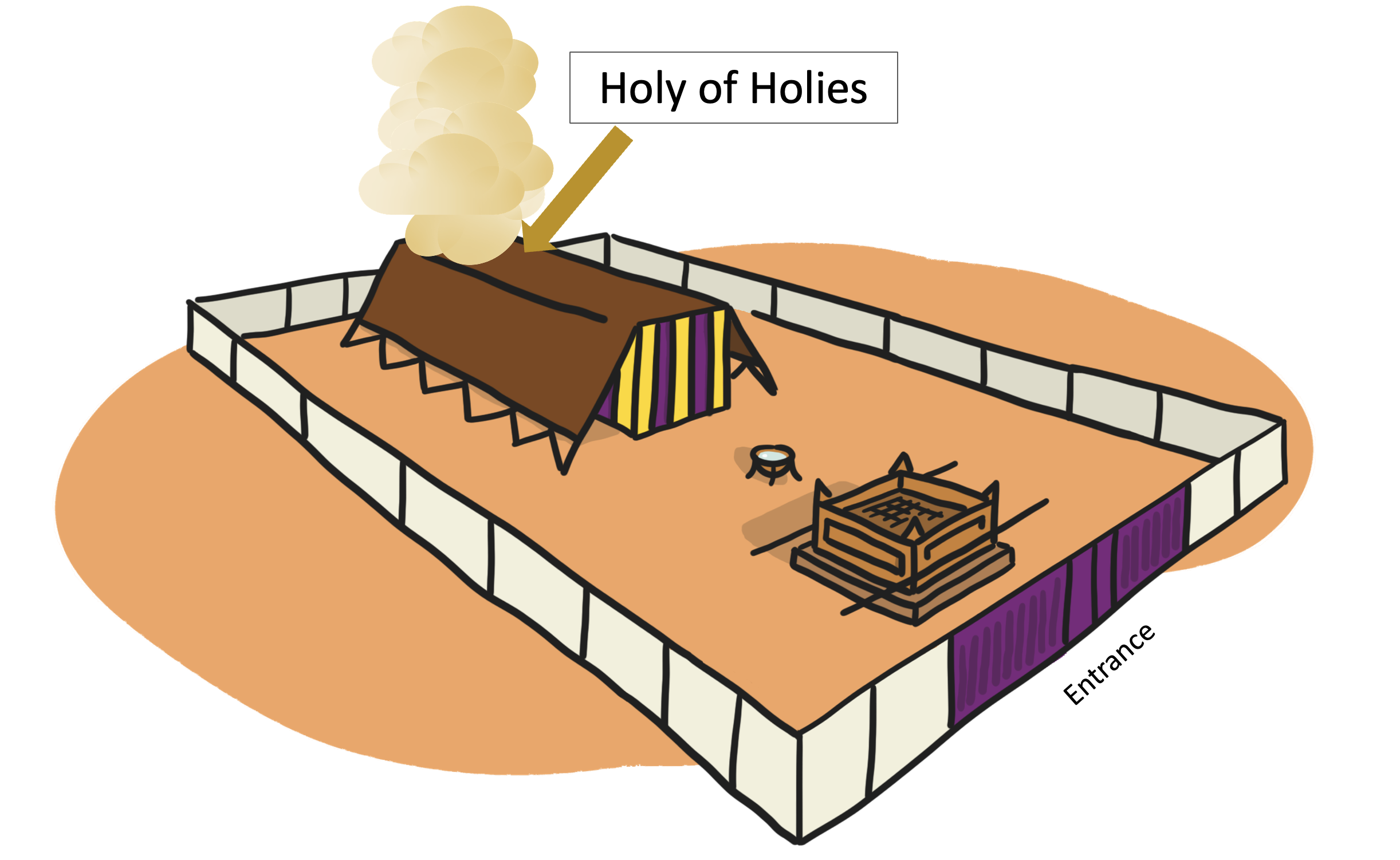
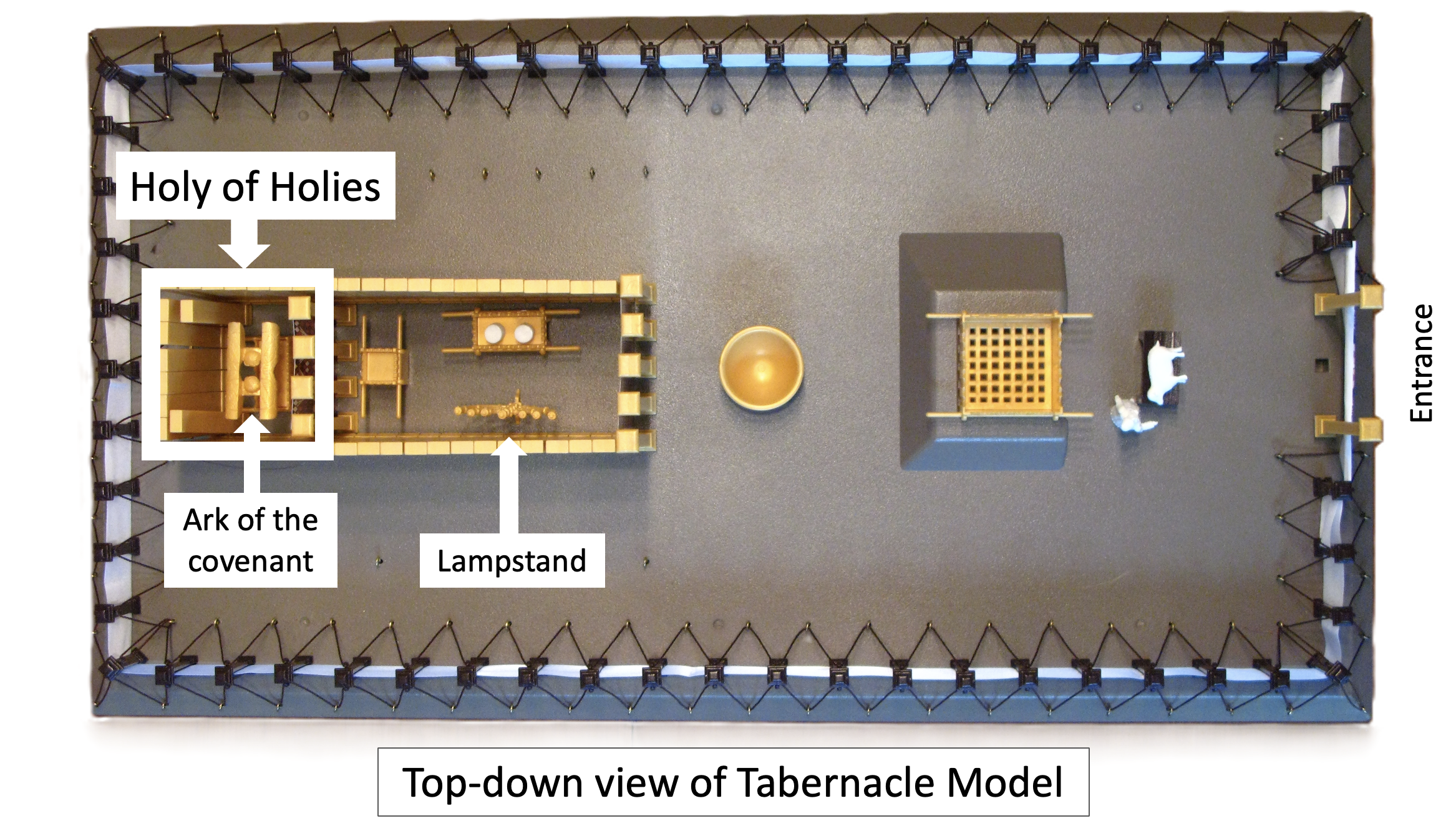
All the rods were brought into the Tabernacle and placed in the Holy of Holies, right in front of the ark of the covenant. The Holy of Holies, or the Most Holy Place, was the curtained-off square room where Yahweh’s presence dwelt above the ark of the covenant, the gold box containing the stone tablets with the Ten Commandments inscribed on them (Exodus 25:16), as well as a jar of manna that God had instructed Moses to keep (Exodus 16:32–34).
Yahweh said He would cause the rod of the man He chose to sprout. And indeed, Aaron’s rod not only sprouted, but there were almond buds, flowers and ripe almonds! It was a miraculous sign.
When Moses brought the rods out and returned them to the tribal leaders, they and the gathered people could see that Aaron’s rod had budded. This silenced the grumbling.
Then Yahweh instructed Moses to put Aaron’s rod in the ark of the covenant as a permanent reminder to the nation that Aaron and his family were the chosen priests, and no one else.
The message was clear. Just as Yahweh could make a dried, dead rod miraculously bear fruit, He could choose a family from among the people and enable them to render priestly service fruitfully.
In fact, the dead rod springing to life was a picture of how God could lead His chosen Saviour to die on a wooden cross but then cause Him to spring back to life to provide salvation for all people who would trust God for salvation.
The choice of almonds was also interesting. Almonds in Hebrew (šaqed) sounds similar to the word “guard” or “watch” (šaqad). It suggested that Aaron’s role as high priest was that of a spiritual guardian of the people. Almond flowers were also white, which symbolised the high priest’s purity and holiness.
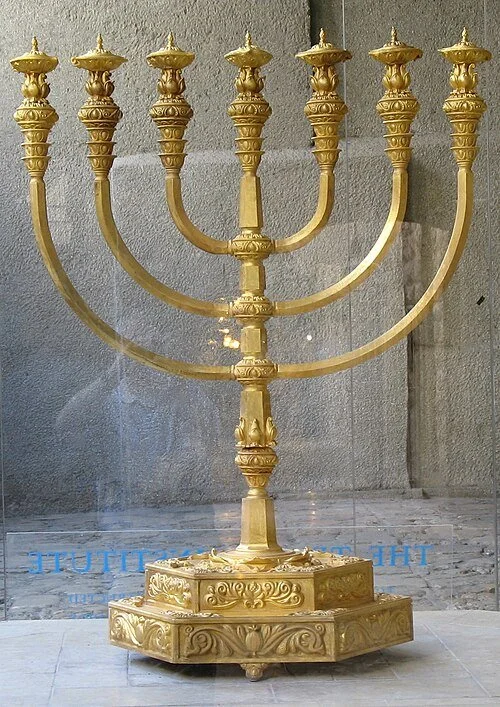
A reconstruction of the menorah of the Temple in Jerusalem, manufactured by the Temple Institute. The cups at the tips holding the oil lamps are shaped like almond flowers. Photo by By ariely - The Temple Institute, Jewish Quarter, Jerusalem. Public Domain.
Also, in the Tabernacle was a gold lampstand. The cups of the lampstand holding the oil lamps were shaped like almond blossoms (Exodus 25:32, 37). When Aaron’s rod blossomed with almond flowers, it really heightened Yahweh’s selection of him as the high priest.
The ark of the covenant now contained three items: (i) the two stone tablets of the Ten Commandments, (ii) the jar of manna and (iii) Aaron’s rod.
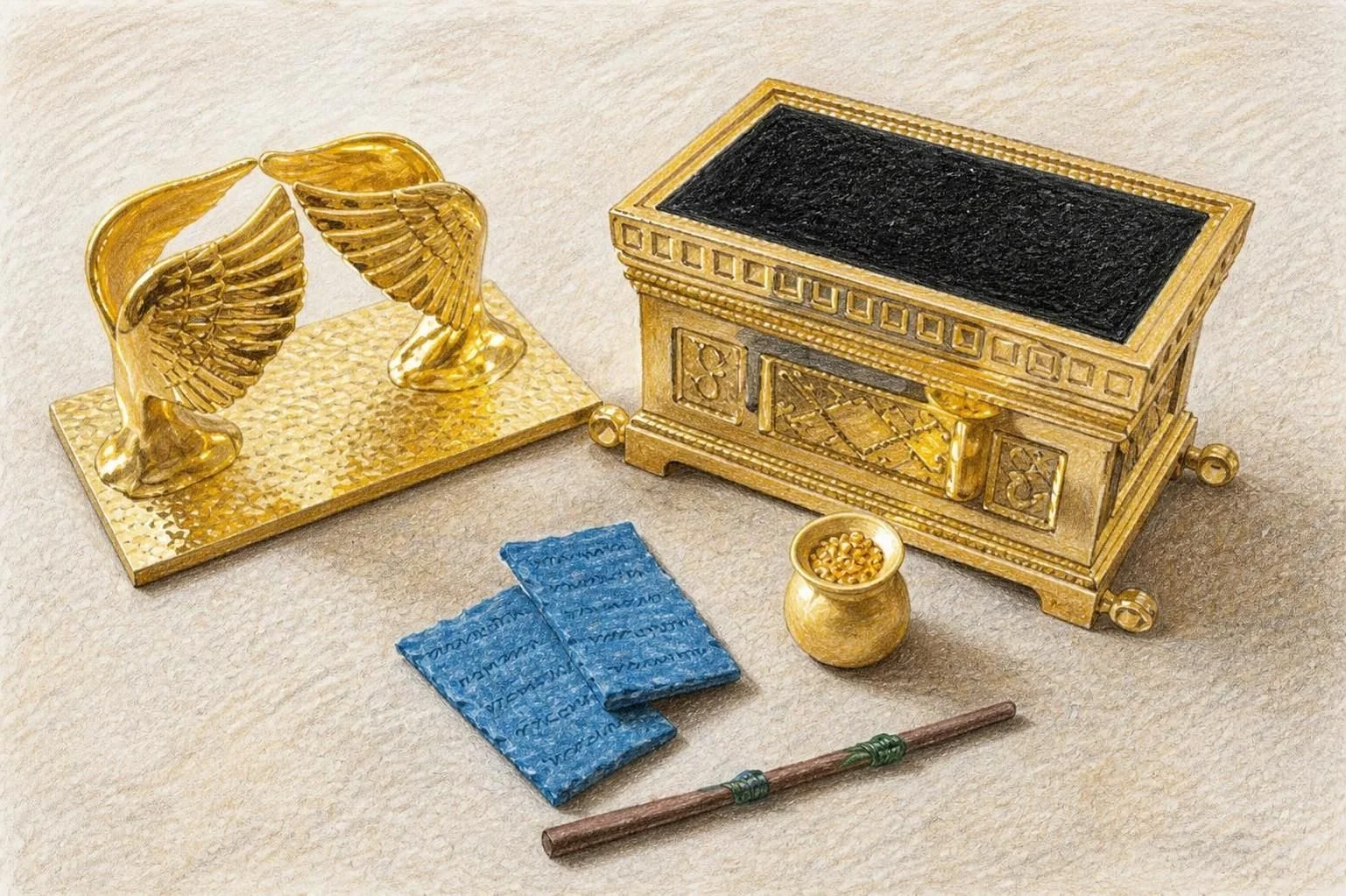
Sketch of the golden ark of the covenant with the cover (known as the mercy seat) featuring the two cherubim, the ark (the gold chest) itself, the two stone tablets, the jar of manna and Aaron’s rod which had budded.
They served as reminders.
The stone tablets reminded Israel of their covenant relationship with Him but also how they broke Yahweh’s laws repeatedly.
The manna reminded them of God’s miraculous provision but also their disobedience and grumbling about His provision.
And now Aaron’s rod reminded them of Yahweh’s choice of the priestly family and their rebellion against God’s choice of leadership.
These items were symbols of God’s grace and served as warnings to future rebels and grumblers.
This time, the people learnt the lesson. Before, they grumbled that anyone could serve Yahweh at the Tabernacle. But now they thought they would all die if they got too close to the worship tent. But Yahweh would not kill the nation if they followed the guidelines He gave in Numbers 18.
Reflecting on our own lives, how do we feel about God’s leading and provision? Do we complain and grumble against Him? Perhaps we don’t do it aloud, but do we have a discontented attitude to how God is directing our lives?
The Bible warns us that grumbling is a sin.
1 Corinthians 10:10
And don’t grumble as some of them did, and then were destroyed by the angel of death.
Philippians 2:14
Do everything without complaining and arguing,
When we grumble, we show we don’t trust God and we lack gratitude.
When we catch ourselves grumbling, let’s tell ourselves to stop immediately. The Israelites had experienced so much of Yahweh’s provision: supernatural rescue from Egypt, miraculous provision of food, protection from enemies, and a Father-son relationship with God. Yet, they didn’t appreciate Him.
We too have received many blessings. We have been reconciled to God through faith in Christ. We have the permanently indwelling Holy Spirit. We have God’s Word to guide us. We have access to God through prayer. And He has placed us in His family, the body of Christ.
Let’s take some time to remind ourselves of all our answered prayers, God’s provision in our lives and the blessings He has given us personally. Let’s focus our thoughts on what He has done for us and be grateful, and our complaining will fade away.