
The Devotional Journey: Bible Reading 77
Forty years since the departure from Egypt
Read Numbers 20:1–29.
Moses’ record of Israel’s journey jumps to the first month of the 40th year since their departure from Egypt. This has been their journey thus far.
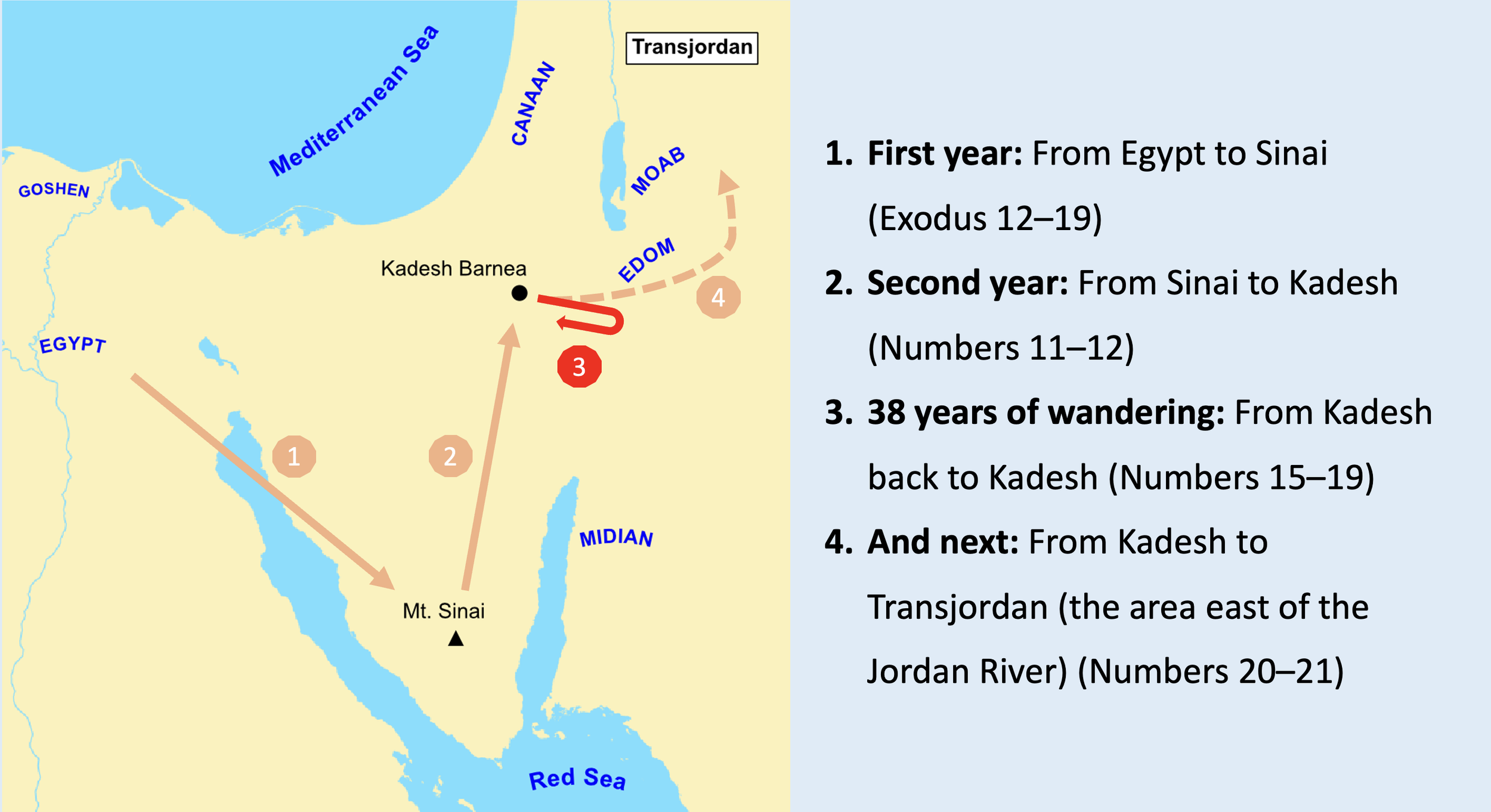
Numbers 20 begins with Miriam passing away at Kadesh. Though she was the most significant woman of the nation, no details about her death are recorded. It’s a stark reminder that Yahweh said all of the first generation would pass away because of disobedience before the next generation could enter the Promised Land (Reading 74).
It must have been hard for Moses and Aaron to lose their beloved sister. It was Miriam whom God used to save Moses’ life when he was a baby (Exodus 2:1–10). She had led the women’s praises after crossing the Red Sea (Exodus 15:20–21). And she had endured these last 38 years in the wilderness with her brothers. The only stain on her record was her criticism of Moses (Numbers 12). But even among those who are serious about God, who can claim to be spotless?
The chapter closes with the death of Aaron, the first high priest of Israel. He died because of rebellion. Though he was Yahweh’s chosen priest, God held him accountable for his sin (verse 24) and he didn’t get to enjoy the Promised Land.
We realise from Numbers 33 that 40 years had passed.
Numbers 33:37–39
[37] They left Kadesh and camped at Mount Hor, at the border of Edom. [38] While they were at the foot of Mount Hor, Aaron the priest was directed by the LORD to go up the mountain, and there he died. This happened in midsummer, on the first day of the fifth month of the fortieth year after Israel’s departure from Egypt. [39] Aaron was 123 years old when he died there on Mount Hor.
The middle of Numbers 20 records another sin of the people. Once again, the Israelites (most of whom were now the second generation since the first were dying out) complained about a lack of food and water. Instead of turning to God, they said they would rather die like the first generation than to suffer thirst!
They had forgotten that the last 38 years of wandering and hard living conditions were the result of their sin, rather than a failure of Yahweh to care for them. They should have gone on their faces to plead with God for help. Instead, they blamed Moses and Aaron yet again.
Moses and Aaron did the right thing and prayed to God. And Yahweh gave instructions. With the people watching, Moses was to take the rod and speak to the rock. The Hebrew word for rock in verse 8 referred to a cliff rather than a boulder. Yahweh wanted to show them again that He could solve their problem no matter the circumstances, provided they trusted and obeyed Him.
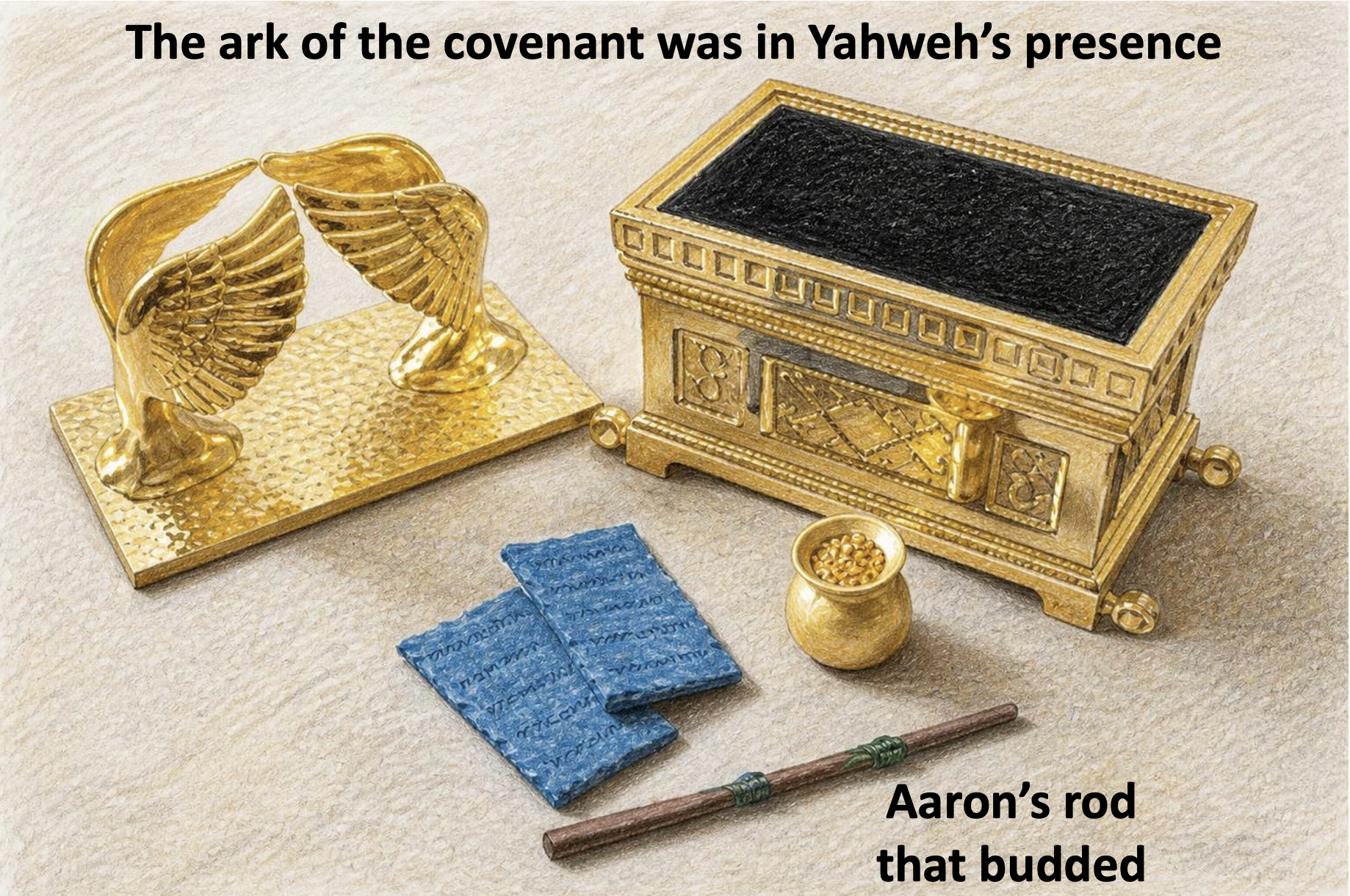
But alas, Moses didn’t trust God this time. Verse 9 says he took the rod from Yahweh’s presence. This probably referred to Aaron’s rod which budded. It was kept in the ark of the covenant which was in Yahweh’s presence. But instead of just speaking to the rock, Moses struck the rock face twice. He disobeyed! Nevertheless, Yahweh was merciful. Enough water gushed out to supply the nation and their animals.
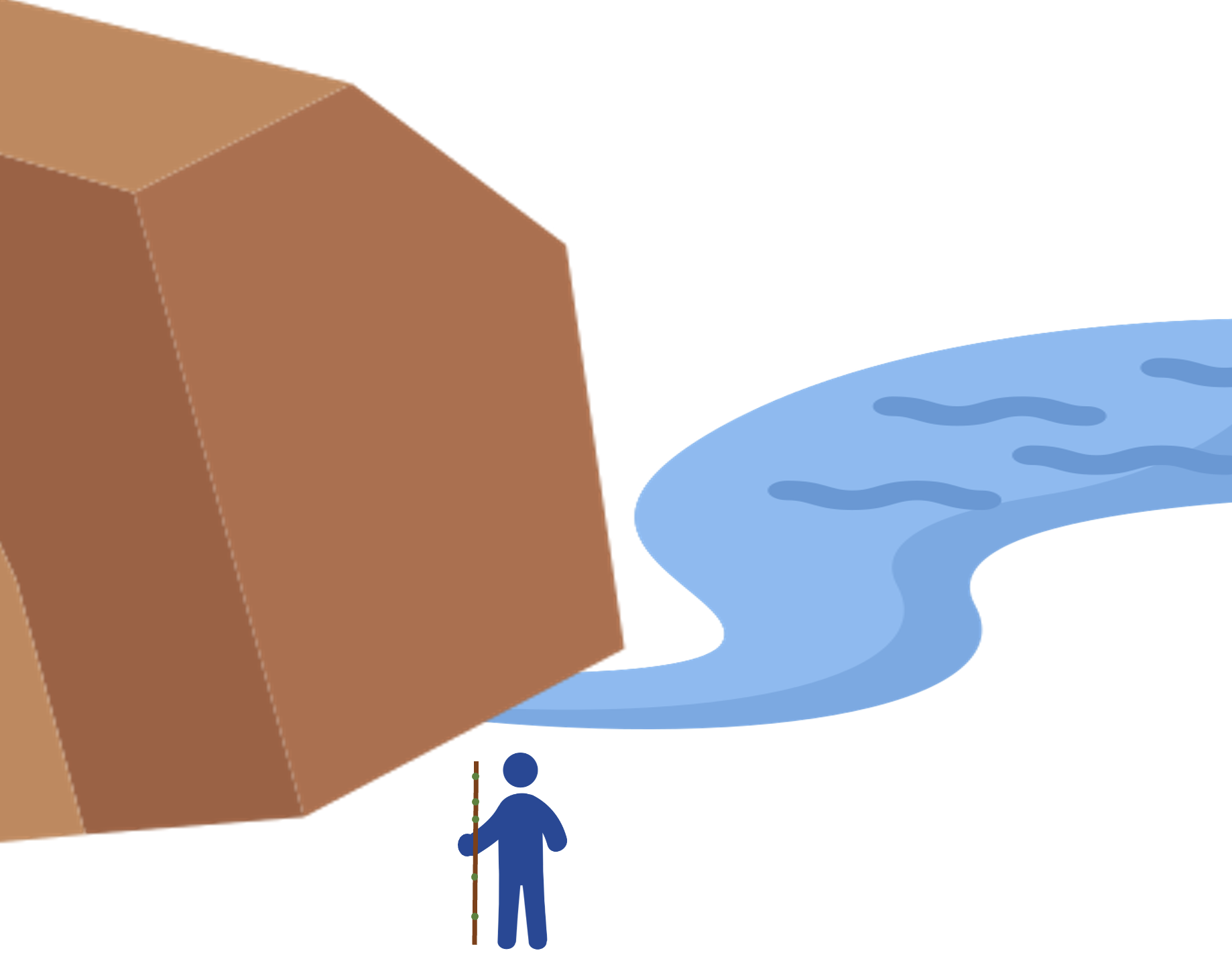
However, Yahweh was displeased with Moses and Aaron’s lack of trust (verse 12). They should’ve trusted that what He had said was true and in faith followed His instructions carefully.
They failed to honour God and bring Him glory. As a result, Yahweh said both of them wouldn’t be allowed to lead Israel into the Promised Land. Though their eternal destiny remained with God, they suffered an earthly punishment for not acting in faith.
After this, Israel encountered hostility from Edom. This nation was a distant relative (through Jacob’s brother Esau. See Genesis 36:8 and Reading 17). Moses tried to establish friendly relations with them and seek permission to pass through their territory en route to Canaan. But the Edomites refused and their troops came out in a show of force. Moses wisely decided not to confront them in battle and directed Israel around Edom’s territory.
Challenging circumstances either help us mature or cause us to stumble in our journey toward spiritual maturity. Israel’s attitude showed they were still babes in their spiritual journey. God works to stretch and grow believers through trials. And He warns believers not to love the world—the values, attitudes and things that unbelievers consider valuable.
1 John 2:15–16
[15] Do not love this world nor the things it offers you, for when you love the world, you do not have the love of the Father in you. [16] For the world offers only a craving for physical pleasure, a craving for everything we see, and pride in our achievements and possessions. These are not from the Father, but are from this world.
When we’re facing difficulties, we mustn’t blame God for the circumstances. Sometimes, our circumstances are due to our own sinful attitude and decisions. And God uses our circumstances to humble us and fix our attitude. Until we humble ourselves to face the reality of the way we have lived, we'll have little peace and won’t grow spiritually.
See what Yahweh said about this incident at the rock which was called Meribah (Hebrew for “striving” or “contending”). (This is the second incident called Meribah. See Exodus 17:7.)
Psalm 95:8–11
[8] The LORD says, “Don’t harden your hearts as Israel did at Meribah,
as they did at Massah in the wilderness.
[9] For there your ancestors tested and tried my patience,
even though they saw everything I did.
[10] For forty years I was angry with them, and I said,
‘They are a people whose hearts turn away from me.
They refuse to do what I tell them.’
[11] So in my anger I took an oath:
‘They will never enter my place of rest.’”
The place of rest wasn’t eternity with God but the earthly, temporal Promised Land. The first generation (including Miriam, Aaron and Moses) didn’t get to enjoy the Promised Land because of disobedience and lack of faith.
As we reflect on these incidents, here are some thoughts for our own lives.
When facing difficult circumstances, can we be humble enough to admit that the difficulties could be due to our wrong thinking, sinful decisions or poor attitudes?
Can we recognise that God uses tough times to correct, train and stretch us spiritually?
When God speaks to us through His Word, will we trust what the Bible says and obey?
If God blocks off certain outcomes that we were hoping for, can we be like Moses and Aaron, and humbly accept the consequences and continue to obey and serve God with a good attitude?